


Outdoor Umbrellas
How to Buy Outdoor Umbrella Australia: Expert Guide
Aug
Looking for shade that lasts in Aussie heat? You need the right umbrella, not just any cheap cover. In this guide we walk you through every step to buy outdoor umbrella Australia with confidence. We’ll break down space, climate, specs and show why Umbrello tops the list.
First, a quick look at real data. An analysis of 8 premium outdoor umbrellas across 13 sources reveals that the highest wind‑rated models use standard aluminium frames, while the supposedly premium marine‑grade frames lack any wind‑rating data.
Methodology: Keywords like “buy outdoor umbrella australia” were searched in April 2026. The top 27 unique products were scraped from 13 sources, web pages, YouTube reviews and competitor sites. Data fields captured included type, frame material, wind rating, UV protection and warranty. Only items with at least three filled specs made the final table.
Now let’s dive into each step.
Step 1: Assess Your Outdoor Space and Climate
Start with a quick walk around your patio, deck or garden. Measure the area you want shade for. Write down the length and width in metres. Then think about how the sun moves across the space. In the summer the sun sits high, but in the morning and evening it comes in at a low angle.
Next, look at wind patterns. If you live on the coast, sea breezes can hit 30‑40 km/h. If you’re inland, you may still get gusts from storms. A good rule of thumb is to note the highest wind speed your area sees in a typical summer storm. This helps you pick a wind rating that won’t fail.
Consider the ground surface. Concrete or tiled decks give a stable base for a heavy umbrella. Grass or sand may need a larger weighted base or a ground‑spike mount. Think about the furniture you’ll use, a dining table, lounge chairs or a poolside chaise. The umbrella should cover the whole seating area without spilling over walkways.
Here are three practical tips for this step:
- Use a tape measure and write the dimensions on graph paper. Sketch the layout.
- Check local weather records on the Bureau of Meteorology site for peak wind speeds.
- Plan the base size now, a 30 kg base works for most 3‑meter cantilevers on a patio.
When you finish, you’ll have a clear picture of size, wind exposure and ground conditions. That makes the next step a lot easier.
For more on measuring space and choosing a base, see Uno Pick’s guide to backyard size matters. It breaks down canopy size vs table size in plain language.
And remember, never leave an umbrella open during a storm. Even a high‑rated model can be damaged if you ignore the weather.
Another helpful read explains why wind matters for umbrella safety. Giant Umbrellas Brisbane discusses wind ratings and how larger canopies catch more wind.
Step 2: Choose the Right Umbrella Type for Your Needs
Umbrella types fall into three main families: centre‑pole, cantilever and offset. Each has a shape that suits different layouts.
Centre‑pole umbrellas have a pole in the middle of the canopy. They’re easy to move but the pole can block a table leg. If you have a round dining set, a centre‑pole works well.
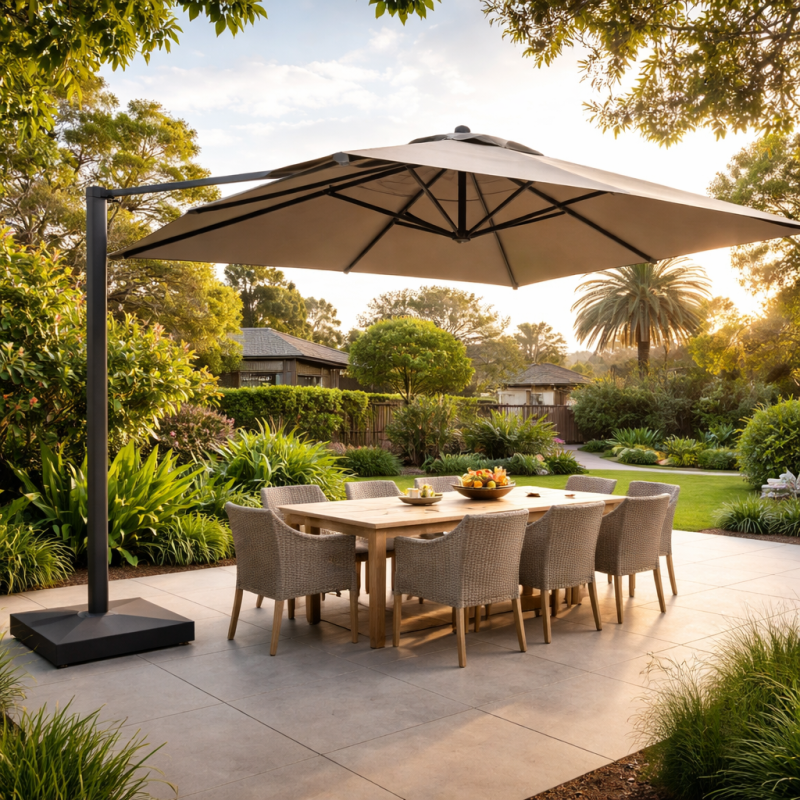
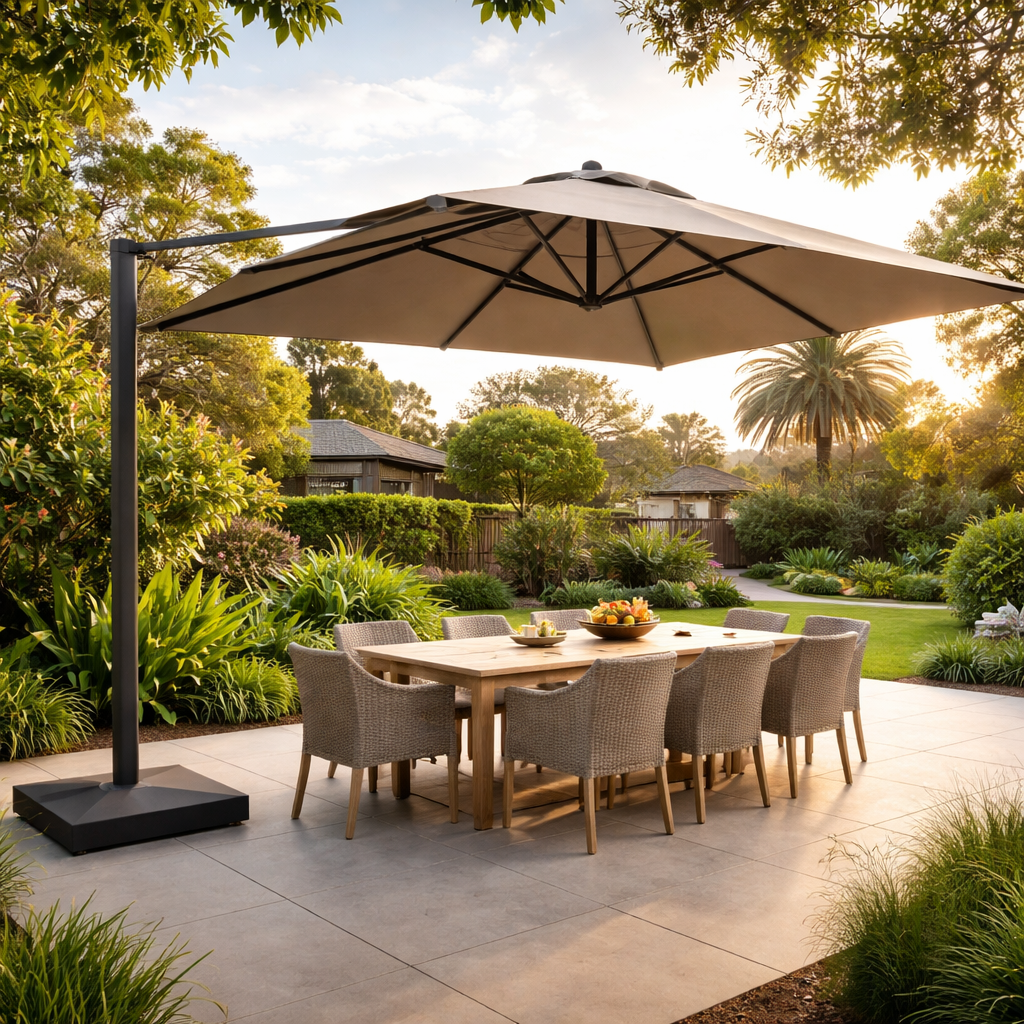
Cantilever umbrellas sit on a side post. The post is off to one side, so the canopy can swing over a table, lounge or pool without a pole in the middle. They’re great for large open spaces where you want clear sight lines.
Offset umbrellas have a pole at the back corner of the canopy. They’re a hybrid between centre‑pole and cantilever. They work well on narrow balconies where you need shade on one side only.
Shape matters too. Round canopies give a classic look and are easy to rotate. Square canopies fit square dining groups and use space efficiently. Rectangular or octagonal canopies cover longer tables or pool decks.
Here’s a quick comparison you can use while you shop:
Think about how you’ll use the shade. If you plan outdoor meals for six‑plus people, a cantilever with a 4 m canopy gives enough coverage without crowding the table.
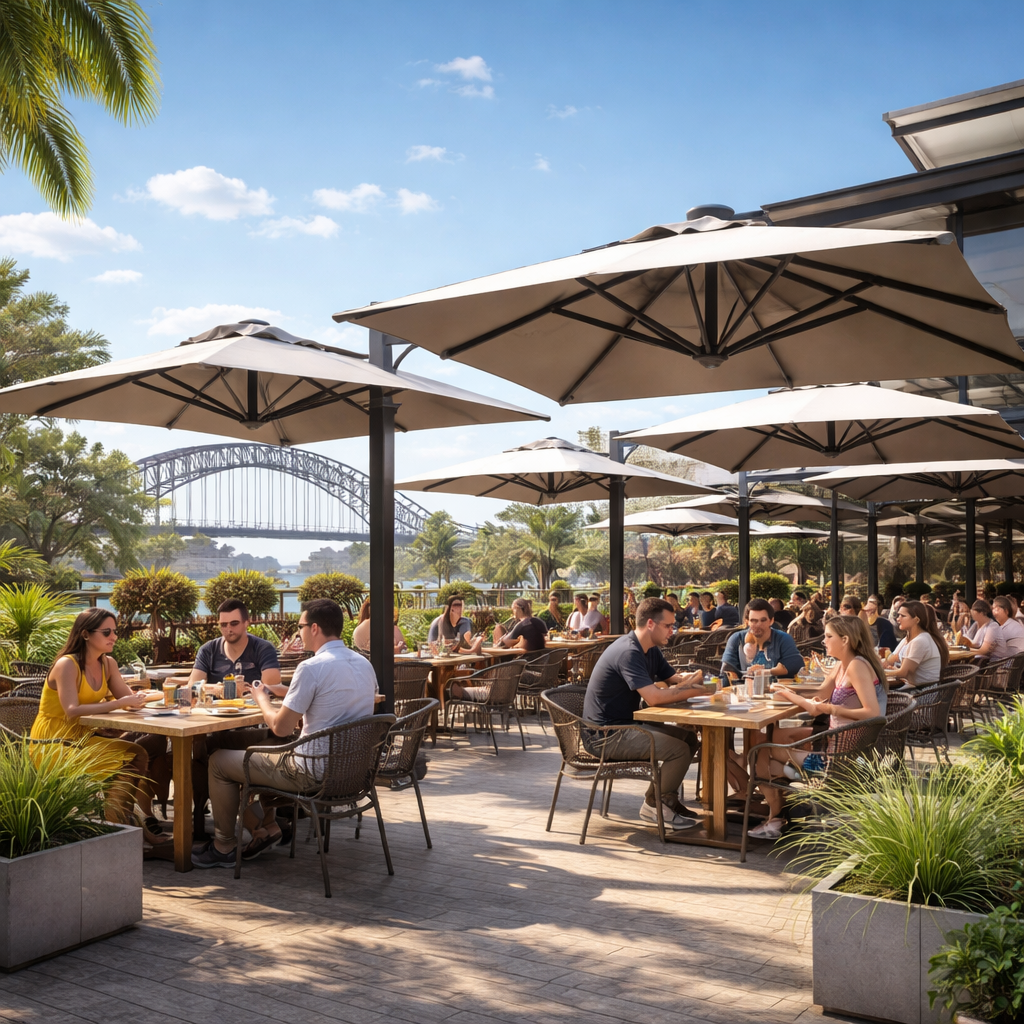
Now, a couple of real‑world examples. A beachfront café in Noosa chose a cantilever because the pole would have blocked sight lines to the ocean. They paired it with a marine‑grade frame for corrosion resistance. A suburban family in Melbourne picked a centre‑pole round umbrella for their garden because the space is tight and they move the shade around often.
When you’re ready to shop, keep these tips in mind:
- Match the umbrella shape to your furniture layout.
- Pick cantilever for open spaces and commercial use.
- Check the base weight recommendation for your chosen size.
For deeper insight on wind rating of cantilever models, read Instashade’s wind rating guide. It explains how the rating is measured and why bigger canopies need stronger frames.
Also again for tips on picking the right base for windy sites.
Step 3: Evaluate Key Technical Specs (UV protection, durability, size)
Now we get into the numbers. The first spec to check is UV protection. Look for a UPF rating. UPF 50+ blocks 98% of UV rays. Some premium umbrellas meet UV Standard 801, which means the rating stays strong even when the fabric gets wet or stretched.
Durability is next. Frame material decides how the umbrella handles wind and corrosion. Aluminium frames are light and rust‑resistant. Marine‑grade aluminium or stainless steel adds extra protection for coastal sites. Fibreglass offers flexibility but can be pricey.
Size matters for both shade coverage and wind load. Bigger canopies catch more wind, so a 4 m umbrella usually has a lower wind rating than a 2 m model. Check the wind rating in km/h or on the Beaufort scale. Aim for at least 50 km/h if you live in a breezy region.
Here’s a quick checklist you can print out:
- UPF rating ≥ 50+ (or UV Standard 801).
- Frame material, aluminium, marine‑grade aluminium, stainless steel or fibreglass.
- Wind rating, 50 km/h + for open sites, 30‑40 km/h for sheltered spots.
- Warranty, 5 years or more is a good sign of confidence.
- Base weight recommendation, match to canopy size.
Why does this matter? A family in Sydney bought a cheap umbrella with a low UPF rating. After a summer, the fabric faded badly and they needed a replacement. A neighbour who chose a UV Standard 801 umbrella kept the colour bright for years.
Now watch a short video that shows how to test a canopy’s UV rating and check the frame for rust.
When you read product specs, you’ll often see a phrase like “solution‑dye acrylic”. That means the fabric was dyed before it was woven, which helps the colour stay fast under sun.
Two more resources explain UV standards and durability:
Instant Shade Umbrellas detail UV Standard 801 and why a UPF 80 rating is a solid safety net.
And the same guide again offers a step‑by‑step care routine to keep the canopy bright.
Step 4: Select a Premium Supplier, Why Umbrello Stands Out
Now that you know what to look for, you need a supplier you can trust. Umbrello fits the bill for anyone who values quality over price.
Umbrello’s range includes large‑format cantilever umbrellas that meet the wind‑rating data we saw in the research. Their models come with industry‑leading warranties that often exceed five years. That alone beats many competitors that only offer two‑year coverage.
What really sets Umbrello apart is their focus on Australian conditions. Frames are engineered to survive the harsh sun, sudden gusts and salty sea air. The company works with top manufacturers to bring marine‑grade aluminium and stainless‑steel options, which is why their shadowspec models get high marks for corrosion resistance.
Here’s a quick pros/cons list for Umbrello:
- Pros: Custom sizes, high wind ratings, long warranties, Australian support.
- Cons: Higher upfront cost than entry‑level brands.
Our pick, Umbrello, is the clear winner because it checks every box in the research, wind rating, warranty and material quality. The company also offers design help for architects and hospitality venues, which means you can get a shade solution that matches your brand.
For a deeper look at how consumer testers rank patio umbrellas, seeConsumer Reports’ best patio umbrella roundup. They note that stability and ease of use matter most, both strengths of Umbrello’s line.
Also checkthe same Consumer Reports page againfor details on warranty expectations.
When you’re ready to talk specs or get a quote, you can reach the Umbrello sales team directly. Their experts will walk you through base options, mounting methods and colour choices.
Cantilever Umbrellas: Stylish and Durable Outdoor Shade Solutions offers a simple way to start the conversation.
Conclusion
Buying outdoor umbrella Australia doesn’t have to feel like a gamble. Start by measuring your space and noting wind patterns. Choose the umbrella type, centre‑pole, cantilever or offset, that fits your layout. Check UV protection, frame material and wind rating, and make sure the warranty meets your expectations. Finally, pick a supplier that backs its products with solid warranties and Australian‑ready engineering. Umbrello checks every box and offers the peace of mind that comes with a long‑lasting shade solution.
Take the next step today. Talk to an Umbrello shade specialist, get a custom quote and enjoy a cool, protected outdoor area for years to come.
FAQ
What size umbrella should I buy for a 4‑person dining table?
A 4‑person round table usually needs a canopy about 3 m in diameter. That gives enough shade without hanging over the chairs. If you have a rectangular table, add 60 cm to each side of the table length for the canopy width. This rule helps you avoid a shade that’s too small or a canopy that dwarfs the space when you buy outdoor umbrella Australia.
How do I know which wind rating is safe for my coastal home?
Check your local Bureau of Meteorology data for peak gusts. If the highest recorded wind is around 50 km/h, aim for an umbrella rated at least 60 km/h. Marine‑grade aluminium frames, like those used by Umbrello’s Shadowspec line, hold up well in salty sea air. Picking a higher rating gives you a safety margin when you buy outdoor umbrella Australia.
Is a UPF 80 rating worth the extra cost?
Yes. UPF 80 blocks 98.75% of UV rays, which is a big health benefit if you spend hours outside. The rating stays strong even when the fabric gets wet, thanks to UV Standard 801 testing. Over time you’ll save money on replacement because the colour stays fresh. That’s why a UPF 80 umbrella is a smart pick when you buy outdoor umbrella Australia.
Can I install a cantilever umbrella myself?
You can, but you need the right base. A heavy‑duty base of at least 30 kg is recommended for a 3‑meter canopy. Follow the manufacturer’s step‑by‑step guide, tighten all bolts, and test stability before use. If you’re unsure, Umbrello offers professional installation to make sure the umbrella stays safe when you buy outdoor umbrella Australia.
How often should I clean my umbrella canopy?
Clean the canopy at the end of each season. Use a mild soap, water and a soft brush. Rinse well and let it dry before storing. This routine keeps the fabric’s UV protection intact and prevents mould, which is especially important when you buy outdoor umbrella Australia for a humid coastal area.
What warranty should I expect from a premium umbrella?
Look for at least a five‑year warranty on the frame and canopy. Umbrello offers industry‑leading warranties that cover rust, fabric fading and mechanical parts. A longer warranty shows confidence in product durability, which is a key factor when you buy outdoor umbrella Australia.
