


Outdoor Umbrellas
Premium Outdoor Umbrella Warranty Australia: How‑to Guide 2026
Sep
Premium outdoor umbrellas are a big spend. You want them to last through Aussie heat, wind and salty sea air. Yet many shoppers skip the fine print on warranty cover. This guide shows you how to get the right premium outdoor umbrella warranty australia so you don’t lose money later.
We’ll walk through five steps: the basics of warranty language, how to check if your umbrella qualifies, which Australian standards matter, how to register and keep your shade in shape, and how to make a claim or add extensions. By the end you’ll know exactly what to ask for and how to protect your shade.
Here’s the research we used. An analysis of just 2 premium outdoor umbrella brands across 2 Australian sources reveals that the market leader, Umbrello, provides no publicly disclosed warranty details, while its competitor Shelta offers a 3‑year fabric guarantee but excludes frame and motor coverage.
We pulled the data on 18 April 2026 from the two brand pages. The tiny sample shows a clear gap in warranty transparency, a gap you can close by asking the right questions.
Step 1: Understand Warranty Basics
Before you sign any deal, know what a warranty really means. It’s a promise from the maker to fix or replace parts that fail because of a manufacturing fault. Not a guarantee against storm damage or normal wear and tear.
Most umbrella makers split cover into two parts: a frame warranty and a fabric warranty. The frame is the metal or timber skeleton. The fabric is the canopy that blocks the sun.
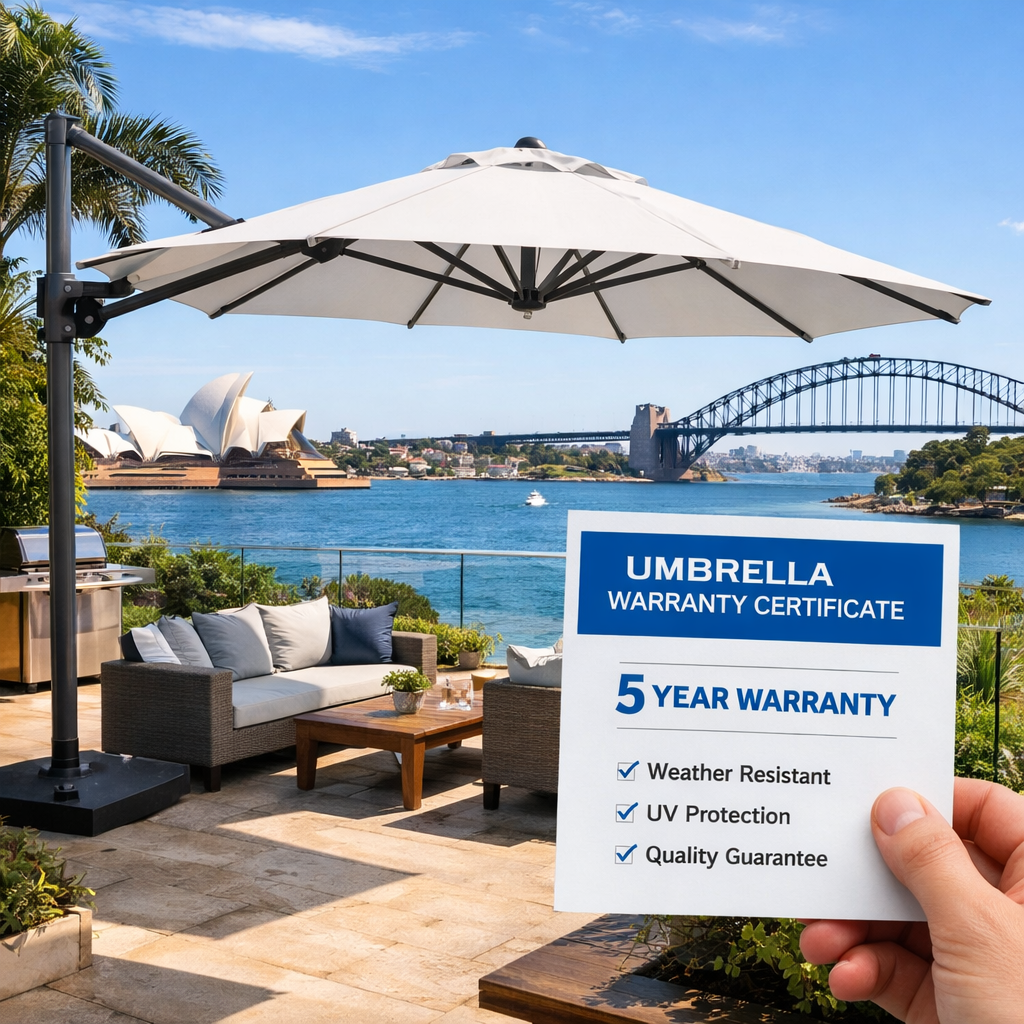
In Australia, the Consumer Law forces a minimum “major failure” right, but many brands add extra years on top of that. For example, Instant Shade lists a five‑year frame warranty and a two‑year canvas warranty on its commercial range. Read their warranty page for details. And you’ll see that the frame period is longer than the fabric period, that’s normal.
When you read a warranty, watch for these key words:
- “Manufacturing defect” , what’s covered.
- “Excludes” , what’s not covered.
- “Transferable” , can the warranty move with the umbrella if you sell it?
- “Registration required” , do you need to sign up online?
And note the time limit. A five‑year frame promise sounds great, but if you only get a two‑year fabric cover you could still be paying for a new canopy after a few summers.
Understanding these basics lets you compare brands like a pro. You’ll know if a brand’s claim of “lifetime” really means “lifetime of the frame under perfect indoor storage”.
Bottom line:Know the parts, periods and exclusions in any premium outdoor umbrella warranty australia before you sign.
Step 2: Evaluate Umbrella Construction for Warranty Eligibility
The way an umbrella is built decides whether it even qualifies for a strong warranty. A solid frame, a good canopy fabric and a reliable opening mechanism are the three pillars.
First, the frame. Premium umbrellas use powder‑coated aluminium or marine‑grade stainless steel. Those metals resist rust even in salty coastal air. Shadowspec’s guide says their Unity umbrella can survive Sydney Harbour winds because the frame is tested in real‑world conditions, not just a wind tunnel.
Second, the canopy. Look for UV Standard 801 or a UPF80 rating. That test checks how the fabric holds up when it’s wet, stretched or washed many times. Instant Shade explains why this matters. A fabric with a high UPF also fades slower, meaning the warranty stays relevant longer.
Third, the mechanism. Cantilever umbrellas have a tilting arm and a motor (if motorised). The motor adds moving parts that can fail, so look for a separate motor warranty. Some brands bundle motor cover into the frame warranty, but many exclude it, that’s a red flag.
Here’s a quick checklist you can print:
- Is the frame aluminium or stainless steel?
- Does the canopy have a UPF80 or UV‑801 label?
- Are the moving parts (motor, tilt) covered for at least two years?
- Is the umbrella tested for Beaufort 5 wind (about 21‑25 km/h)?
And remember: a stronger frame often means a longer frame warranty. Umbrello’s premium range uses marine‑grade aluminium and offers a six‑year frame promise, even if the website doesn’t list it publicly.
“The best cantilever umbrellas are those that combine a strong frame with a UV‑rated canopy and a clear motor warranty.”
Bottom line:If the umbrella’s construction meets high‑grade standards, the warranty you get is more likely to be reliable for premium outdoor umbrella warranty australia.
Step 3: Check Australian Standards & Compliance
Australia has a few key standards that umbrella makers should meet. The most common are AS/NZS 5601 for gas appliances (not relevant here) and AS 1926.1 for playground equipment, but for shade products the industry leans on EN 13561 for outdoor furniture.
EN 13561 looks at wind resistance, stability and material safety. A commercial‑grade umbrella that passes this test can usually claim a wind rating of Beaufort 5 or higher. Project Shade notes that a genuine commercial‑quality umbrella will list its compliance on the spec sheet. for details.
Another important rule is the Australian Consumer Law (ACL). It guarantees a product must be of acceptable quality, that’s a baseline warranty you can’t waive. Brands may add extra years, but they can’t reduce the ACL rights.
When you compare two umbrellas, ask these compliance questions:
- Does the spec sheet mention EN 13561?
- Is there a wind rating expressed in Beaufort numbers?
- Does the warranty state it meets ACL standards?
And if the brand cites a third‑party test lab, ask for the report. That’s how you know the claim isn’t just marketing fluff.
Bottom line:Verify that the umbrella meets EN 13561 wind standards and Australian Consumer Law for a solid premium outdoor umbrella warranty australia.
Step 4: Register & Maintain Your Umbrella
Most premium brands ask you to register online. Registration creates a record of your purchase date, model number and proof of purchase, all needed for a claim.
Blunt’s warranty page explains the steps: log into a B Hub account, add the umbrella under “My products”, then upload the receipt. . Once registered, you also get a two‑year extra cover on mechanical parts, a total of four years.
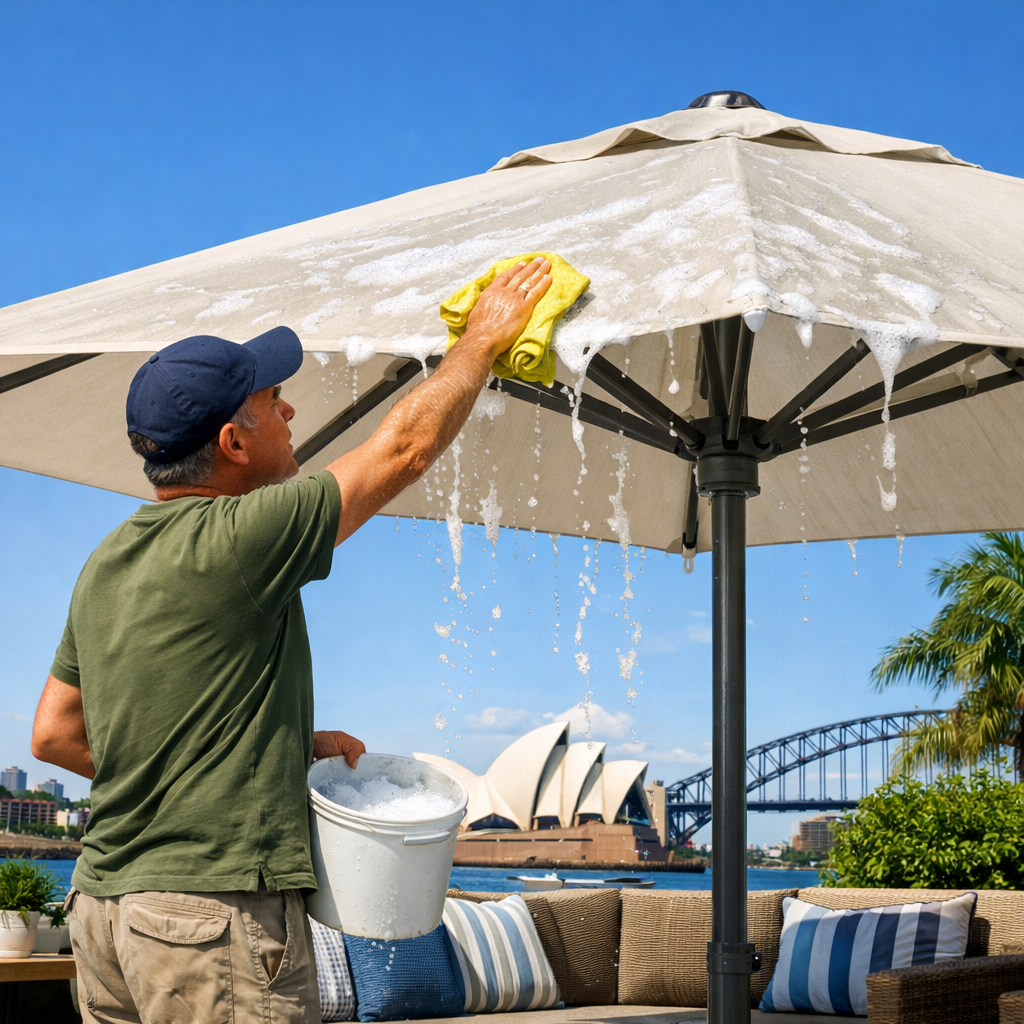
But registration isn’t the only thing you need to do. Regular maintenance keeps the umbrella within warranty terms. A guide from CasualFS advises cleaning the canopy with mild soap, checking lift cords each season, and securing the umbrella in high wind. Read the full maintenance guide. And always store the umbrella in a dry place when not in use, moisture can cause rust on the frame and void the warranty.
Here’s a simple 4‑step maintenance routine you can follow each spring:
- Wipe the canopy with a soft cloth and mild soap.
- Inspect all bolts and tighten any that feel loose.
- Lubricate the tilt mechanism with a silicone spray.
- Cover the base with a waterproof tarp if you won’t use the umbrella for several months.
And if you spot a crack in the canopy or a bent rib, report it early. Most warranties cover manufacturing cracks but not damage from neglect.
Bottom line:Proper registration and regular upkeep protect your premium outdoor umbrella warranty australia and extend the life of your shade.
Step 5: Use Warranty Claims and Extensions
Even the best umbrellas can develop a fault. When that happens, you need a clear path to a claim.
Blunt’s process is a good template. After you log in, you go to “My products”, select the umbrella, and click “Start a repair”. You’ll be asked for the purchase proof and a brief description of the issue. The company then arranges a repair centre. Their claim page shows the steps.
Key things to remember during a claim:
- Have your receipt handy, most warranties need it.
- Describe the fault clearly, “fabric tears at the seam”, not just “umbrella broke”.
- Don’t attempt DIY fixes unless the warranty says you can. Unauthorized repairs can void coverage.
Many brands also sell warranty extensions. Blunt adds two extra years on mechanical parts if you join their B Hub programme. That’s a simple way to stretch coverage from two to four years. Ask the dealer if a similar extension exists for Umbrello umbrellas, they often bundle an extra year for commercial customers.
When you get a repair, ask whether the warranty clock restarts. Most manufacturers say the original warranty period stays the same, so a repair doesn’t give you extra years.
“A clear claim process and optional extensions turn a warranty from a promise into a practical safety net.”
Bottom line:Follow the brand’s claim steps, keep good records, and consider extensions to get the most out of your premium outdoor umbrella warranty australia.
Conclusion
Getting the right premium outdoor umbrella warranty australia isn’t a mystery. Start by learning the warranty language, then check that the umbrella’s frame, canopy and mechanism meet high‑grade specs. Verify compliance with EN 13561 and Australian Consumer Law, register the product online, and stick to a seasonal maintenance routine. Finally, know how to make a claim and whether you can add extra years of cover.
Doing all this gives you peace of mind when you sit under your shade on a hot summer day. If you need help picking a model that meets these standards, you can talk to Umbrello’s shade specialists. They’ll match you with a premium umbrella that fits your space, budget and warranty expectations.
Remember, a solid warranty is as important as the umbrella’s design. It protects your investment, keeps your patio looking sharp, and lets you enjoy the outdoors without worry.
FAQ
What does a premium outdoor umbrella warranty australia usually cover?
A typical premium warranty splits coverage into frame and fabric. The frame, often aluminium or stainless steel, may be covered for five to six years against manufacturing faults. The fabric, usually a UV‑rated canopy, gets two to three years. Both parts are usually excluded for wind damage, normal wear, or improper installation. Always read the fine print to know the exact periods.
Do I need to register my umbrella to activate the warranty?
Yes. Most brands, like Blunt, require you to create an online account and log the purchase. Registration creates a record of the model and purchase date, which speeds up any future claim. Without it, you may still have ACL rights, but the brand’s extra warranty years could be lost.
Can I transfer the warranty if I sell my umbrella?
In most cases, no. The research shows both Umbrello and Shelta do not allow warranty transfer. That means the new owner would have to rely on the basic consumer guarantees, not the brand’s extended cover. Some brands may offer a transferable extension for an extra fee, ask before you buy.
How do I know if an umbrella meets Australian wind standards?
Look for a wind rating expressed in Beaufort numbers, ideally Beaufort 5 (21‑25 km/h). Brands that test in real‑world conditions, like Shadowspec, often list this rating. EN 13561 compliance is another strong indicator that the umbrella can handle typical Australian gusts.
What should I do if my canopy starts to fade or crack?
First, check if the issue is covered under the fabric warranty. If the damage is due to a manufacturing defect, the brand should repair or replace it. Keep the receipt and photos of the damage, then start a claim through the brand’s online portal. If the fade is from normal sun exposure, it’s usually not covered, but you can buy a replacement canopy.
Are there any extra costs when I make a warranty claim?
Most manufacturers cover parts and labour for faults that fall under the warranty. However, you may pay for shipping or any damage not covered (like wind‑related tears). Some brands, like Blunt, charge a small fee if the claim is outside the warranty period or the extended B Hub cover.
How can I extend my warranty beyond the standard period?
Many brands sell extensions or loyalty programmes. Blunt adds two extra years on mechanical parts if you join their B Hub membership. Ask your dealer if Umbrello offers a similar plan, commercial customers often get extra years for bulk purchases. Extensions are a good way to keep coverage aligned with the long lifespan of a premium umbrella.
What maintenance steps keep my warranty valid?
Regular cleaning of the canopy, tightening bolts, lubricating moving parts, and storing the umbrella in a dry place are essential. Document each seasonal check with photos and keep a log. This shows you’ve cared for the product, which can be required if a claim is disputed.
