


Outdoor Umbrellas
How to Choose a Coastal Outdoor Umbrella
Sep
Coastal sun and salt air can expose weak umbrella materials fast. The right choice starts with the site, then moves through fabric, frame, size, wind control and care. If you’re comparing outdoor umbrellas for an Australian coastal home, use these steps before you buy.
Step 1: Assess Your Coastal Site and Shade Requirements
To choose an outdoor umbrella for coastal homes in Australia, first study the exact spot where it will stand. A sheltered courtyard has different needs from a high deck beside the sea.
Spend time at the site at three points in the day. Note where the sun hits at mid-morning, noon and late afternoon. Look at the path of the shade across seating, doors and pool edges. A fixed umbrella may work well over a dining table, while a cantilever model can cover a lounge without putting a pole in the middle.
Write down these details before looking at products:
- The length and width of the area that needs shade.
- The height of nearby walls, roofs, screens or trees.
- The direction of sea winds and any wind tunnels between buildings.
- The surface type, such as concrete, pavers, timber decking or soil.
- Whether the umbrella must stay in place or move during the season.
Don’t judge wind exposure by one calm afternoon. Coastal weather can shift quickly. An umbrella near an open beach, bluff or upper-level balcony needs a more careful design review than one protected on three sides.
Also check the space above the canopy. A large umbrella may fit the floor area but clash with a roofline, gutter or pool enclosure when opened. Leave room to open and close it without scraping walls or catching nearby branches.
Umbrello can help match the shade layout to a residential site before you settle on a frame style. That discussion is useful when the space has several seating zones or an unusual deck shape.
For a rough sun check, ultraviolet levels indicate the potential for exposure at a given place and time. The UV guidance also notes that UV levels can remain high when the air feels cool. Shade reduces direct exposure, but it doesn’t replace sensible sun protection.
Step 2: Select Materials That Resist Salt Air, UV and Heat
Material choice often decides how well a coastal umbrella ages. Salt carried in sea spray can settle on metal parts, while strong sun can fade or weaken fabric over time.
Start with the frame. Aluminium is often suited to coastal use because it doesn’t rust in the same way ordinary steel does. Still, aluminium can corrode, especially when salt and dirt stay on joints or fasteners. Look for aluminium specified for coastal exposure, along with a finish made for outdoor exposure.
Steel can provide useful strength, but its coating must remain intact. Inspect the finish around bolts, hinges and moving parts. A small chip can expose the metal below. Timber has a warm look, yet it needs a clear care plan for moisture, heat and salt.
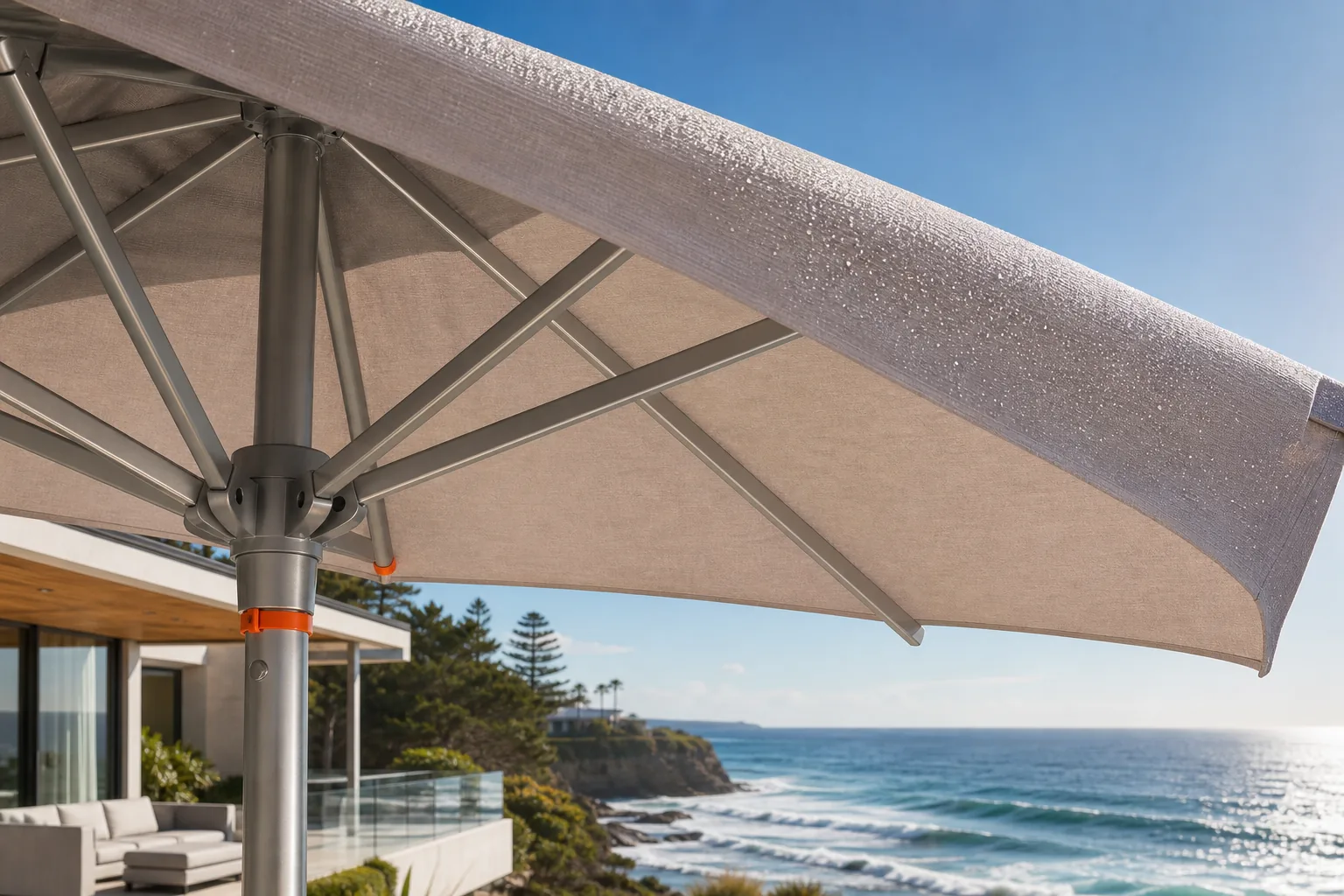
The canopy deserves equal attention. A premium canopy fabric with colour integrated through its fibres can help support colour retention over time. Polyester can suit some settings, but its long-term performance depends on the fabric grade, coating and exposure level.
Ask the supplier for the actual fabric specification. Useful questions include:
- What is the UV protection rating or UPF rating?
- Is the fabric solution dyed?
- How does the fabric handle mould, water and salt residue?
- Can the canopy be replaced without replacing the full frame?
- What warranty applies to fading, stitching and fabric failure?
High UV protection matters for people beneath the canopy, but it also helps slow damage to cushions and outdoor furniture. Corrosion is the deterioration of materials through chemical or electrochemical reactions. In plain terms, salt residue needs to be removed before it sits on metal for weeks.
Don’t assume a product is coastal-ready because it has a shiny finish. Ask whether the hardware, screws, pulley, crank and base fittings have the same level of protection as the main frame. Mixed metals can also create problems when moisture and salt connect them.
Eco claims need care too. Recycled fabric may reduce the use of new material, but that doesn’t tell you how it will perform in harsh sun or salty air. Request the fabric’s test data and warranty rather than choosing from a green label alone.
Step 3: Match the Umbrella Design and Size to the Space
Umbrella design should follow the way you use the area. The right size on paper can still feel wrong if the mast blocks a chair or the canopy misses the part of the deck you use most.
A market umbrella has a central support. It suits a table with a central opening or a compact seating area where the mast can sit between people. This design has a familiar footprint and can be easier to position in a small courtyard.
A cantilever umbrella places the mast beside the canopy. That leaves the space beneath the shade open, which helps around pool seating, outdoor lounges and daybeds. Many cantilever designs also allow rotation or tilt, so you can adjust the canopy as the sun moves.
A design attached to a suitable vertical structure may suit a narrow deck or balcony where there isn’t enough floor space for a base. It needs a sound fixing point, though. Brick, concrete and timber posts each need a suitable installation method, and a decorative wall is not automatically strong enough.
Measure the furniture footprint, not just the room. Add the space needed to pull out chairs and walk around them. Then compare that total with the canopy dimensions. A canopy that only covers the table may leave the chair backs in direct sun for much of the afternoon.
| Outdoor setting | Design to assess first | Size check | Main limitation |
|---|---|---|---|
| Compact dining table | Market umbrella | Cover the table plus pulled-out chairs | Central support remains in the work zone |
| Open lounge or pool edge | Cantilever umbrella | Cover the full seating footprint | Needs a strong base or fixed mount |
| Narrow deck or balcony | Structure-attached design | Check wall reach and canopy swing | Fixing points limit placement |
| Large hospitality terrace | Commercial shade system | Plan clear paths between shade zones | Wind and installation review become more important |
Umbrello’s range includes premium cantilever and large-format shade solutions for residential and commercial settings. When you compare options, ask for the open and closed dimensions, the base footprint and the usable shade area, not just the canopy width.
For example, a large square canopy may cover a deep lounge better than a round canopy with the same diagonal measurement. A cantilever may also cast shade beyond the base, but that extra reach increases the load on the support system.
Sketch the space to scale with the furniture in place. Mark the mast, base and canopy corners. This quick test can reveal a blocked path before delivery day.
Step 4: Verify Wind Performance, Anchoring and Safe Operation
Wind performance is a design question, not a promise that an umbrella can stay open in every gust. To choose a coastal umbrella with care, check the stated rating and the conditions attached to it.
Ask for the wind guidance in kilometres per hour, then ask how the figure was measured. Does it apply to a certain canopy size? Was the umbrella fixed into concrete, placed on a weighted base or installed on a deck? Those details change the result.
Look for features that manage wind rather than trap it. A vented canopy can let some air pass through. A double-top design may reduce pressure in certain conditions. Neither feature makes an open umbrella safe in severe weather.
The base and fixing method matter as much as the canopy. A base designed for sheltered use may suit a sheltered patio. An exposed deck may need a fixed anchoring method tied into the structure. In-ground mounts can look clean, but they need correct drainage and a stable footing.
Use this check before you approve an installation:
- Confirm the substrate and inspect it for cracks, movement or weak boards.
- Match the anchor system to the manufacturer’s instructions.
- Check that the open canopy clears walls, rails, lights and doors.
- Test the locking and opening controls before regular use.
- Set a clear rule for when staff or household members must close it.
On a coastal home, close the umbrella before a front arrives or when gusts begin. Don’t wait for the canopy to flap. Sudden movement can damage arms, hinges and the mount, even when the frame looks sound.
If you’re weighing a base for sheltered use against a fixed mount, Umbrello’s guide to cantilever umbrella base stability can help you compare the trade-offs around placement and support.
A wind rating is a guide, not permission to leave the umbrella open unattended. For a high deck, exposed headland or commercial site, ask a qualified installer to review the structure and the fixing plan.
Step 5: Check Maintenance, Warranty and Whole-of-Life Value
Maintenance should be part of the buying decision. An umbrella that needs a quick rinse each week may suit a coastal home better than one that looks good but has hard-to-reach parts.
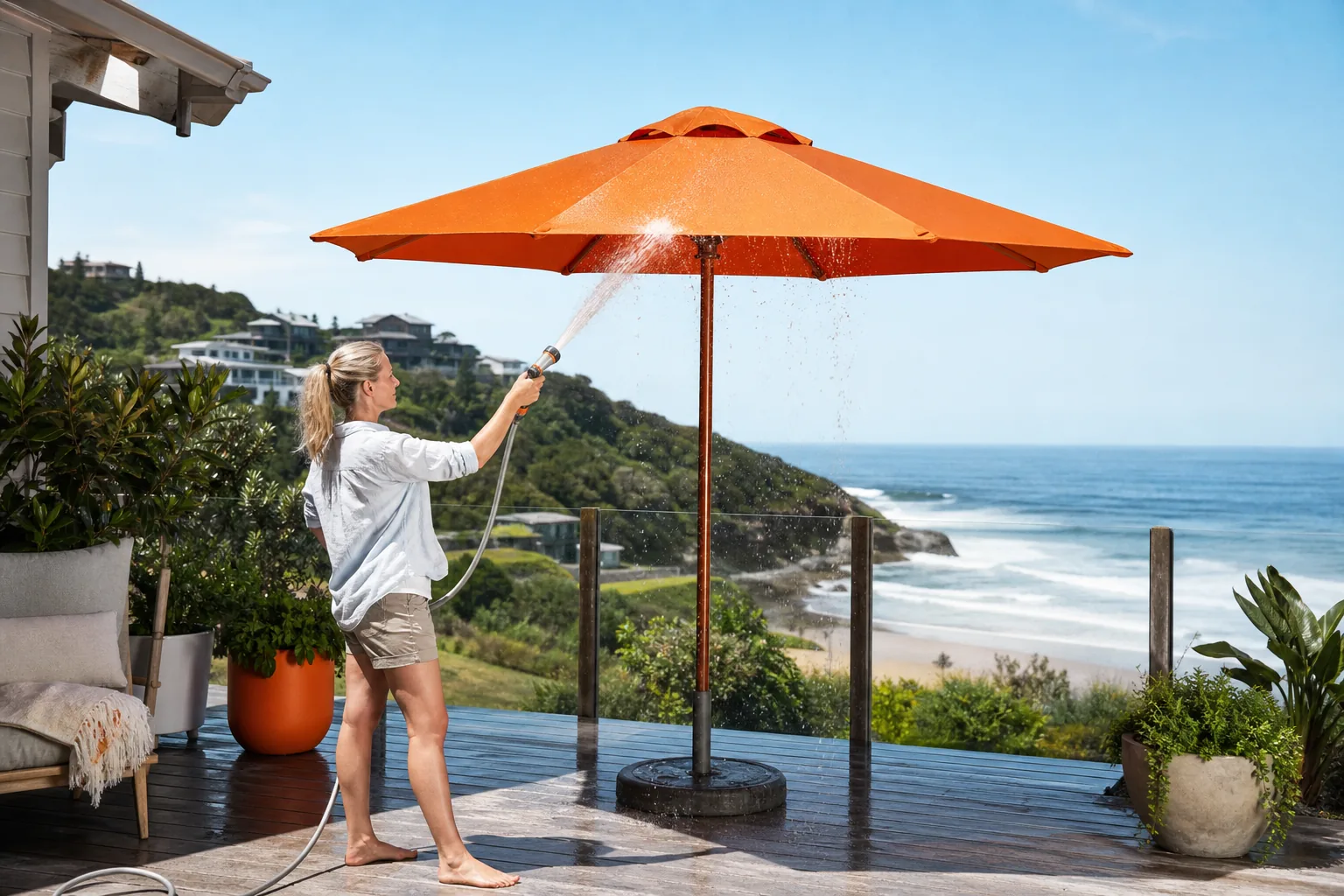
Ask how to clean the canopy without harming its finish. In many cases, loose salt and sand should be brushed away before a gentle wash. Follow the fabric maker’s instructions. Avoid harsh chemicals unless the care guide permits them.
Inspect the frame at the start and end of the warmer season. Look closely at:
- Bolts and fasteners where salt can collect.
- Joints, hinges and rotation points.
- Cracks, loose stitching or stretched fabric.
- Drainage around an in-ground mount.
- Base wheels, locks or plates that have shifted.
Let the canopy dry before folding it away. Trapped moisture can lead to mildew and stains. A protective cover can reduce dust and bird mess, but it shouldn’t replace cleaning.
Read the warranty in full. Separate terms may apply to the frame, mechanism, fabric colour and installation. Check whether the warranty depends on using an approved base or keeping service records. Also ask who supplies replacement canopies and how long common parts remain available.
Whole-of-life value is easier to judge when you list the parts that may need attention. A replaceable canopy can extend the useful life of a sound frame. A repairable crank may be more useful than a sealed mechanism that requires full replacement. A good warranty is helpful, but it can’t cover damage from misuse or leaving the umbrella open in unsafe wind.
Umbrello focuses on premium outdoor shade for homes, hospitality areas and project sites. If the umbrella will sit beside the sea, request a written care plan with the specification. That gives your household, facilities team or installer the same instructions from day one.
FAQ
What type of umbrella suits a coastal home?
A cantilever umbrella often suits an open lounge or pool area because its side post keeps the shade zone clear. A market umbrella can work well over a dining table. The right type depends on wind exposure, furniture layout, fixing surface and how often you need to move the shade.
What material is suitable for outdoor umbrellas near the sea?
A corrosion-resistant frame material with a suitable outdoor finish is a sensible option to assess near the sea. The canopy also needs strong UV protection and a fabric warranty. Check the fasteners, hinges and crank as well, since a corrosion-resistant frame does not protect poorly chosen hardware.
How do I stop a coastal umbrella from blowing away?
Use a base or fixed mount that matches the umbrella size and the site’s wind exposure. A weighted base may suit a sheltered patio, while an exposed deck may need structural fixing. Close the canopy before gusts rise, even when the product has a stated wind rating.
How large should an outdoor umbrella be?
Choose a canopy that covers the furniture plus the space needed to sit and walk around it. Measure with chairs pulled out, not pushed under the table. For coastal homes, also check the closed size, base footprint and clearance from rails, doors and roof edges.
How often should I clean a coastal outdoor umbrella?
Rinse or clean the umbrella when salt or sand builds up, then inspect it through the season. Coastal exposure varies, so there is no single schedule for every home. Follow the fabric instructions, dry the canopy fully and check metal joints before storing it.
Conclusion
Choose the umbrella that fits your site first, then confirm its fabric, frame, wind guidance, mount and care needs. For a coastal property, request a written specification and installation plan from Umbrello before ordering. That one step can prevent a poor fit and make long-term upkeep much clearer.
