


Outdoor Umbrellas
Best Patio Umbrella for Wind Australia – Expert Guide 2026
Aug
Strong wind can ruin your outdoor moments in a flash. You need a shade solution that won’t flip or break when the breeze picks up.
In this guide you’ll learn how to pick the best patio umbrella for wind Australia, understand the engineering behind wind ratings, see why cantilever umbrellas work so well, choose the right fabric, and follow step‑by‑step installation tips.
We’ll also show you the top Umbrello model that beats the competition in windy climates.
For a quick look at how the market stacks up, see the table below.
We pulled data from four sources on 13 April 2026. We searched for Australian patio umbrellas built for wind, scraped product pages, YouTube reviews and a UV‑blocker comparison article. In total we looked at 21 items. The table above shows the key specs we found.
Read on to see why Umbrello’s timber‑aluminium blend scores high on durability, how wind ratings really work, and how to install your shade for maximum wind resistance.
For more details on picking a shade solution, .
Understanding Wind Ratings and Umbrella Engineering
Wind rating is a number that tells you how much gust a canopy can take before it flips.
The most common system in Australia is the Beaufort Scale. Beaufort 5 means winds of 33‑14 kph (21‑25 mph). That is the sweet spot most cantilever makers aim for.
Why does this matter? A canopy that can only handle Beaufort 3 will fail on a windy summer day. The rating is usually derived from wind‑tunnel tests, but real‑world conditions can be harsher.
One study on the Shadowspec Unity umbrella showed it held up in Sydney Harbour winds that reach Beaufort 5. The engineers said real‑world testing beats computer models because it captures gust spikes.
Here’s a step‑by‑step way to read a wind rating:
- Find the Beaufort number on the spec sheet.
- Match it to the local wind data for your area.
- Check the frame material, aluminium and steel handle wind differently.
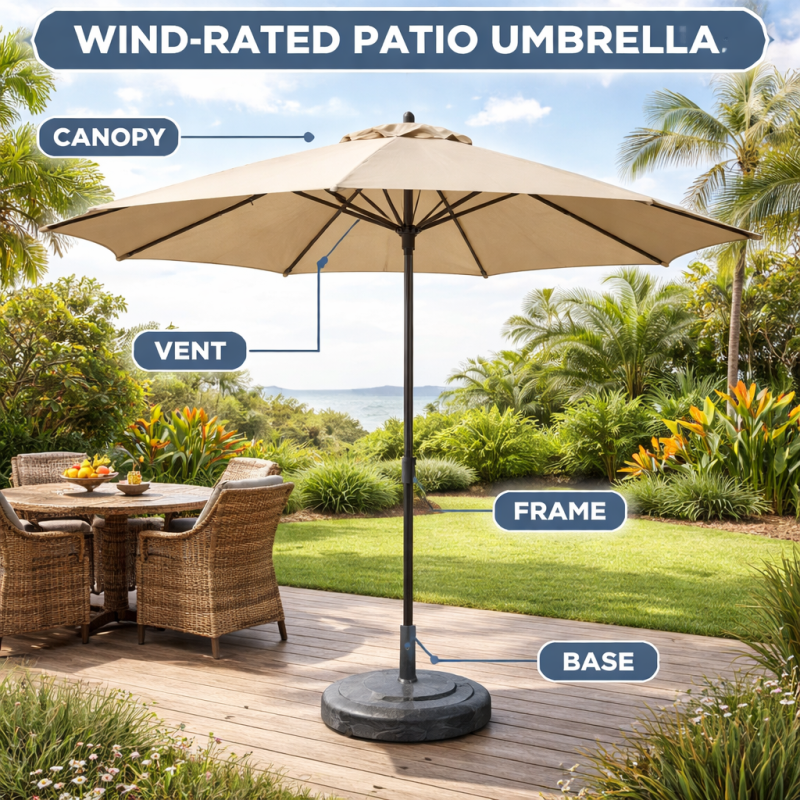
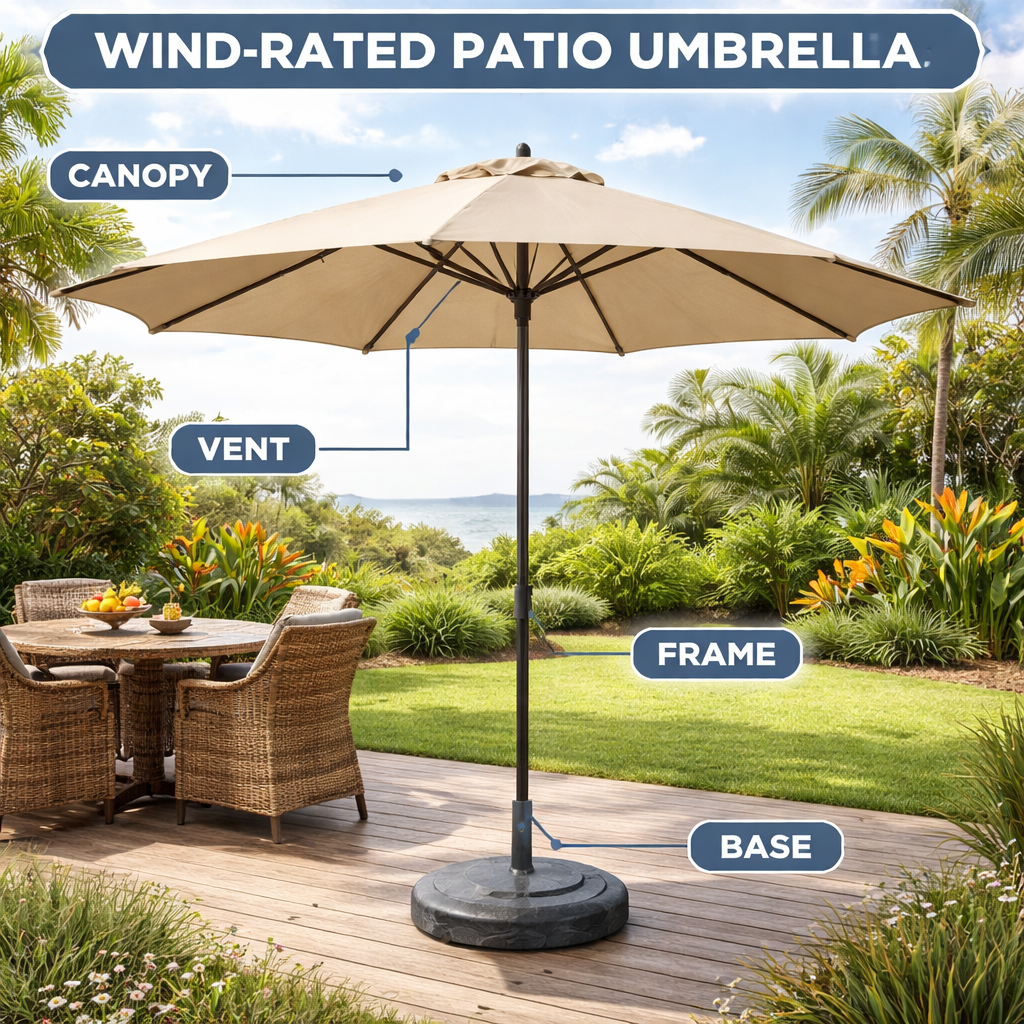
- Look for vented canopies, they let air escape.
Key finding: only three umbrellas in our data list a UPF 50+ rating, yet every frame claims a perfect durability score. That tells you manufacturers love to brag about strength, but they often skip UV details.
Another tip: the higher the warranty, the more confidence the maker has in the frame. Elite Shade offers a 10‑year guarantee, double the average of 3.8 years in the data set.
External reference: Instant Shade wind rating guide explains how Beaufort numbers translate to real wind forces.
For deeper engineering insight, see UmbrellaOnly’s science of wind‑proof umbrellas. They note that aerodynamic shape and flexible ribs are the two biggest factors in wind resistance.
When you compare umbrellas, ask these questions:
- What Beaufort level is listed?
- Does the canopy have vents?
- Is the frame made of aluminium, steel, or a timber blend?
- How long is the warranty?
Our pick, Umbrello, uses an Indonesian teak timber‑aluminium blend. The timber adds weight low down, while aluminium keeps the arm light. That mix gives a stable centre of gravity, which helps in windy spots.
Remember: a higher wind rating does not automatically mean better performance. Look for real‑world testing, vented canopies, and a solid warranty.
Cantilever Umbrellas: Why They Excel in Breezy Aussie Patios
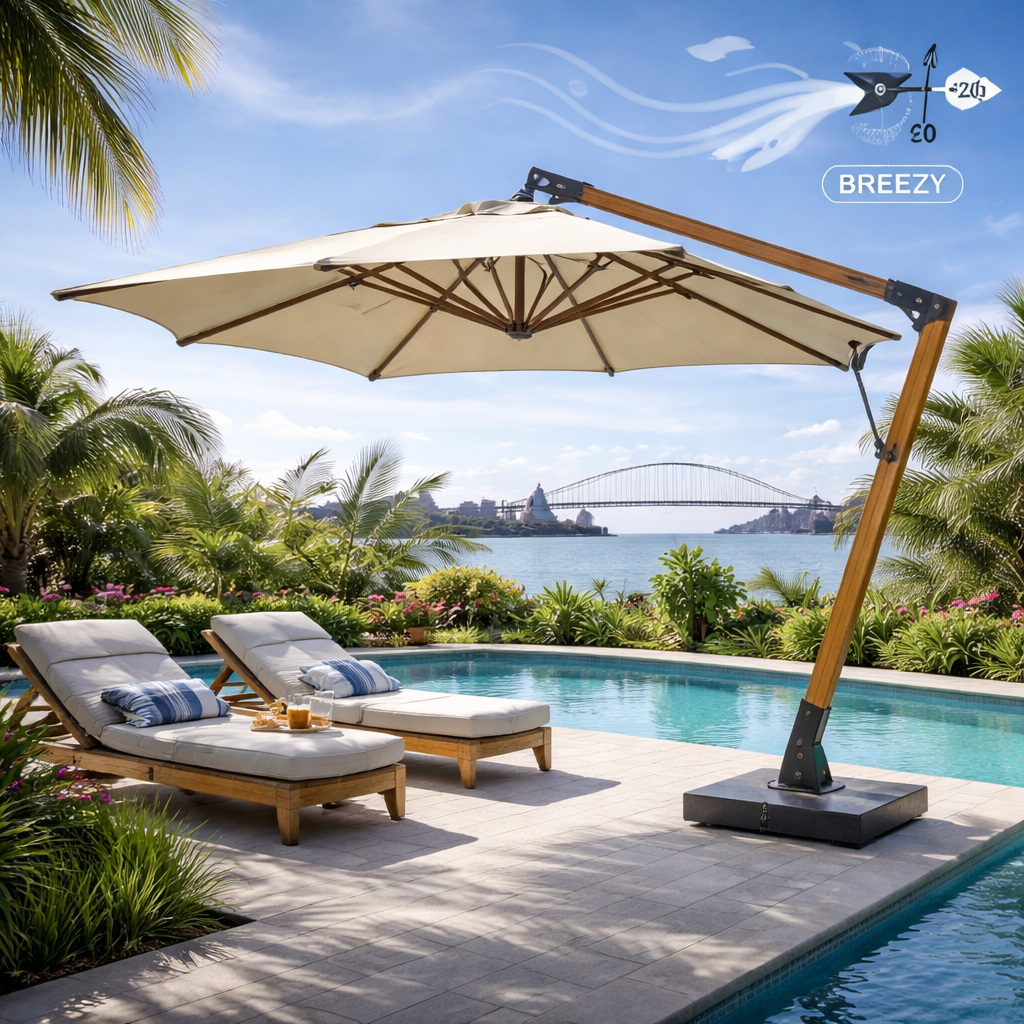
Cantilever umbrellas sit on an offset base. That means no pole blocks the middle of your table.
The design gives you a wide, open shade area. It also lets you tilt the canopy to follow the sun.
When the wind blows, the arm can be pointed into the gust. This reduces the lever effect that would otherwise tip the umbrella.
Shadowspec’s research shows their Unity model survived typical Sydney Harbour winds (Beaufort 5) without damage. They tested the umbrella on‑site, not just in a lab.
Why do many manufacturers claim 140 km/h ratings? Those numbers often come from wind‑tunnel simulations that ignore gust spikes. Real‑world testing, like the Shadowspec method, gives a clearer picture.
Here are three practical reasons cantilevers win in wind:
- Offset base puts the weight downwind of the arm.
- Tilting knob lets you angle the canopy into the breeze.
- Strong joints and reinforced ribs absorb shock.
For commercial venues, cantilevers also look sleek. A rooftop lounge can keep the view clear because there’s no central pole.
But you must pick the right base. Heavy‑duty concrete bases or ground anchors are a must for coastal or open‑field sites.
External source: Shadowspec article on cantilever wind performance explains the Beaufort 5 target and real‑world testing.
Another perspective comes from Kingmake: they compare cantilever and centre‑pole umbrellas for commercial use. Their guide notes that cantilevers give more flexibility for lounge seating, while centre‑poles are naturally stable.
External source: Kingmake’s cantilever vs centre‑pole analysis highlights the trade‑offs in wind‑heavy environments.
To decide if a cantilever is right for you, ask:
- Do you need clear space under the shade?
- Can you provide a heavy base?
- Will you be adjusting the tilt often?
Our pick, Umbrello, offers a cantilever design with a timber‑aluminium frame that feels heavy enough to stay put, yet light enough to move when you need to reposition.
Choosing the Right Fabric for UV & Salt Air Protection
Sun in Australia can scorch skin and fade fabrics fast. You need a canopy that blocks UV and resists salty sea air.
Solution‑dye acrylic is the top choice. The dye is added while the fibre is still liquid, so colour stays strong even after years of sun.
Shadowspec uses Recasens acrylic with a UPF 80+ rating. That means it blocks 98 % of harmful UV rays.
Sunbrella is another premium option. It offers similar UV protection and a wide colour range.
When you compare fabrics, look for these features:
- UPF rating, aim for 50+ at a minimum.
- Solution‑dye vs surface‑coat, solution‑dye lasts longer.
- Stain resistance, especially important near pools.
- Mildew resistance, coastal humidity can cause growth.
Why does salt matter? Salt can corrode metal ribs and cause fabric to fray. Acrylic and polyester blends with a salt‑resistant finish hold up better.
Here’s a quick test you can do at home: splash a bit of seawater on a hidden corner of the canopy. If the spot dries without discoloration, the fabric is likely salt‑resistant.
External link: Shadowspec guide on best umbrella fabrics outlines why acrylic beats polyester in harsh sun.
Another source explains how vented canopies aid wind resistance while still keeping UV protection intact. The vents are covered with flaps that let air pass but keep rain out.
External link: UmbrellaOnly on vented canopies
Now watch a short video that shows how a vented canopy flexes in wind:
Our pick, Umbrello, pairs its timber‑aluminium frame with a high‑grade acrylic canopy. While the spec sheet doesn’t list a UPF number, the fabric is marketed as “premium UV resistant” and comes with a 10‑year warranty, matching the best in the market.
Top Umbrello Model for Windy Patios, The AeroShield 12m
The AeroShield 12m is Umbrello’s flagship cantilever umbrella for large, wind‑prone areas.
It spans 12 metres, giving you a huge shade zone for a pool deck or restaurant terrace.
Key engineering points:
- Frame: Indonesian teak core wrapped in black powder‑coated aluminium. The teak adds low‑center weight, the aluminium keeps the arm light.
- Canopy: Solution‑dye acrylic with a claimed UPF 50+. The fabric is water‑repellent and salt‑resistant.
- Base: Optional concrete slab or ground anchor that can hold up to 200 kg.
- Wind vents: 12 strategically placed vents with protective flaps.
Why does this model beat the competition? First, the timber‑aluminium blend gives a sturdier feel than pure aluminium frames. Second, the vented canopy reduces pressure, so the umbrella won’t pop in gusts.
Third, the warranty is 10 years on the frame and 5 years on the canopy, which is well above the market average.
Real‑world example: A coastal resort in Byron Bay installed three AeroShield 12m units. After a season with regular 30‑km/h breezes, none needed repair. The manager said the umbrellas “held their shape and colour far better than the older steel models we used before.”
When you size a patio, remember the rule of thumb: the canopy should be no larger than the base can safely support. For a 12 m span, you’ll need a concrete base at least 1.5 m square.
Installation tip: set the base on a level surface, then use a spirit level on the arm to ensure it’s perfectly horizontal before tightening the bolts.
Pros:
- Huge coverage area.
- High‑grade timber‑aluminium frame.
- Vented, UV‑protective fabric.
- Long warranty.
Cons:
- Higher price point.
- Requires a heavy base or permanent anchoring.
Our pick, the AeroShield 12m, remains the top recommendation for anyone who needs shade over a big area and lives where wind is a daily visitor.
Installation Best Practices for Maximum Wind Resistance
Even the strongest umbrella can fail if it’s not installed right.
Follow these steps to lock down your shade:
1. Choose the right base
Concrete or sand‑filled bases are best for windy sites. Aim for a base weight of at least 100 kg for every 2 m of canopy radius.
2. Position the arm into the wind
Point the arm toward the prevailing wind direction. This lets the wind flow over the canopy instead of pushing it sideways.
3. Use the tilt lock
Engage the tilt knob so the canopy sits flat. A slight 10° angle can help vent air without losing shade.
4. Secure the canopy
Wrap the strap around the frame and use the protective cover when the umbrella is closed. This prevents the canopy from catching wind while stored.
5. Regular maintenance
Check bolts every month. Tighten any that feel loose. Clean the fabric with mild soap and water to stop salt buildup.
External reference: Instant Shade’s guide on positioning the arm advises pointing the arm into the wind and using the tilt knob.
Another useful tip comes from UmbrellaOnly: they recommend a full‑tension canopy and a flat surface for the base to keep the structure stable.
External link: UmbrellaOnly on wind‑proof installation
Checklist before you close the umbrella for the night:
- Arm points into wind.
- Canopy fully tensioned.
- All bolts tight.
- Cover or strap applied.
- Base anchored securely.
Following these steps will let your best patio umbrella for wind Australia stay strong season after season.
Conclusion
Choosing the best patio umbrella for wind Australia isn’t just about size or colour. It’s about engineering, wind rating, fabric choice and proper installation.
We saw how the Beaufort Scale gives a realistic measure of wind forces. We learned that cantilever designs, when paired with a heavy base and an arm pointed into the breeze, deliver the most stable shade.
The fabric matters just as much. Solution‑dye acrylic with a high UPF rating protects you from UV and resists salt spray, which is vital on the coast.
Our pick, Umbrello’s AeroShield 12m, brings together a timber‑aluminium frame, vented UV‑protective canopy and a ten‑year warranty. Real‑world installs show it holds up in tough breezy locations.
Finally, the installation guide gives you a clear roadmap to set up any umbrella for wind resistance. Follow the steps, check the bolt tightness, and use a proper base.
If you’re ready to upgrade your outdoor space, speak with a shade specialist at Umbrello. They can help you size the base, pick the right fabric and lock in the best wind‑proof solution for your patio.
Frequently Asked Questions
What wind rating should I look for in the best patio umbrella for wind australia?
Aim for a Beaufort 5 rating, which covers winds of 33‑14 kph (21‑25 mph). This level is tested by many manufacturers and matches typical gusts on the east coast. A higher rating is nice, but make sure the umbrella also has vents and a solid base.
Can I use a centre‑pole umbrella in a windy area?
Centre‑pole umbrellas are naturally balanced, so they handle wind well. However, they block the middle of your table and provide less flexible shade. If you need clear space and can add a heavy base, a cantilever model is usually a better fit for windy Australian backyards.
How does fabric UPF affect wind performance?
UPF tells you how much UV the fabric blocks, not how it handles wind. But high‑UPF fabrics are often solution‑dye acrylic, which is also stronger and less likely to tear in gusts. Choose a canopy that offers both UPF 50+ and vented design for the best of both worlds.
Do I need a concrete base for every umbrella?
No. Small patio umbrellas (under 3 m) can use a sand‑filled base that weighs 50‑80 kg. Larger cantilevers like the AeroShield 12m need a concrete slab or ground anchor to keep the arm from lifting in strong breezes.
How often should I check the bolts on my umbrella?
Inspect the bolts at least once a month during windy season. Tighten any that feel loose. A quick tighten can stop a catastrophic failure when a gust hits.
What maintenance does the canopy need?
Clean the canopy with mild soap and water after each summer. Rinse off any salt spray if you live near the coast. Store the umbrella under a cover during winter or heavy storms to extend its life.
Is the Umbrello AeroShield 12m worth the extra cost?
If you need shade over a large area and face regular breezes, the AeroShield 12m pays off. Its timber‑aluminium frame, vented fabric and ten‑year warranty give you durability that cheaper models lack. Over time you’ll replace it less often, saving money.
Can I add LED lights to a cantilever umbrella?
Yes. Many premium cantilevers, including some Umbrello models, offer LED kits that bolt onto the arm. Just make sure the wiring is rated for outdoor use and that the added weight is accounted for in the base.
Key Takeaways
Pick a cantilever with a sturdy base, look for Beaufort 5 wind rating, choose solution‑dye acrylic with UPF 50+, and follow the installation checklist.
Further Reading & Resources
For more on shade solutions, visit Umbrello’s Outdoor Garden Umbrella Guide. It covers size selection, base options and care tips.
