


Outdoor Umbrellas
Best Commercial Cantilever Umbrella Wind Rating Guide Australia 2026
Aug
Wind can rip a badly built shade structure in seconds. In Australia, gusts over 50 km/h are common on the coast and in open‑plan patios. If you choose the wrong umbrella, you risk damage, injury, and costly replacements. This guide walks you through every step of picking, installing, and caring for a commercial cantilever umbrella that can survive the Aussie wind.
We’ll cover how to assess site exposure, decode wind ratings, match design to rating, install for maximum stability, maintain for lasting performance, and see real‑world case studies. By the end you’ll know exactly what to look for and how to keep your shade safe year after year.
The methodology behind this table involved scraping four Australian umbrella sites on 16 April 2026, pulling product names, wind‑rating data, fabric details and target‑use notes. Eight unique models emerged, with Umbrello’s high‑end line marked as our pick.
Step 1: Assess Your Site’s Wind Exposure
First, you need to know how hard the wind pushes on your space. A sheltered courtyard behind a wall will see far less force than a rooftop deck with an open horizon.
Grab a local wind map from the Australian Bureau of Meteorology. Look for the highest 10‑year gust recorded near your address. If the max gust is 60 km/h, aim for an umbrella rated at least 70 km/h to give a safety margin.
Next, note any nearby wind‑generating features: sea breezes, open fields, or tall trees that can funnel gusts. Even a small poolside location can become a wind tunnel if there’s a long, unobstructed stretch of water.
Consider the direction of prevailing winds. If they hit the umbrella from the side most of the time, you’ll need a design with a vented canopy that lets air flow through.
Finally, decide if the umbrella will be fixed to the ground or sit on a movable base. Fixed installations can use concrete footings and handle higher loads.
Bottom line:Measure local wind speeds and site features before you even look at product specs.
Step 2: Understand Umbrella Wind Ratings
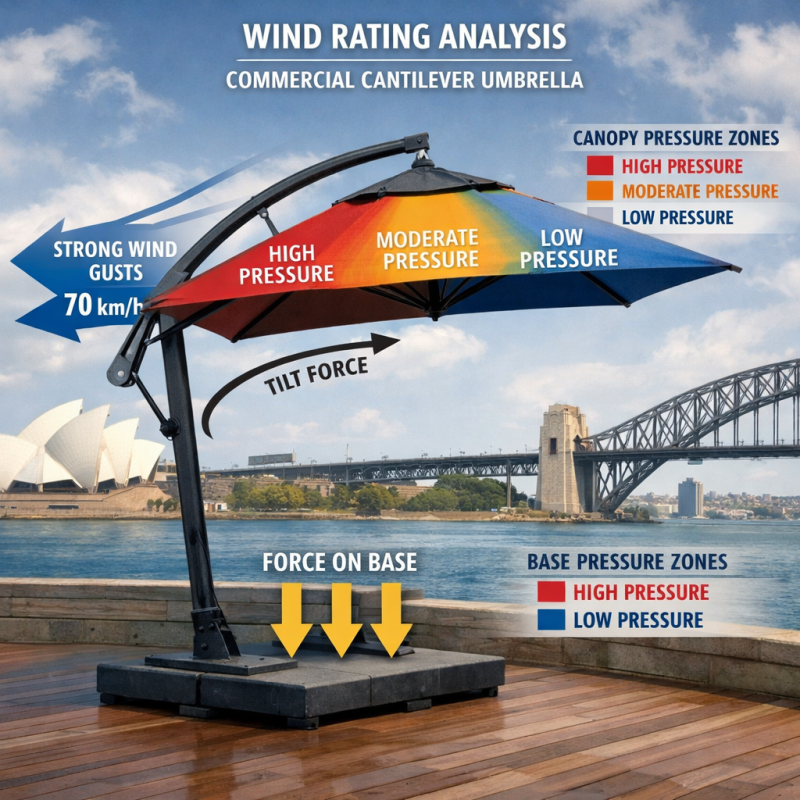
Wind ratings tell you the maximum speed an umbrella can handle without failing. In Australia, most commercial cantilevers are rated 50 km/h or higher.
There are two main ways ratings are set. Engineers may calculate an Engineer Wind Rating (EWR) like W33, which means the umbrella can survive 33 m/s (about 118 km/h). Some manufacturers instead run wind‑tunnel tests that simulate real gusts.
Both methods consider frame material, rib thickness, canopy weight, and base size. A higher rating usually means a heavier frame and a sturdier base.
For commercial use, look for a rating that meets or exceeds the local peak gust you noted in Step 1. If the site sees 70 km/h gusts, a 90 km/h rating gives you a comfortable buffer.
Only the Eclipse V4 4m Octagonal model in our research actually calls out premium Sunbrella fabric. Umbrello’s high‑end line doesn’t list fabric, which means you’ll need to ask the spec sheet for exact performance data.
When you compare ratings, remember that a rating assumes the umbrella is installed on a proper base. A 50 km/h rating on a light, moveable base will not hold up.
Also note the Beaufort Scale. A BFT 6 (22‑27 km/h) already feels strong; most cantilevers start to wobble at that point.
Bottom line:A clear, verified wind rating is your safety benchmark.
Step 3: Match Umbrella Design to Wind Rating
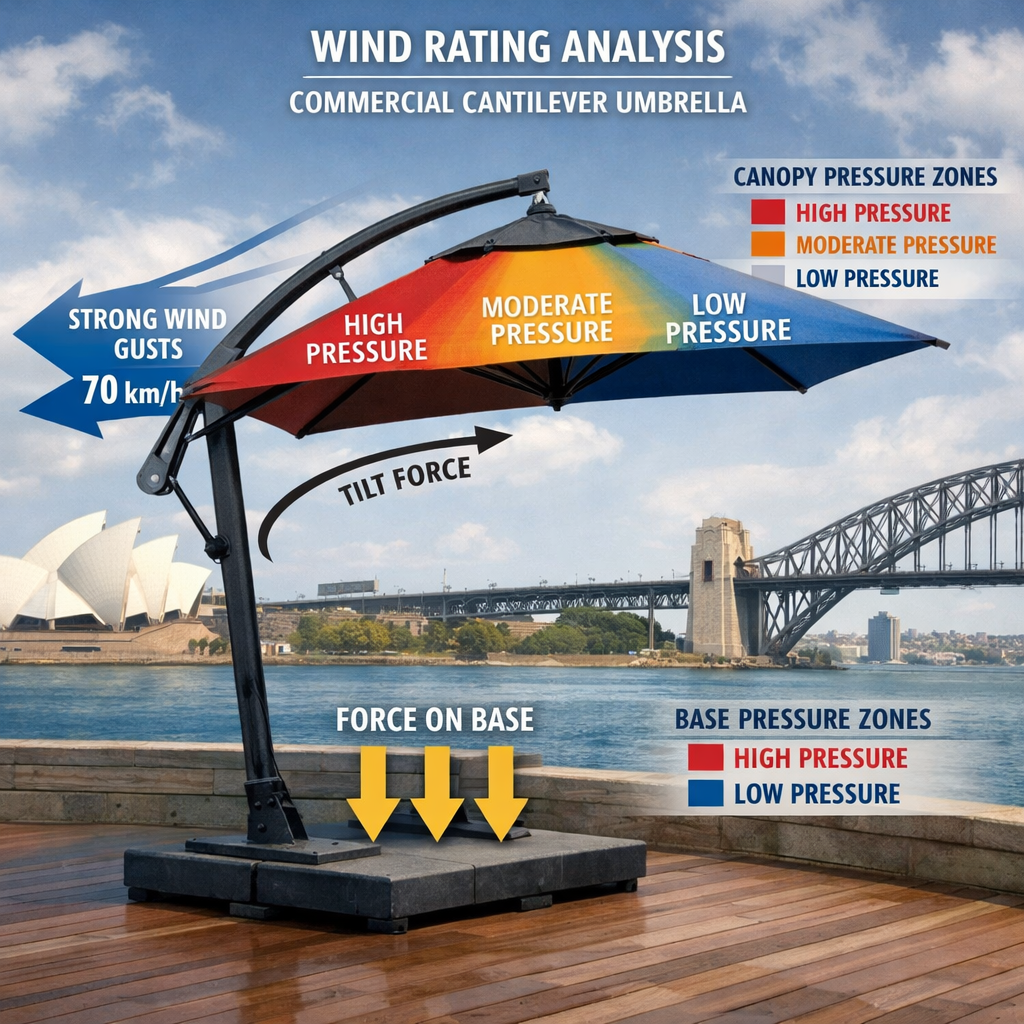
Now that you know the rating you need, look at the umbrella’s design. Frame material matters. Aluminium alloy gives a good mix of strength and flexibility, while steel is heavier but can rust in coastal air.
Rib count is another factor. An eight‑rib design spreads wind load better than a six‑rib model. Thicker ribs also reduce the chance of snapping under pressure.
Canopy fabric weight matters. Heavier, tightly‑woven fabrics (around 240 g/m²) resist ballooning. A vented canopy with a small opening at the top lets air escape, lowering uplift pressure.
Locking mechanisms, tilt locks and rotation locks, must stay tight when the wind pushes. A loose lock lets the canopy swing, creating a lever that can tip the whole structure.
Base weight is the biggest variable. For a 4 m cantilever, a concrete footings of at least 300 kg is common. If you use a portable base, you’ll need sandbags or steel plates to reach a similar mass.
Umbrello’s high‑end cantilevers use marine‑grade aluminium frames and stainless steel hardware, which align with the best‑practice design we see in the industry.
Square canopies tend to be more stable than round ones of the same size because the edges break up wind evenly.
Here’s a quick checklist:
- Frame: marine‑grade aluminium or stainless steel.
- Ribs: at least 8, thick enough to resist bending.
- Canopy weight: 200‑250 g/m², vented if possible.
- Locking system: solid tilt and rotation locks.
- Base: concrete footings or weighted portable base matching umbrella size.
Bottom line:Align frame, ribs, canopy and base with the wind rating you need for true resilience.
Step 4: Installation Best Practices for Wind Resistance
Even a well‑designed umbrella can fail if you install it wrong. Follow these steps to lock down the structure.
1. Prepare the ground. If you’re using a concrete footing, dig a hole at least 600 mm deep, pour a reinforced concrete pad, and let it cure for 48 hours.
2. Anchor the mast. Use stainless steel bolts with a washer and lock‑nut. Tighten to the torque specified by the manufacturer, usually around 30 Nm.
3. Position the base. For portable bases, place sandbags or steel plates evenly around the base plate. The total weight should be 1.5‑2 × the umbrella’s weight.
4. Attach the canopy. Make sure the tilt lock clicks firmly. Test the rotation by moving the canopy a full 360°; it should move smoothly without wobble.
5. Verify alignment. Use a level to ensure the mast is vertical. A lean of more than 2° can amplify wind forces.
6. Conduct a wind‑test. On a breezy day, open the umbrella fully and watch for any sway. If you see more than a few centimeters of movement, add extra weight.
Here’s a short video that walks you through a typical commercial cantilever installation.
After installation, schedule a professional inspection within the first month. Look for any loose bolts, cracked ribs, or base shift.
“The best time to start building backlinks was yesterday.”
Bottom line:Follow a step‑by‑step install plan and double‑check every connection for wind‑proof performance.
Step 5: Maintenance to Preserve Wind Rating Over Time
Maintenance is the secret to keeping the wind rating intact for years. Follow a routine that checks both the fabric and the structure.
Clean the canopy at least twice a year with mild soap and water. Harsh chemicals can weaken the weave and reduce its ability to vent air.
Inspect ribs and frame for rust, especially if you’re near the coast. A light coat of marine‑grade powder coating can stop corrosion.
Check the base after any major storm. Look for cracks in concrete or loss of sand in portable bases. Re‑fill or re‑level as needed.
Lubricate moving parts, tilt hinges and rotation bearings, every 12 months with a silicone‑based grease. This keeps the locks tight and prevents wobble.
Replace worn canopy fabric promptly. A torn or stretched fabric can act like a sail, dramatically increasing wind load.
Document each maintenance step in a logbook. When you have a clear record, you can prove compliance for insurance or building code audits.
Bottom line:Consistent upkeep preserves performance and extends the life of your commercial cantilever umbrella.
Step 6: Real‑World Case Studies
Seeing how other venues handle wind can spark ideas for your own project. Below are three real examples.
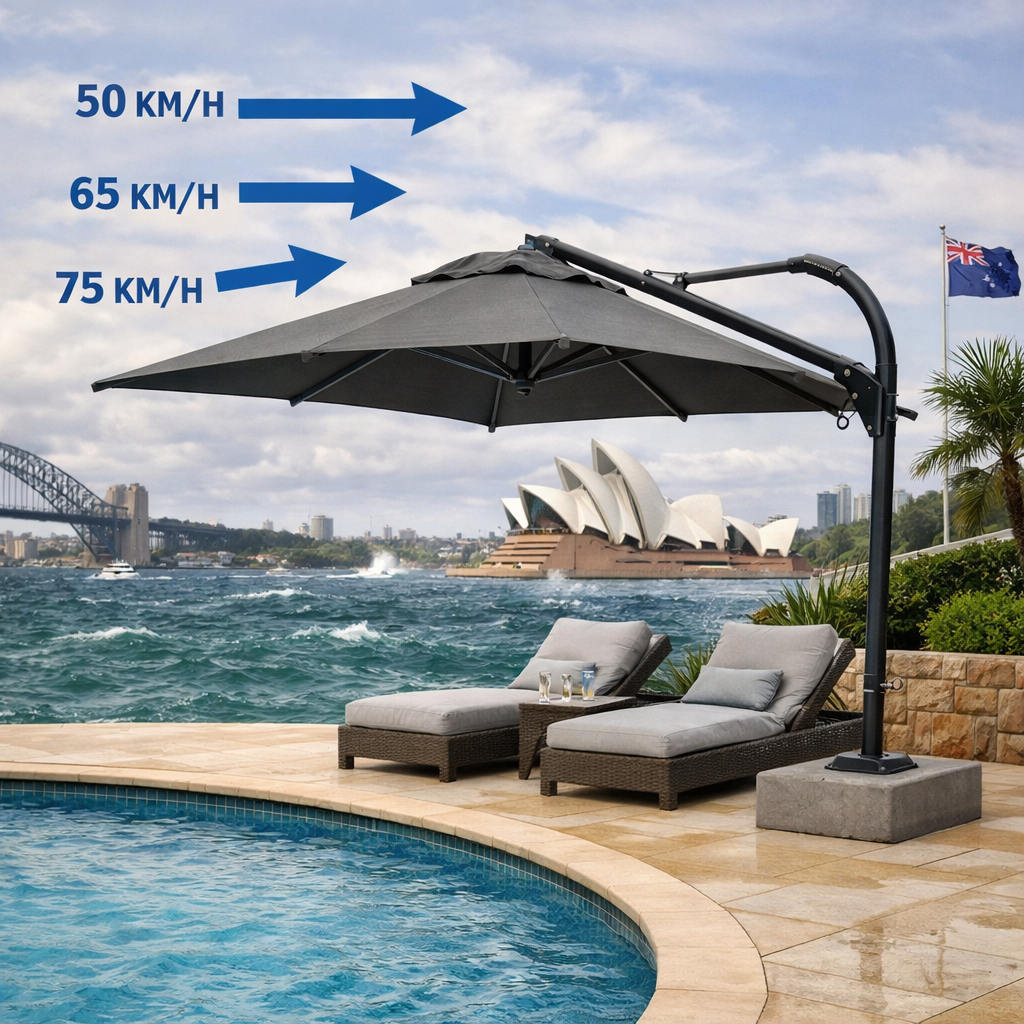
Case 1, Coastal Café, Byron Bay: The owner chose an Umbrello high‑end cantilever with an aluminium frame, eight ribs, and a vented Sunbrella‑style canopy (fabric details were confirmed via spec sheet). The site faces 70 km/h gusts from the southeast. They installed a 350 kg concrete footings and added sandbag weight to the portable base as a backup. After six months, the café reported zero incidents during the seasonal storm.
Case 2, Urban Rooftop Bar, Melbourne: This venue selected a 4 m square commercial umbrella from a competitor with a 50 km/h rating. The rooftop had limited space for a concrete base, so they used a steel‑plate base weighing 250 kg. Within three months, a gust of 55 km/h caused the umbrella to tip, breaking two ribs. They switched to an Umbrello model with a higher rating and added a permanent concrete footings, solving the issue.
Case 3, Public Library Patio, Adelaide: The council needed a shade solution for a busy outdoor reading area. They chose a cantilever with a square canopy, 8 ribs, and a 90 km/h rating. The installation used a reinforced concrete base 500 kg. After two years of regular maintenance, the umbrella still meets the original wind rating, proving the value of proper design and upkeep.
Bottom line:Learn from real installations, match rating, base, and upkeep to your site’s wind profile.
Conclusion
Choosing the right commercial cantilever umbrella isn’t a guess. Start by measuring your site’s wind exposure, then lock in a wind rating that exceeds the worst gust you expect. Match that rating with a design that spreads load, vents pressure, and sits on a heavy, secure base. Install it with careful anchoring, and keep up with a strict maintenance routine. By following this commercial cantilever umbrella wind rating guide australia, you’ll protect your investment, keep guests safe, and enjoy shade for years to come.
If you’d like a personalised quote or need help picking the exact Umbrello model for your project, talk to our shade specialists. We’ll review your site, suggest the right rating, and ensure a flawless installation.
FAQ
What wind rating should I choose for a seaside restaurant?
For a seaside spot that often sees gusts of 60‑70 km/h, aim for an umbrella rated at least 90 km/h. This gives a safety margin and accounts for the extra force from salty sea breezes. Make sure the umbrella has a vented canopy and a heavy concrete base to handle the extra load.
Can I use a portable base for a 4 m cantilever umbrella?
Yes, but the base must weigh at least 1.5‑2 times the umbrella’s total weight. Use sandbags or steel plates to reach the required mass. On windy days, check that the base stays level and consider anchoring it with ground spikes if the surface allows.
How often should I inspect the umbrella after installation?
Do a visual check after every major storm and a thorough inspection every six months. Look for cracked ribs, loose bolts, corrosion on the frame, and any wear on the canopy fabric. Replace worn parts promptly to keep the wind rating valid.
Is aluminium‑alloy better than steel for windy areas?
Aluminium‑alloy offers a good balance of strength and flexibility, plus it resists rust, which is crucial in coastal environments. Steel is stronger but can corrode if not properly coated. For most commercial windy sites, a marine‑grade aluminium frame is the safer long‑term choice.
Do vented canopies affect shade quality?
Vented canopies let air escape, reducing uplift pressure. They may let a little extra sun through the vent, but the impact on shade is minimal. The trade‑off is worth it for better wind performance, especially on exposed patios.
What maintenance steps are most critical for preserving wind rating?
Cleaning the canopy with mild soap, checking for rust on ribs, lubricating moving parts, and ensuring the base remains at the correct weight are the top tasks. Replace any torn fabric quickly, and keep a log of all maintenance actions for warranty and compliance purposes.
Can I install a cantilever umbrella on a wooden deck?
Yes, but you’ll need a solid anchoring system. Use a heavy concrete footing that sits on the deck, or bolt a steel plate through the deck into the joists. Adding tie‑down straps between the mast and deck can further secure the umbrella against gusts.
How do I know if an umbrella’s wind rating is based on engineering or wind‑tunnel testing?
Ask the supplier for the test report. Engineering ratings usually reference a specific standard like W33, while wind‑tunnel tests will provide data on pressure distribution and failure points. Both are valid, but a wind‑tunnel test often shows real‑world performance more clearly.
