


Outdoor Umbrellas
How to Spec Shade Structure for Council Park Australia
Aug
Got a council park that needs shade? You’ve probably hit a wall of paperwork, specs, and endless choices. This guide walks you through how to spec shade structure for council park Australia, from the first council chat to the final approval sheet. You’ll see real‑world steps, practical tips, and why Umbrello’s engineering‑grade umbrella system should be your go‑to.
We’ll pull data from a recent Umbrello analysis that shows an architectural shade solution delivers a 5 % openness factor, four times tighter than the typical 20 % spec, and uses 20 MIC anodised aluminium, polished stainless steel and Shade View 300 fabric for max durability.
Step 1: Assess Council Requirements & Site Conditions
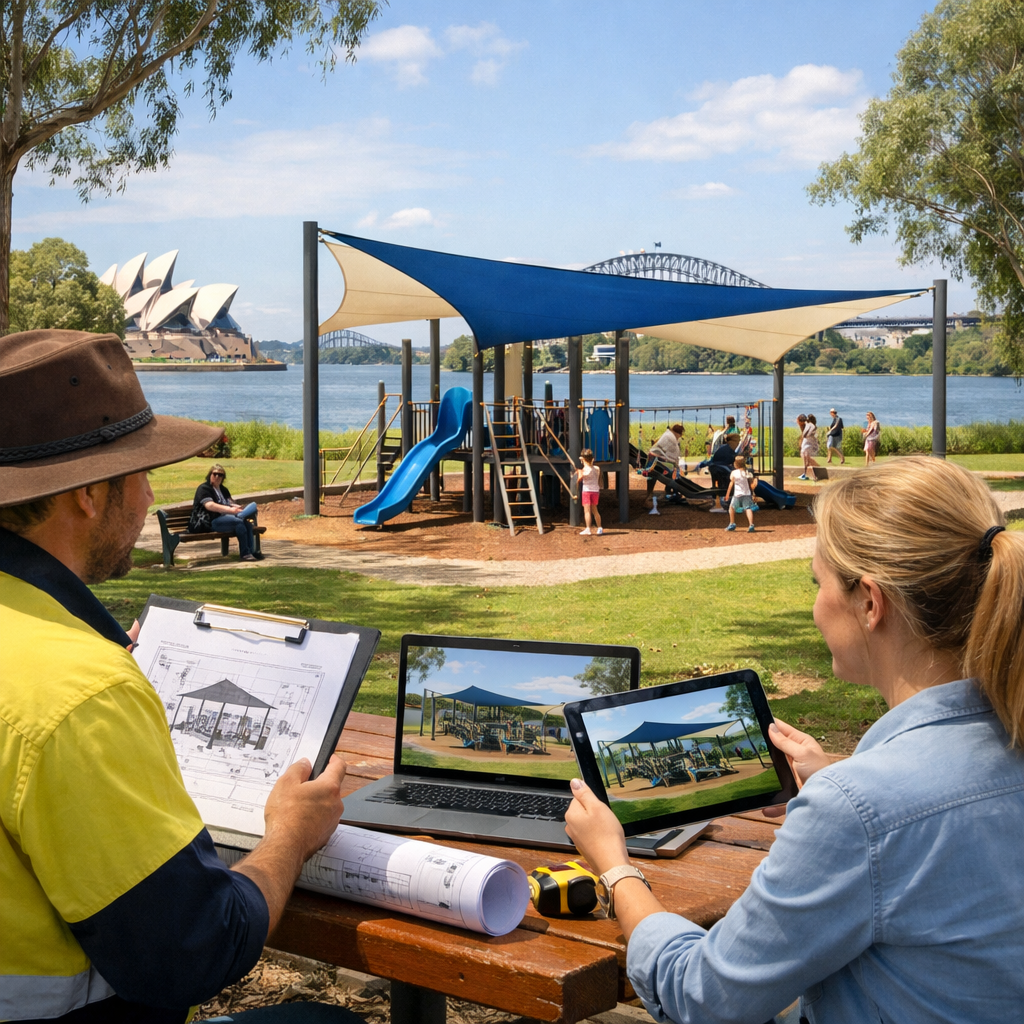
First thing you do is talk to the local council. Most Australian councils treat a park shade structure as a building project, so you’ll need a planning permit and possibly a building permit. The exact name of the permit varies by state, it could be a Development Approval, a Construction Certificate, or a Planning Consent. Getting this right stops costly delays later.
Ask the council for their specific shade‑structure guidelines. Look for:
- Maximum height limits (often 4‑5 m for park installations).
- Wind‑rating requirements, many councils demand a 90 km/h rating for public areas.
- UV‑openness factor, the research shows 5 % is exceptional, but most councils accept up to 20 %.
Next, walk the site. Note the sun path, prevailing winds, and any nearby trees or buildings that could cast shadows or create wind tunnels. Use a simple sun‑path app or a compass to chart the angle of the sun at different times of year. In coastal parks, salt‑air corrosion is a real risk, so you’ll want a material spec that resists it.
Don’t forget flood‑zone checks. If the park sits near a creek, you may need a flood‑zone assessment. Council planners often ask for a storm‑water management plan alongside your shade‑structure submission.
Now you have the paperwork list and site data. It’s time to start drafting a concept plan that matches those rules.
EnviroClass’s guide to handling shade‑structure permits breaks down the exact steps councils use across the states.
Another useful read from the same source explains how building codes protect public safety in outdoor projects.
And the council may ask for a simple flood‑zone map, you can get that from the local water authority.
Bottom line:Know the exact permits, capture site conditions, and bundle all required docs before you draw the first line.
Step 2: Define Functional Requirements & User Needs
With permits in hand, ask yourself what the park users actually need. Is the shade for a playground, a sports court, or a picnic area? Each use case drives different specs.
For a playground, you’ll want a low‑profile canopy that won’t snag on climbing equipment. UV protection is critical because kids spend long periods outdoors. A 5 % openness factor, the level Umbrello’s Architectural shade solution offers, blocks 95 % of UV rays, keeping skin safe.
If the shade is over a basketball court, you’ll need a larger span, higher wind rating, and a canopy that won’t interfere with ball trajectories. In that case, a cantilever design with a wide arm works well.
Make a table of user scenarios and match them to spec needs:
| Use | Canopy Size | Wind Rating | UV Openness |
|---|---|---|---|
| Playground | 3‑4 m diameter | ≥80 km/h | 5 % (exceptional) |
| Picnic Area | 5‑6 m square | ≥90 km/h | 10 % (good) |
| Sports Court | 6‑8 m span | ≥100 km/h | 15 % (moderate) |
Next, think about maintenance. Public parks get heavy foot traffic, so choose a fabric that resists mildew and is easy to clean. Shade View 300 fabric, bundled with Umbrello’s top pick, is both water‑resistant and UV‑blocking, which cuts down on cleaning cycles.
Don’t forget accessibility. Make sure the shade structure doesn’t block wheelchair routes or emergency exits. Council guidelines often require a minimum clearance of 1 m around pathways.
Finally, consider future upgrades. If the park might add lighting or outdoor speakers later, leave room in the design for mounting brackets.
Bottom line:Define clear functional specs that fit the park’s activities, safety rules, and future growth.
Step 3: Choose Umbrello’s Engineering‑Grade Umbrella System (Video)
Now that you know the site and user needs, it’s time to pick the actual product. Umbrello’s engineering‑grade umbrella system checks every box: 20 MIC anodised aluminium, polished stainless steel, and Shade View 300 fabric. It meets the 5 % openness factor that the research highlighted as a standout feature.
Why does this matter? The tighter openness factor means less UV gets through, which is a huge health benefit for public users. The high‑grade aluminium resists corrosion, especially important in coastal parks where salty air can eat away at cheaper metals.
Watch the video above to see the umbrella in action, you’ll notice the sleek pole, the smooth tilt mechanism, and the sturdy base that can be anchored into concrete or set on a weighted platform.
Umbrello offers several mounting options:
- Surface Plate:bolts to a concrete slab, perfect for permanent park installations.
- In‑ground Anchor:a poured concrete foot that gives extra wind resistance.
- Wall Bracket:for shade over a seating wall or railing.
All Umbrello models come with a 10‑year Sunbrella‑type warranty on the fabric, and a 5‑year structural warranty on the frame. That longevity aligns with council expectations for public assets that should last at least a decade.
When you request a quote, ask for the wind‑rating certification. It should show compliance with AS/NZS 1170.2 for wind loads.
Bottom line:Umbrello’s engineering‑grade umbrella meets the toughest UV, wind, and durability specs for council park projects.
Step 4: Finalise Specification Sheet & Submit for Approval
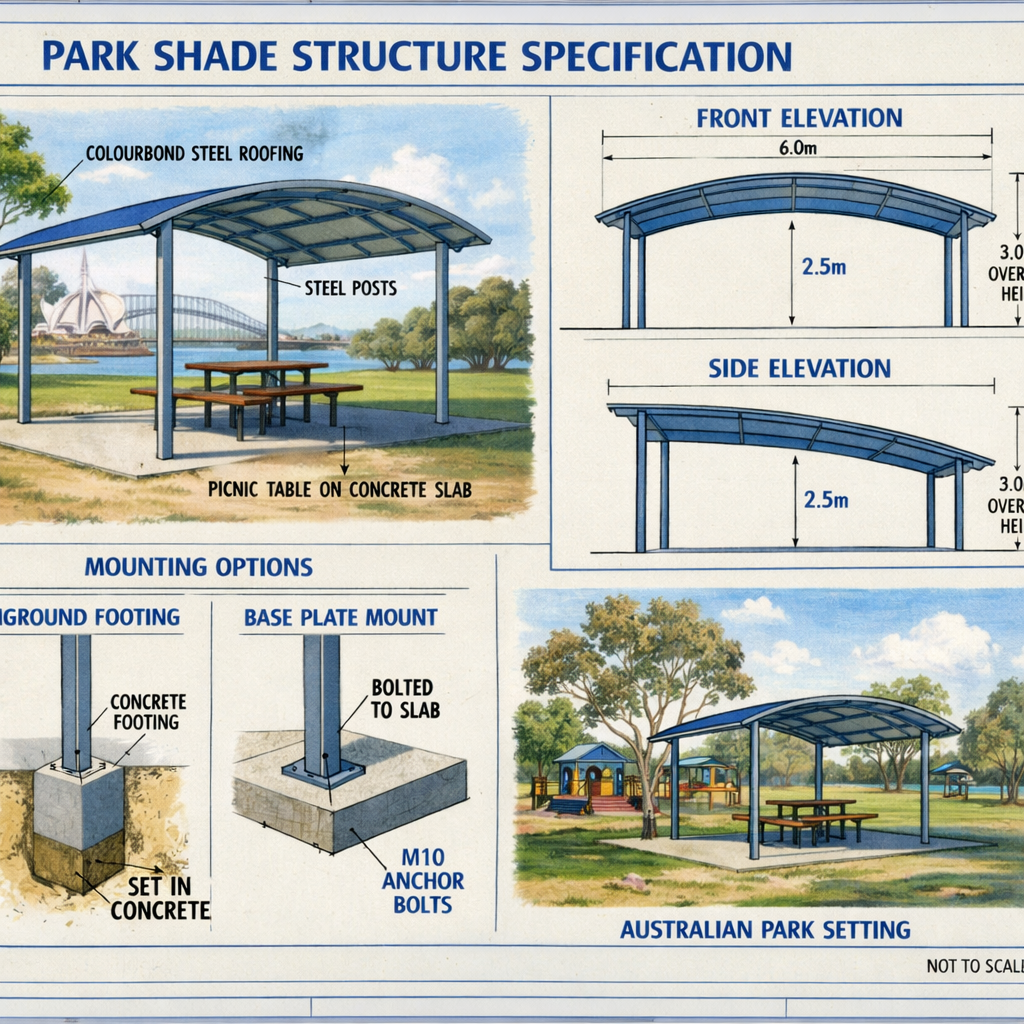
With the product chosen, you now draft the specification sheet. Councils love tables, so lay out the data in a clear grid.
Include these rows:
- Product Name, Architectural shade solutions (Our Pick)
- UV Protection, 5 % openness factor
- Material, 20 MIC anodised aluminium, polished stainless steel, Shade View 300 fabric
- Wind Rating, ≥90 km/h (AS/NZS 1170.2)
- Dimensions, canopy width, height, arm length
- Mounting Options, surface plate, in‑ground anchor, wall bracket
- Maintenance, water‑resistant fabric, cleaning schedule
- Warranty, 10‑year fabric, 5‑year frame
Attach supporting documents: wind‑rating certificate, UV‑openness test report, corrosion‑resistance data, and a CAD drawing of the placement on the park site. Councils often request a 3‑D model, which you can generate in SketchUp or similar software.
When you submit, include a cover letter that references the council’s specific requirements you’ve met. Quote the research findings, “Our Pick delivers a 5 % openness factor, four times tighter than the typical 20 % spec, using premium 20 MIC anodised aluminium and polished stainless steel for coastal durability.” This shows you’ve aligned with the data they’ll be reviewing.
Send the package via the council’s e‑procurement portal or hand‑deliver it to the planning department. Follow up after a week to confirm receipt and ask if any extra info is needed.
Here’s a simple checklist you can copy into your own Word doc:
- ✔️ Completed specification table
- ✔️ Wind‑rating certificate
- ✔️ UV‑openness test report
- ✔️ Material data sheet
- ✔️ CAD/3D site layout
- ✔️ Cover letter referencing council clause numbers
Once the council signs off, you can move to procurement and installation. Keep a copy of the approved spec on site, it helps the installer stay on track and gives the council a reference for future maintenance contracts.
Bottom line:A complete, well‑documented spec sheet clears council approval fast and sets the stage for a smooth install.
Conclusion
Specifying a shade structure for a council park in Australia may feel like a maze of permits, materials, and performance numbers. By following the four steps, assess council rules, define user needs, pick Umbrello’s engineering‑grade umbrella, and lock in a detailed spec sheet, you turn that maze into a clear path.
Remember the key points: get the right permits early, match the canopy to the park activity, lean on Umbrello’s 5 % openness factor and premium materials, and bundle every certification in a tidy spec sheet. This approach not only satisfies council requirements but also delivers a shade solution that lasts for years, protects visitors from UV, and stands up to wind and salty air.
If you’re ready to move forward, speak with a shade specialist at Umbrello. They can help fine‑tune the spec, run wind‑load calculations, and get the paperwork ready for council sign‑off.
With the right plan, your council park will enjoy reliable, high‑quality shade that keeps families safe and comfortable for generations.
FAQ
What permits do I need to install a shade structure in a council park?
You’ll typically need a planning permit and a building permit. The exact name varies by state, it could be a Development Approval, Construction Certificate, or Planning Consent. Check with your local council’s planning department for the specific forms and any wind‑rating or UV‑openness clauses they require.
How do I choose the right canopy size for a park playground?
Measure the play area and add at least 60 cm of shade on each side. For a typical playground, a 3‑4 m diameter canopy works well. Make sure the height clears any climbing equipment and that the wind rating meets the council’s minimum, usually 80 km/h for public use.
Why is the 5 % openness factor important?
A 5 % openness factor means the canopy blocks 95 % of UV rays, far better than the usual 20 % spec. This protects children and adults from harmful sun exposure, reduces heat build‑up underneath, and meets stringent health guidelines for public spaces.
Can I use a standard garden umbrella for a council park?
Standard garden umbrellas often lack the wind rating, corrosion resistance, and UV performance needed for public parks. Councils usually require a wind rating of at least 90 km/h and materials that can endure salty coastal air. Umbrello’s engineering‑grade system is designed specifically for those demands.
What maintenance does a public shade structure need?
Inspect the frame and bolts quarterly, especially after storms. Clean the Shade View 300 fabric with mild soap and water, then let it dry fully before closing. Replace any worn fasteners and keep the base free of debris to maintain stability.
How long does council approval usually take?
Approval times vary, but most councils take about 8‑12 weeks from receipt of a complete submission. Submitting a thorough spec sheet with all required certificates can shave weeks off that timeline.
Is there a warranty on Umbrello’s shade structures?
Yes. Umbrello offers a 10‑year warranty on the Shade View 300 fabric and a 5‑year structural warranty on the aluminium frame and stainless‑steel components. This aligns with council expectations for long‑lasting public assets.
Can I upgrade the umbrella after installation?
Absolutely. Because Umbrello provides modular mounting options, you can add lighting, speakers, or even a solar panel bracket later. Just keep the original spec sheet handy so any upgrades match the approved dimensions and wind rating.
