


Outdoor Umbrellas
Coastal Shade Umbrella Buying Guide Australia
Sep
A coastal umbrella needs more than a wide canopy. Salt air, strong UV, heat and sudden gusts can expose weak frames and poor bases fast. This coastal home shade umbrella buying guide for Australia shows how to check the site, materials, wind details, placement and long-term care before you buy.
Step 1: Assess Your Coastal Site and Shade Requirements
Start with the site. A coastal home shade umbrella can work well on a patio, pool deck or garden, but the right size depends on the space around it.
Watch the area at different times of day. Morning shade may come from one side, while late afternoon sun reaches under the canopy from another angle. Mark the table, chairs and main walking path. Then note where doors open, where children play and where people tend to sit.
Measure the usable footprint, not just the area you want covered. A cantilever umbrella needs room for its base and arm. A centre-pole model needs a clear spot through the table. Leave enough space for people to walk past without brushing the canopy or frame.
Check the local exposure
Look for signs of extra stress. A balcony or headland site may receive stronger gusts than a sheltered courtyard. Salt spray can reach properties well inland from the beach, especially when the wind moves across open water.
Write down these details before speaking with a supplier:
- How many people need shade?
- Will the umbrella cover a dining table, lounge area or pool edge?
- Can the base sit on a slab, deck or paved surface?
- Will the umbrella stay open all day, or only during use?
- Do you need shade to move as the sun changes?
Umbrello works with residential buyers as well as designers, builders and coastal projects. That matters when the site has unusual limits, such as a narrow deck or a fixed pool layout. By now, you should have a measured area and a clear use case, not just a preferred canopy shape.
Step 2: Choose Materials That Withstand Salt, UV and Heat
Materials decide how a coastal umbrella ages. In this coastal home shade umbrella buying guide, give each part the same attention: canopy, frame, fixings and base.
Solution-dyed acrylic is a common choice for premium canopies because the colour runs through the fibre rather than sitting only on the surface. A UV-resistant acrylic canopy can suit a home that sees long hours of sun. Some designs use polycotton instead, which may give a softer look but needs close review of its care instructions.
Do not treat a UPF figure as a full durability rating. UPF describes how much UV passes through fabric under test conditions. UV exposure can rise with factors such as sun angle, cloud and reflection. A canopy still needs good fabric weight, stitching and care.
The items that disclosed UV protection all listed UPF 50+, yet that shared number did not tell the whole story. Fabric weight, weave, finish and construction can affect how the canopy feels and ages.
Inspect the frame and hardware
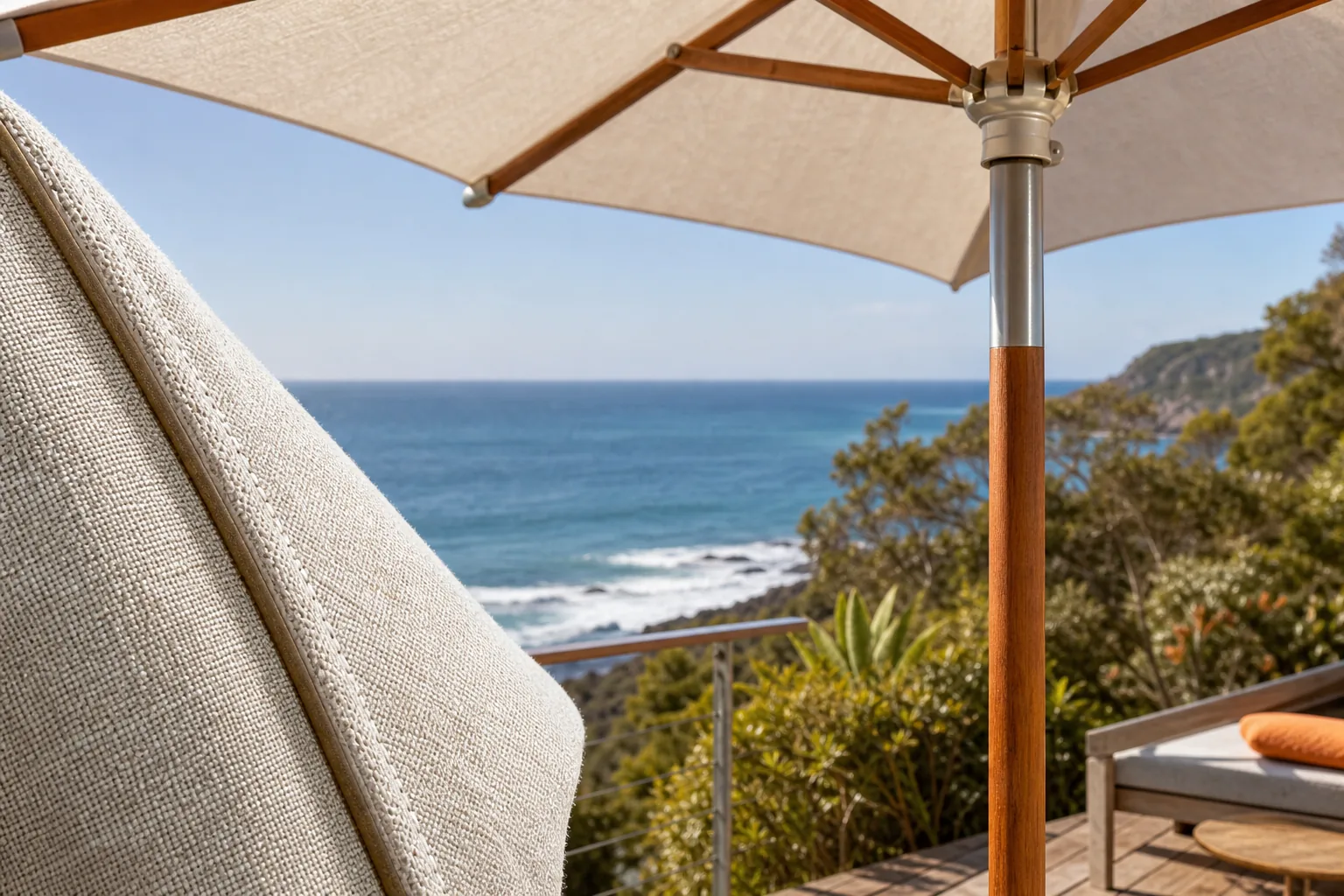
Aluminium keeps weight down and can take a powder-coated finish. Teak gives a natural look and can suit gardens, patios and event spaces. Umbrello specifies an Indonesian teak frame with either a UV-resistant acrylic or white polycotton canopy for its design-led umbrella range.
Fasteners deserve attention in coastal areas. Ask whether exposed hardware is stainless steel, what grade it is, and how easy it is to replace. A small rust mark around a joint can spread if salt stays trapped there.
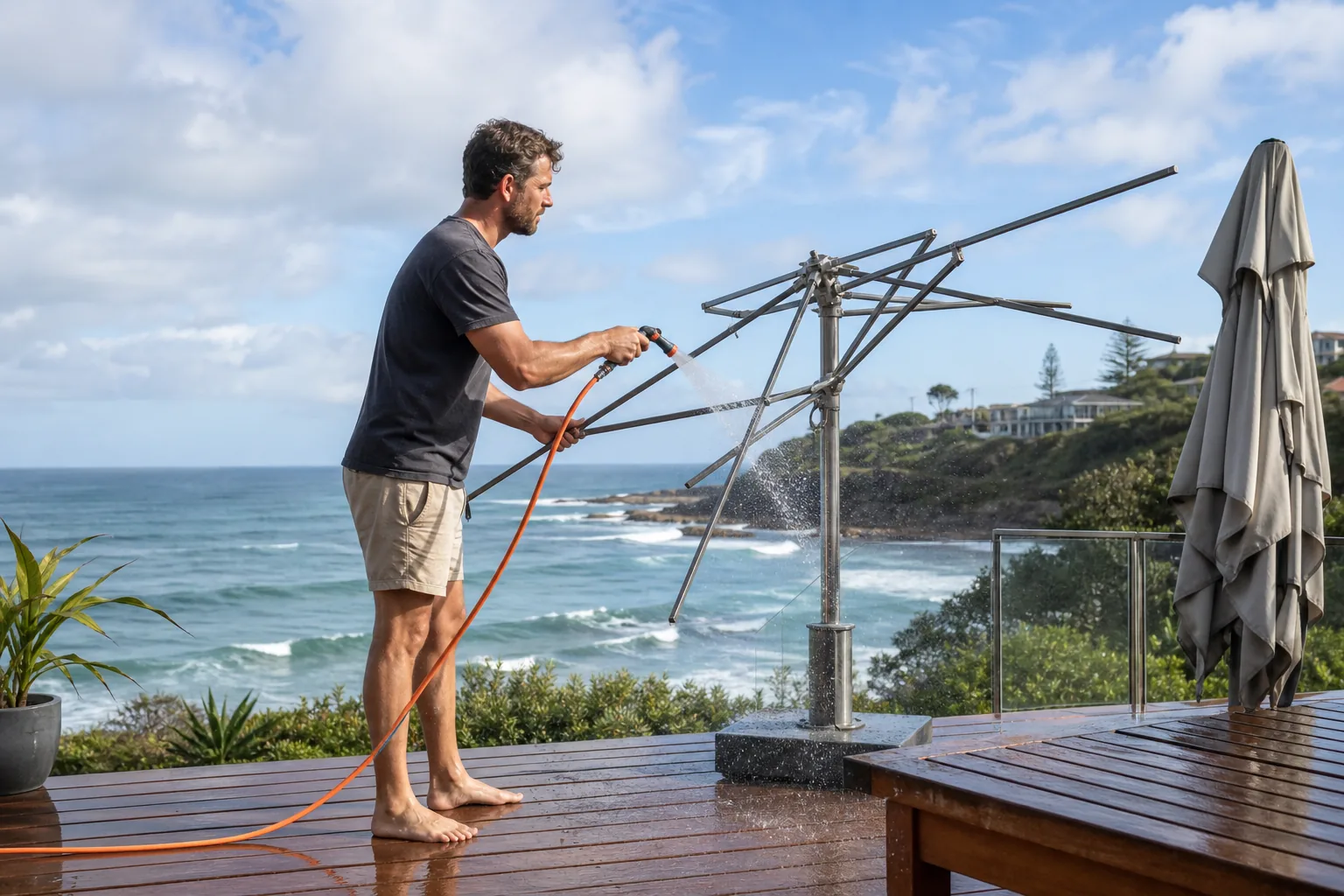
Ask for care instructions before you order. The supplier should explain how to rinse salt from the frame, clean the canopy and store it during long periods of non-use. If those details are missing, treat that as a gap in the buying information.
Step 3: Match the Umbrella Style to Your Outdoor Layout
The best style for a coastal home depends on how people use the space. A large patio umbrella may suit a fixed dining setting, while a cantilever design keeps a centre pole away from chairs.
Choose a centre-pole umbrella when the table already has a suitable opening or when the pole can sit in a clear, stable base. This layout is often tidy and easy to understand. It becomes less useful when the pole would cut across a walkway or limit chair placement.
Choose a cantilever umbrella when you need the shade beside the base. The offset arm can cover a lounge, pool chair or table without placing a pole in the middle. It also lets you shift the shaded zone as the day moves on, though the base must be sized and placed with care.
A wall-mounted umbrella can work on a narrow balcony or beside a building. It saves floor space, but the wall and fixings must suit the load. Do not assume any brick wall or rendered surface can take the force of a large canopy.
Match shape to furniture
Square canopies make good use of square tables and defined seating zones. Round canopies suit circular tables and softer garden layouts. Rectangular shapes can cover a long table, but they may catch wind differently across the wider edge.
Umbrello’s range includes cantilever and architectural shade options for home, hospitality and design projects. If you are unsure about the layout, compare a cantilever plan with a centre-pole plan using the same table size. Umbrello’s guide to Parashade and cantilever umbrella layouts can help you frame that choice.
Also check the canopy height. A high canopy may clear a door, but it can let low-angle sun pass under the edge. A lower setting may shade better but interfere with sightlines. The right height is a fit between sun angle, furniture and safe movement.
By now, you should know which style fits the layout and where the base or wall mount will sit. Do not choose the canopy first and try to force the rest of the space around it.
Step 4: Verify Wind Performance, Anchoring and Structural Safety
Wind is the point many coastal buyers miss. A wind rating can help, but only when you know what it covers and how the umbrella must be anchored.
Ask for the stated wind speed, test conditions and required base. A canopy rated at one speed may need to be closed at lower gusts on an exposed site. A rating is not permission to leave an umbrella open through every weather event.
Research into premium cantilever products found that only 38% of the sampled umbrellas disclosed wind-rating data. The stated figures ranged from 40 km/h to 60 km/h, with an average of 46.7 km/h. Those figures may be marginal for exposed coastal settings, where gusts can rise quickly.
Use a local wind reading as a design input, not as a promise. Check local warnings through an official weather service before opening a large canopy, then follow the supplier’s closing instructions.
Review the base and anchor point
A heavy base can help a freestanding umbrella, but weight alone does not solve every site problem. The base must match the canopy size, arm design and surface. A cantilever on pavers behaves differently from one fixed to a designed concrete footing.
Check for movement after installation. The frame should not rock at the joint. The base should not slide when people move around it. On a deck, confirm that the structure can take the load before drilling or adding a fixed mount.
Umbrello’s coastal shade advice places attention on hardware and base choice, including marine-grade stainless steel where salt exposure is high. Ask for the full installation method, not only the product brochure. The anchor is part of the shade system.
- Close the canopy before strong wind arrives.
- Do not leave a freestanding umbrella open while the property is unattended.
- Check bolts and joints after severe weather.
- Keep the canopy clear of branches, wires and nearby structures.
A supplier that cannot explain the wind limit, base requirement and closing rule has not given you enough information to make a safe decision.
Step 5: Compare Lifetime Value, Maintenance and Expert Support
Price is only one part of the cost. For a coastal home shade umbrella, lifetime value depends on how often it is used, how well it is maintained and whether replacement parts remain available.
Ask what the warranty covers. Check the canopy, frame, finish and hardware as separate parts. Among the products that listed a warranty, the average term was 3.33 years, with a median of four years.
A warranty does not replace good care. Salt should be rinsed from exposed surfaces with fresh water. Let the canopy dry before folding it away. Follow the care guide for stains, since harsh cleaners may damage the fabric finish.
Ask about support before purchase
Good support should cover site advice, delivery, assembly, base selection and replacement parts. For a project with several umbrellas, ask how the supplier handles layout review and installation coordination.
Umbrello supports residential, hospitality, commercial and architectural shade projects. Its product range includes natural-material designs as well as marine-grade aluminium and stainless-steel options. That gives specifiers more than one way to balance appearance with exposure and use.
Compare two quotes by writing down what each includes. One may include a base while another lists it separately. One may state a wind limit while another leaves it blank. A lower quote can look attractive until you add installation, anchoring, covers and future fabric replacement.
Choose the supplier that answers the hard questions clearly. In coastal conditions, transparent specifications are worth more than a polished image or a vague promise of durability.
FAQ: Coastal Home Shade Umbrellas in Australia
What should I look for in a coastal outdoor umbrella?
Look for a suitable canopy fabric, corrosion-aware hardware, a stable base and clear wind instructions. A coastal home shade umbrella buying guide should also cover UV protection, fabric weight, warranty terms and care. If the product page omits wind or warranty details, ask the supplier before you place an order.
Are cantilever umbrellas suitable for windy coastal areas?
Cantilever umbrellas can suit coastal homes, but their performance depends on the canopy, arm, base and anchor point. Ask for a stated wind limit and the conditions behind it. Close the umbrella before strong gusts. Never treat a wind rating as permission to leave it open in severe weather.
Is acrylic fabric good for a coastal home?
UV-resistant acrylic can be a sound choice for a coastal home because it is made for outdoor exposure. Still, fabric type alone does not prove long service life. Check the fabric weight, seams, cleaning method and warranty. Also ask how salt should be removed without harming the finish.
How do I protect an outdoor umbrella from salt air?
Rinse exposed frame parts with fresh water and let the canopy dry before storage. Inspect fasteners, joints and finish for early corrosion. Use the care method supplied with the umbrella. A covered, dry storage spot helps during long periods when the canopy is not in use.
How much wind can a patio umbrella handle?
The safe wind speed depends on the specific umbrella and its installation. Some products disclose figures between 40 km/h and 60 km/h, but those numbers do not apply to every model or site. Ask for the tested limit, base requirement and closing rule before buying.
Conclusion
Choose a coastal umbrella only after you match the site, canopy, frame and anchoring system. Umbrello is a sensible place to request specialist advice when you need a design-led umbrella for a home, event space or coastal project. Send the measured layout and exposure details first, then ask for a written recommendation with wind limits, base requirements and care instructions.
