


Outdoor Umbrellas
Outdoor Umbrella for Salt Air: Coastal Tips
Sep
Salt air can attack metal while strong Australian sun fades and weakens fabric. The right outdoor umbrella for salt air in coastal Australia needs more than a large canopy. It needs suitable frame materials, a secure base, clear wind limits and a care plan. Follow these steps before you buy or specify one.
Step 1: Assess Your Coastal Site and Exposure
Choosing an outdoor umbrella for salt air coastal Australia starts with the site, not the color or shape. Walk the area at different times of day and note where the umbrella will face sea spray, gusts, heat and rain.
Measure the space first. Mark the table, chairs, pool edge or seating zone that needs shade. Then check how much room the umbrella needs when it opens. A cantilever frame can cover furniture without a centre pole, but its side arm needs clear space behind or beside the shaded area.
Look for signs of exposure:
- Direct sea spray or wind that travels across open water.
- A rooftop, balcony or raised deck with little shelter.
- Strong afternoon sun on the canopy and frame.
- Nearby sand, salt residue or standing water.
- High foot traffic around a café, pool or public area.
Also check what sits around the umbrella. A wall, hedge or solid screen may reduce wind, but it can also create turbulence at the edge. An open lawn may look sheltered from the house, yet gusts can still reach the canopy above the roofline.
For a home, record the hours when people use the space. For a restaurant or resort, count the seats that need shade during service. A council, school or builder should also note underground services, drainage and the proposed fixing point before selecting an in-ground mount.
Write down three site facts before you speak with a supplier: the canopy size you need, the likely wind exposure and the type of surface available for fixing. That short brief will help Umbrello suggest a shade format that fits the space rather than forcing the space around the umbrella.
Step 2: Choose Materials That Resist Salt Air and UV
For an outdoor umbrella in salt air, coastal Australia calls for careful material checks. Salt deposits can speed up corrosion when moisture remains on exposed metal. Corrosion is the deterioration of a material through chemical or electrochemical reaction, so the frame, fasteners and joints all deserve attention.
Start with the frame. Marine-grade aluminium is a useful specification because it limits weight while giving the structure a material selected for demanding outdoor use. Stainless steel reinforcement can add another layer of protection at high-load points such as hinges, brackets or connections. Umbrello’s premium cantilever umbrella specifies marine-grade aluminium with stainless steel reinforcement. That combined frame detail is uncommon in the small three-model comparison used for this article.
Do not stop at the main post. Ask what material is used for:
- Bolts, pins and hinge parts.
- Base plates and mounting brackets.
- Internal supports and locking parts.
- Drain points where salt water may collect.
A frame can have a suitable main post but still develop trouble around a lower-grade fastener. The same issue can appear where dissimilar metals meet. Ask how those connections are protected and whether replacement parts are available.
Next, check the canopy fabric. Umbrello’s extracted product data did not state the canopy material, so ask for the exact fabric and its care instructions before ordering.
Fabric weight alone does not tell you how a canopy will perform. Request the fabric’s UV rating, colorfastness information and replacement process. A commercial venue should also ask how the fabric can be cleaned without harming its finish.
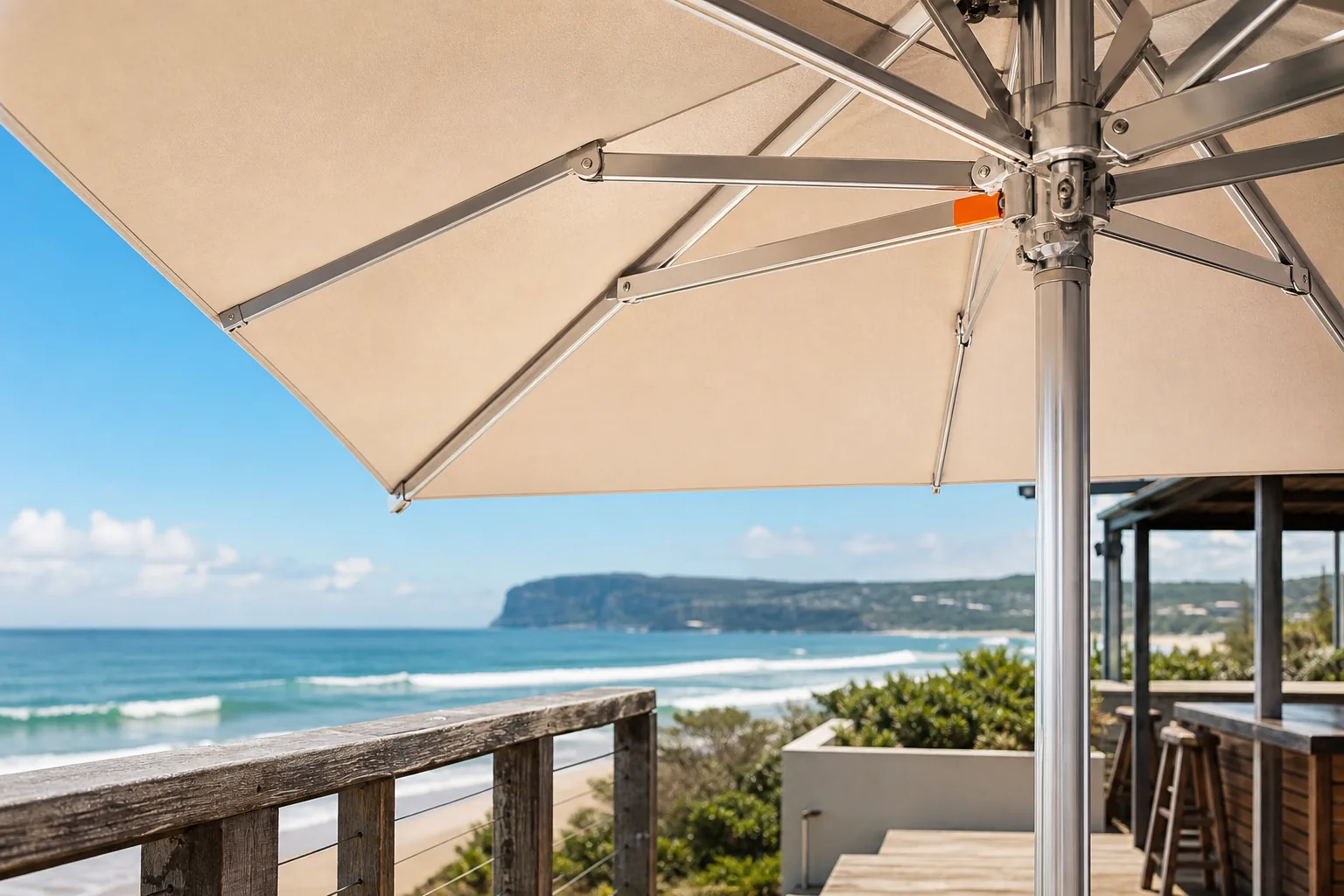
Eclipse specifies marine-grade anodised aluminium, a 65 km/h wind rating, UPF 80 and a five-year warranty. Those details are useful because they give a buyer clear questions to test against their own site.
Step 3: Match the Umbrella Structure to Wind Conditions
An outdoor umbrella for salt air coastal Australia must also suit the wind at the site. Salt resistance cannot make an unstable umbrella safe. Wind pushes against the canopy, transfers force into the ribs and then loads the frame and base.
Begin with the product’s stated wind rating, if one is published. Treat that figure as a design reference, not permission to leave the umbrella open in every storm. Wind changes quickly around buildings, cliffs, pool decks and rooftops. Gusts can also arrive from a different direction than the usual sea breeze.
Eclipse has a stated wind rating of 65 km/h. If a clear wind rating is not published, request the figure and the test conditions before making a final specification. That does not prove the umbrella is unsuitable. It does mean a homeowner, architect or venue manager should request the figure and the test conditions before making a final specification.
Think about the whole structure. A cantilever umbrella places the pole and base to one side, which leaves the shaded area clear. That layout is useful over dining tables and loungers, but the offset load makes the base and fixing method especially important.
Use this decision path:
- For a sheltered courtyard, ask about a suitable freestanding base and the supplier’s closing rule.
- For an open backyard or pool deck, consider a heavier base or a fixed mounting system.
- For a rooftop, commercial site or exposed waterfront, ask whether a permanent structural solution is more suitable.
- For any site with sudden gusts, plan how staff or residents will close and secure the canopy.
Do not judge wind performance by frame material alone. Canopy shape, rib layout, base weight and the fixing surface work together. A good frame can still move if the base is too light or the mount sits on a weak slab.
Umbrello’s range includes premium cantilever and commercial shade solutions for residential, hospitality and project settings. Ask for site-specific advice when the umbrella will remain installed near the sea. A product that works well in a sheltered terrace may need a different mount on an open promenade.
Set a simple operating rule before installation: close the canopy when the wind approaches the supplier’s stated limit, during storms or whenever staff cannot watch the area. If no clear limit is published, ask for written guidance. Guessing is a poor safety plan for a large shade structure.
Step 4: Specify UV Protection, Coverage, and Placement
The right outdoor umbrella for coastal Australia must cover the space without creating a new trip or access problem. Start with the people and furniture beneath it, then select the canopy size and position.
Measure the table, chairs or lounge zone at midday. The sun moves across the sky, so a canopy that covers the table in the morning may leave one side exposed later. A rotating cantilever can help adjust shade through the day, but it still needs enough clearance to move safely.
Ask for a stated UV protection rating. Eclipse has a stated UPF 80 rating. Umbrello’s extracted information did not include a UPF figure, so request the rating for the exact canopy fabric you are considering. Do not treat a dark color or thick-looking cloth as proof of a specific UV result.
Placement also affects comfort. Keep the canopy high enough for people to walk below it, but avoid raising it so far that shade spills away from the seating area. Check the low sun angle from the west, especially beside pools and glass doors where reflected glare can add heat.
Leave clear paths for service staff, guests and emergency access. On a commercial site, mark the open and closed footprint on the plan. On a residential site, check that the canopy will not strike a wall, tree or outdoor light when it rotates.
For a coastal home, it can help to split a wide seating zone between two smaller umbrellas rather than use one very large canopy. That gives you more control when only part of the area needs shade. For a hospitality venue, a consistent row may look neat, but every base still needs enough room for safe access and cleaning.
Make the final decision with a scaled site plan or taped outline on the ground. If the canopy reaches beyond the paved zone, revise the position before you order. Shade is useful only when people can reach it without crossing an unstable or crowded area.
Step 5: Install and Maintain It for Long-Term Coastal Use
Installation and care decide how well an outdoor umbrella for salt air coastal Australia performs after delivery. A sound frame cannot overcome a weak fixing point, poor drainage or months of salt left on the joints.
Choose the base or mount to suit the surface. A freestanding base may suit a protected patio. A fixed plate or in-ground sleeve may make more sense where the umbrella faces regular gusts or where a venue needs a repeatable layout. Ask an installer to check the slab, pavers or footing rather than assuming any flat surface can carry the load.
Use the supplier’s fixing instructions. Do not swap fasteners without checking the grade and fit. In coastal work, stainless steel hardware can be important at exposed connection points. Umbrello’s cantilever umbrella base and coastal hardware guide can help you assess the base before installation.
Plan drainage around the mount. Water that sits under a base or inside a sleeve can carry salt into fittings. Keep the area clear so it can dry after rain and washing. If the umbrella stands on pavers, check for movement after the first period of heavy use.
Set a maintenance schedule that matches exposure. A home near the beach may need more frequent checks than a sheltered inland patio. Include these tasks:
- Rinse salt and sand from exposed metal with fresh water.
- Wipe joints and allow them to dry before closing the canopy.
- Inspect bolts, pins and brackets for movement or surface corrosion.
- Clean the canopy according to the fabric maker’s instructions.
- Close and secure the umbrella before strong wind, storms or long absences.
Never force a stiff opening system. Stop and inspect it first. A jammed hinge may point to grit, corrosion or misalignment. Replacing a small part early is usually simpler than repairing a bent frame after a gust.
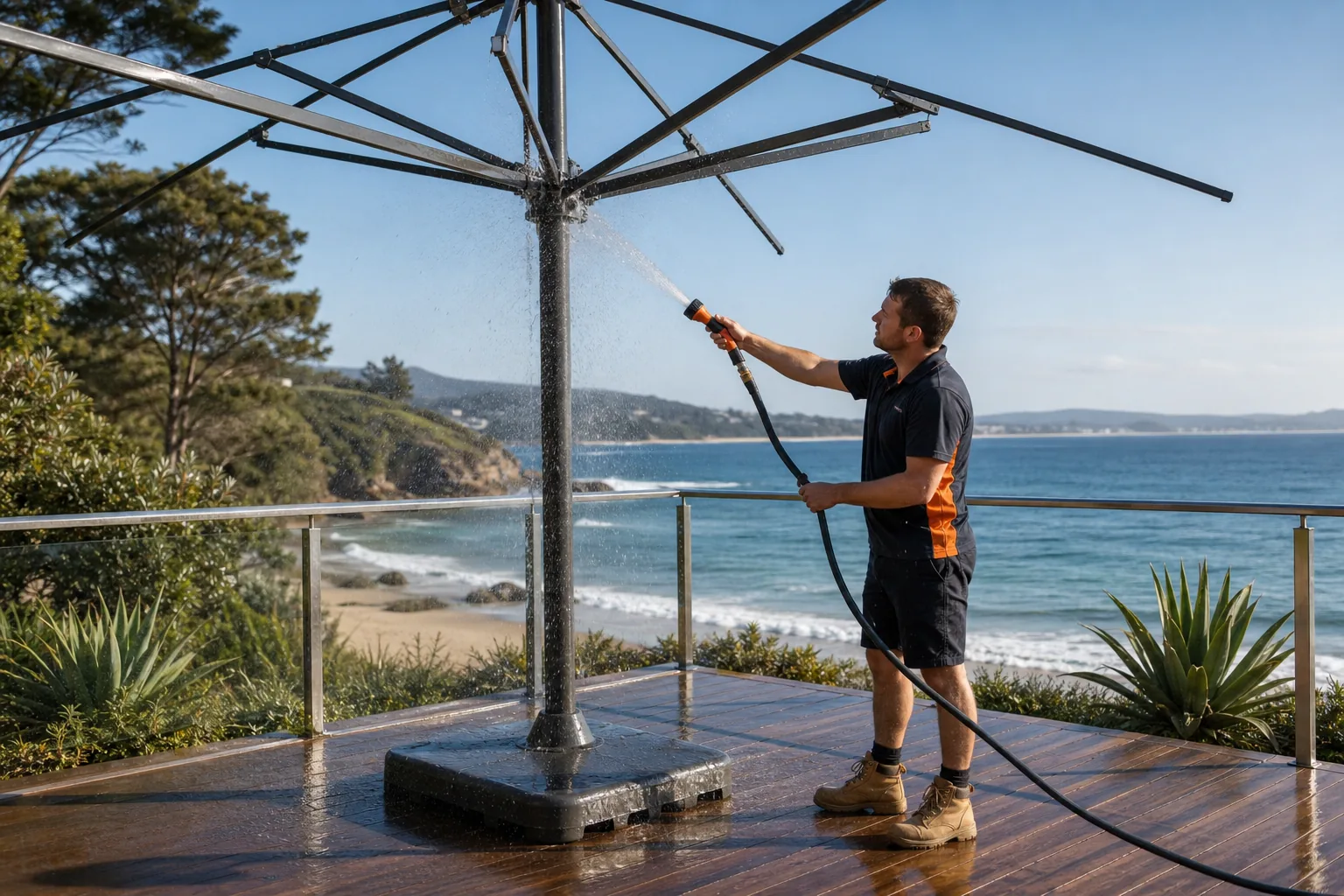
Keep a written inspection log for commercial, school or council sites. Record the date, condition of the frame, base and fabric, plus any action taken. Staff can then follow the same closing rule each day instead of relying on memory.
Warranty terms should also be clear before purchase. Eclipse has a five-year warranty. Warranty details for Umbrello’s product were not captured in that review, so ask what is covered, who handles a claim and whether fabric, frame and hardware have separate terms.
For coastal buyers, good care is part of the specification. Arrange a first inspection after installation, then set reminders before the windy season and after major storms. That small habit can reveal loose fittings before they become a safety issue.
FAQ
What material is best for an outdoor umbrella near the ocean?
Marine-grade aluminium is a sensible frame material for an outdoor umbrella near the ocean, especially when exposed parts also use suitable stainless steel. Check the fasteners, brackets and joints, not only the main pole. Ask for the exact canopy fabric too. Salt air coastal Australia places stress on every exposed part, so a full material schedule is more useful than a broad marketing label.
Can a cantilever umbrella handle coastal wind?
A cantilever umbrella can suit a coastal site when its frame, base and mount match the wind exposure. Check the published wind rating and the conditions behind it. Eclipse lists 65 km/h, while the Umbrello product data reviewed here did not state a figure. Close the canopy whenever conditions exceed supplier guidance or become uncertain.
What UV rating should I look for in a coastal umbrella?
Look for a stated UV or UPF rating and confirm it applies to the canopy fabric you will receive. Eclipse lists UPF 80. Umbrello’s extracted product information did not include a UPF figure, so ask for written confirmation. Canopy position still matters because low morning or afternoon sun can reach under the fabric.
How do I stop salt air from damaging my umbrella?
Rinse exposed metal with fresh water, remove sand from joints and let the frame dry before closing it. Check bolts, hinges and the base on a set schedule. Keep water from pooling around the mount. These steps help limit salt residue, but they cannot replace suitable materials or a proper wind plan for a coastal umbrella.
Should I use a weighted base or a fixed mount?
Use a weighted base in a sheltered area only when the supplier confirms it suits the umbrella and site. A fixed mount may be more suitable for an exposed deck, rooftop or commercial setting. The answer depends on wind, surface strength, canopy size and how often the umbrella must move. Have the fixing point checked before installation.
Conclusion
Choose the frame and mounting system together, then confirm the canopy fabric, UV rating, wind guidance and warranty in writing. Umbrello is a suitable place to start when you need premium coastal shade for a home, hospitality venue or project site. Share your measurements and exposure notes with a shade specialist before you order.
