


Outdoor Umbrellas
Best Coastal Wind Rated Outdoor Umbrella Australia
Sep
Finding a shade solution that survives salty breezes, strong gusts and fierce sun can feel impossible. Here’s a short list of the most capable coastal‑grade umbrellas on the market today, plus a quick checklist to help you decide which one fits your space.
1. Umbrello
Umbrello offers a premium cantilever umbrella built for residential, hospitality and public projects across Australia. It features a 400 cm aluminium‑stainless‑steel frame, a high‑performance canopy and integrated LED lights that you can control with a phone app. The frame uses powder‑coated aluminium and 316 stainless‑steel fittings, which resist corrosion in salty air. The canopy fabric is UV‑blocking and fade‑resistant, making it a solid choice for beachfront patios or poolside lounges.
The umbrella’s size and motorised tilt let you follow the sun without manual effort, a real convenience for cafés that stay open late. Because Umbrello’s engineering data is verified by structural engineers, you get confidence that the shade will hold up during windy afternoons.
One limitation is that the wind rating isn’t publicly listed, so you’ll need to ask your installer about the recommended collapse wind speed. For most coastal sites, the strong frame gives a safe margin.
2. Solarmax Cantilever Umbrella — Published 60 km/h wind rating
The Solarmax model from Shade Australia carries a tested wind rating of 60 km/h. Its frame is aluminium powder‑coated with stainless‑steel fittings, and the canopy uses O’Bravia fabric that blocks 98 % of UV rays (UPF 50+). The design allows 360° rotation and a 55° tilt, so the shade follows the sun all day.
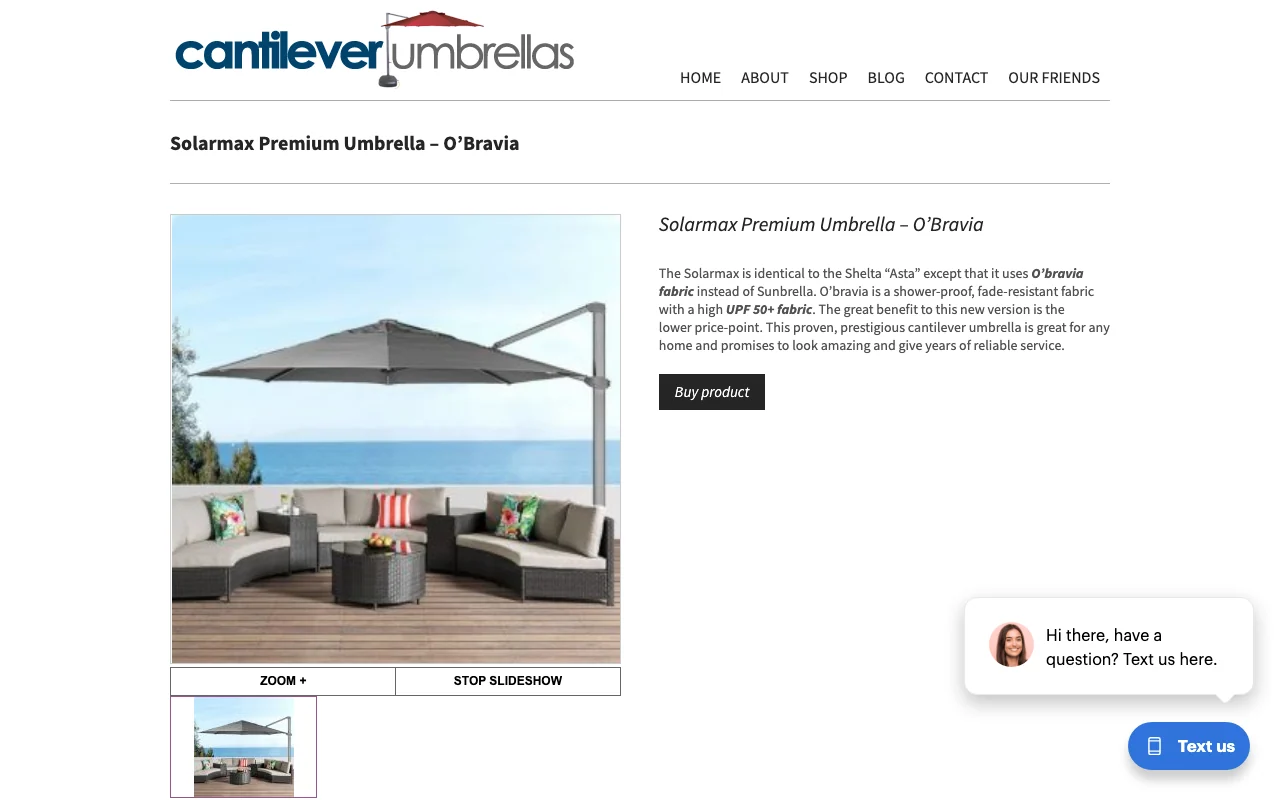
Because the umbrella is heavy, it only works with a bolted concrete base or a custom in‑ground base. It isn’t meant for a portable base, so plan the installation early.
The warranty covers the frame for two years and the fabric for three, but wind damage isn’t included. That’s a common clause for most manufacturers.
For further information, see this guide.
3. Parashade Cantilever Umbrella — Coastal‑grade fittings and repellent fabric
Parashade’s cantilever umbrella targets luxury hotels and high‑end homes. Its patented “Gust‑Buster Arms” release pressure when wind gusts exceed a set threshold, then snap back into place after ten seconds. The frame is anodised aluminium with 316 stainless‑steel fittings, giving it a maintenance‑free finish.
The canopy is made from a solution-dyed polyester and acrylic fabric.
Installation uses a flat‑packed base that fits six standard masonry pavers, providing enough weight to stay stable on breezy decks. The base isn’t included, but local hardware stores carry the required pavers.
A downside is limited colour options and occasional stock shortages, which can add lead time.
4. Baser Supreme Cantilever Outdoor Umbrella — Reinforced frame and UPF 80+
Baser’s Supreme model combines a rust‑proof aluminium VentusMax+™ frame with solution-dyed acrylic fabric that blocks over 98 % of harmful UV rays (UPF 80+). The side pole is 3.2 mm thick and the ribs are 1.8 mm, giving the umbrella extra stiffness for windy days.
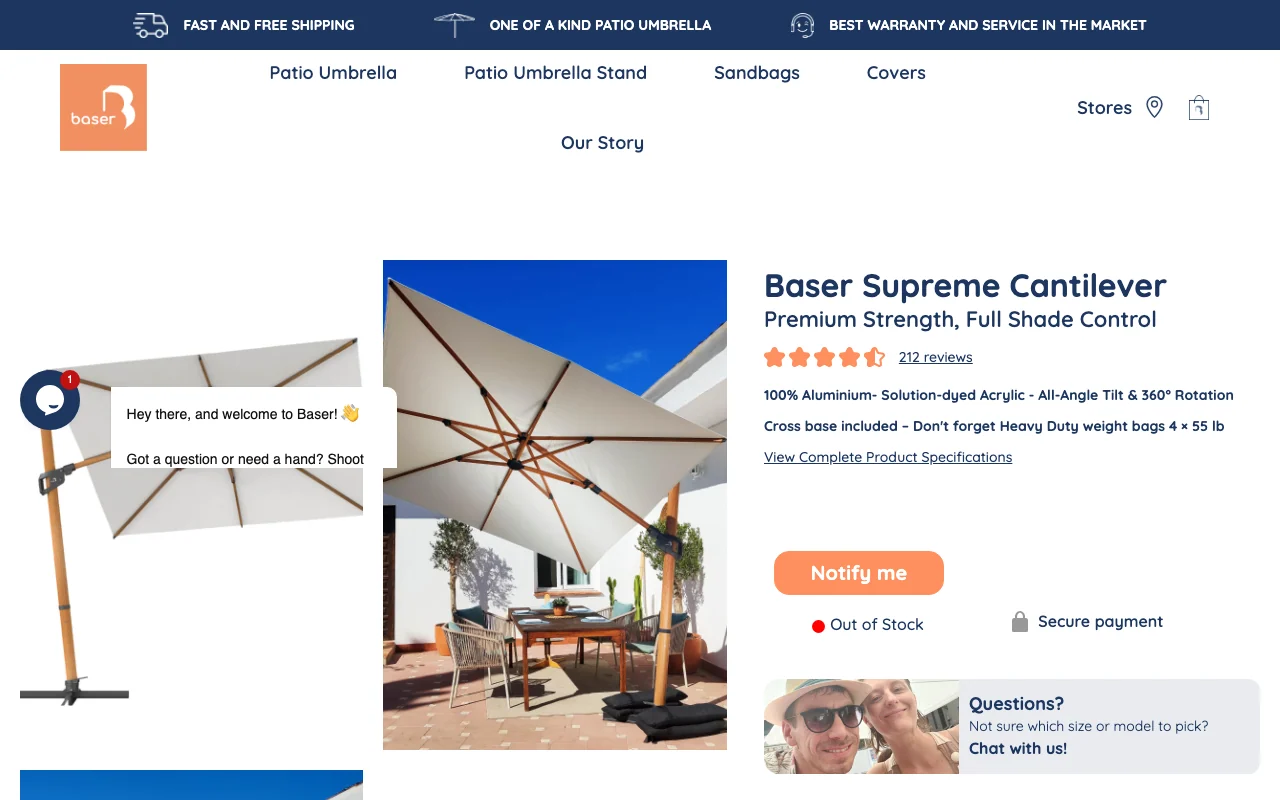
The canopy weighs 260 g/m², which adds durability and colourfastness. A heavy‑duty sandbag base (four × 25 kg) is required for optimal stability; the base itself is powder‑coated for corrosion resistance.
Users appreciate the 360° rotation and independent tilt controls, which let you shade any part of a patio without moving the base. The umbrella also includes a water‑repellent finish with no PFAS chemicals, so light rain won’t ruin the fabric.
One thing to note is the higher price point compared with standard models, but the long‑term durability often justifies the cost for commercial venues.
5. Shadowspec Unity — Vented marine‑grade architecture
Shadowspec’s Unity umbrella is hand‑built in New Zealand using marine‑grade aluminium and stainless‑steel fittings. The vented canopy lets wind pass through, reducing lift and improving stability on exposed coastlines.
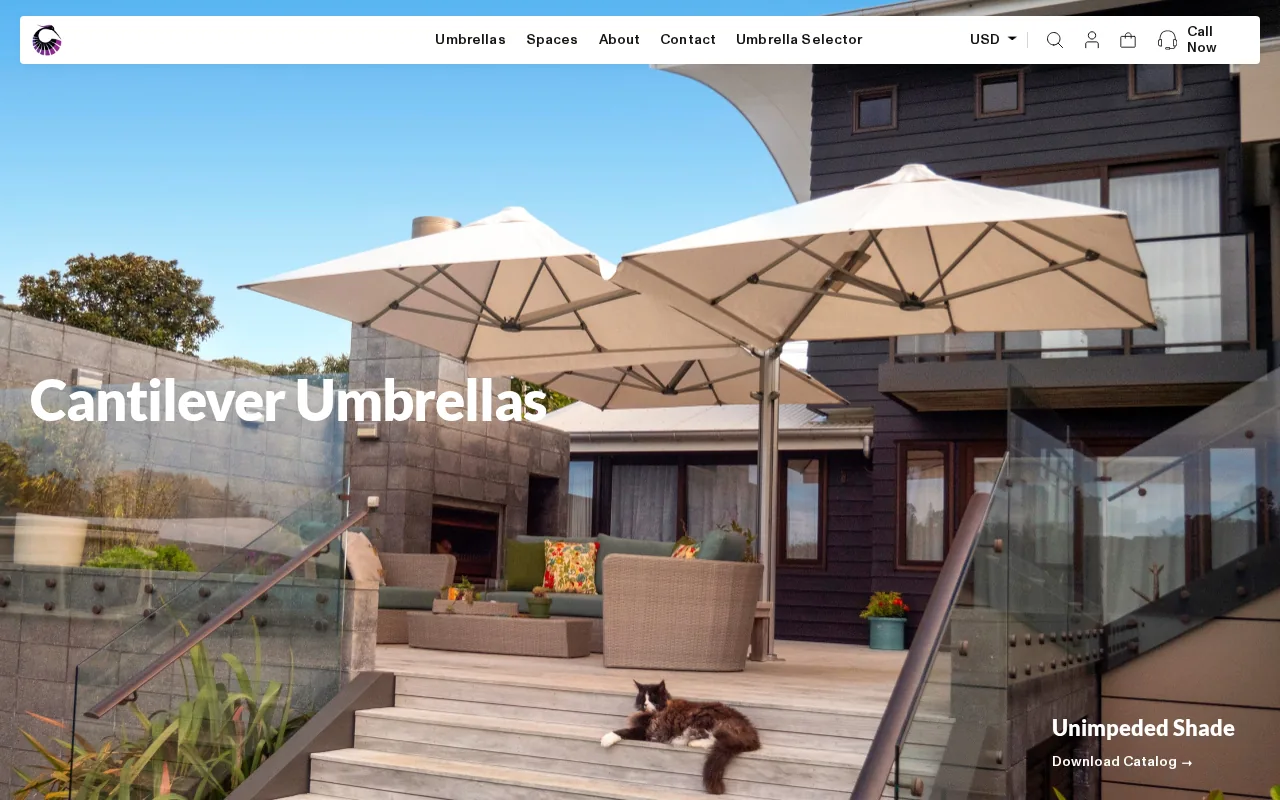
The fabric is a high‑performance, UV‑resistant material that maintains colour after years of sun exposure. The design works for both residential patios and commercial terraces.
Because the umbrella is engineered for marine environments, it resists corrosion even in salty spray. The vented canopy also helps keep the area underneath cooler on hot days.
Below is a quick look at the key specs that matter for coastal use.
How to Choose – Quick Checklist
FAQ
What wind rating should I look for on a coastal umbrella?
For Australian coastal zones, a rating of at least 60 km/h is a good baseline.
Do these umbrellas need a special base?
Yes. A heavy‑duty concrete or sandbag base is essential for stability, especially when the canopy spans 3 m or more.
Is UV protection really necessary?
UV protection matters because Australian sunlight can exceed 10 kW/m². A canopy with UPF 50+ blocks at least 98 % of harmful rays, keeping guests safe.
Can I automate the tilt and rotation?
Some models, like Umbrello’s premium range, include motorised tilt and app control. Others rely on manual crank mechanisms.
How often should I maintain a coastal umbrella?
Inspect the frame and fittings after any strong wind event. Clean the canopy with mild soap and water a few times a year, and re‑tighten any bolts that may have loosened.
Conclusion
If you need a shade solution that tolerates salty breezes and strong gusts, start with Umbrello’s premium cantilever umbrella for its strong frame, smart features and proven engineering. Want to compare a wind‑rated option, check Solarmax’s 60 km/h rating. Ready to act? Explore Umbrello’s full catalog and request a free design consultation today.
- Confirm the wind rating or engineered wind resistance for your site.
- Check that the frame uses aluminium and stainless‑steel fittings (both resist rust).
- Look for UPF 50+ or higher to protect against UV damage.
- Make sure the base can handle the umbrella’s weight; concrete or sandbag bases are safest.
- Consider extra features like motorised tilt, LED lighting or vented canopies if you need flexibility.
| Feature | Details |
|---|---|
| Frame material | Marine‑grade aluminium, stainless‑steel fittings |
| Canopy | UV‑resistant, vented fabric |
| Wind handling | Vented design reduces lift in gusts |
| Ideal settings | Coastal patios, pool decks, hospitality venues |
| Base | Heavy‑duty sandbag or concrete base required |
