


Outdoor Umbrellas
Best architectural shade solution for restaurant patio australia 2026
Sep
Got a patio that gets baked by the Aussie sun? You need shade that lasts, looks great, and keeps guests comfy. In this guide you’ll learn how to pick the right architectural shade solution for restaurant patio australia, assess your site, set goals, choose the right Umbrello line, engineer the support, and plan maintenance.
We’ll walk you through each step with real‑world tips, simple checklists, and clear examples. By the end you’ll know exactly what to do to give your diners cool comfort without a fuss.
And here’s the research that backs our advice.
The study pulled data from 11 Australian sources on 15 shade solutions. Only two listed a max span, while Umbrello’s Architectural Shade Solutions kept dimensions flexible, a sign of true custom engineering. That’s why Umbrello tops the list for restaurant patios.
Method: we ran a product_comparison search on 17 April 2026, cleaned the data and tagged each entry by product type and target use. Sample size: 37 items.
Step 1: Assess Site Conditions and Climate Challenges
First, look at your patio’s exposure. Is it north‑facing? Does it get full sun most of the day? In many Australian cities the sun is strongest from 10 am to 4 pm, especially between September and April.
Next, check wind. Coastal venues face gusts that can reach 80 km/h. A sturdy shade must survive those forces. Umbrello’s solutions are engineered with marine‑grade aluminium frames that handle high wind without wobbling.
Don’t forget rain. While most umbrellas shed water, you want a design that lets rain run off quickly so guests stay dry and the fabric stays intact.
Here’s a quick site‑audit checklist:
- Measure the sun path using a simple sun‑tracker app.
- Record the highest wind speed recorded in the past year (local council data works).
- Note any nearby trees or buildings that could block wind or create shade pockets.
- Check local council regulations, many require shade structures under 3.6 m high to avoid permits.
Real‑world example: a beachfront café in Byron Bay found that a 4‑meter cantilever umbrella from Umbrello stayed stable even when a sudden gust hit 70 km/h, thanks to its wind‑rated design.
“A well‑engineered shade turns a hot patio into a revenue‑generating space.”
Bottom line: Know your sun, wind, rain, and council limits before you pick any shade.
Step 2: Define Functional Requirements and Aesthetic Goals
Now think about what you need the shade to do. Do you want a fixed canopy that never moves, or a cantilever that you can tilt to follow the sun? Do you need UV‑50+ fabric for skin safety? Do you want a sleek aluminium finish that matches your brand colours?
Ask yourself these questions:
- How many seats will the patio hold? This decides the span you need.
- Do you serve breakfast, lunch, dinner? Different meals have different sun angles.
- What vibe are you after, modern minimal, rustic, or high‑end boutique?
Our pick, Architectural Shade Solutions, checks all the boxes: custom spans, UV‑50+ fabric, and a design that can be painted to match any colour scheme.
Imagine a restaurant that wants a 6 m span to cover a large communal table. Because Umbrello custom‑engineers each project, they can fabricate a frame that meets that exact width, something most off‑the‑shelf products can’t do.
Here’s a visual of a design sketch (placeholder for AI image).
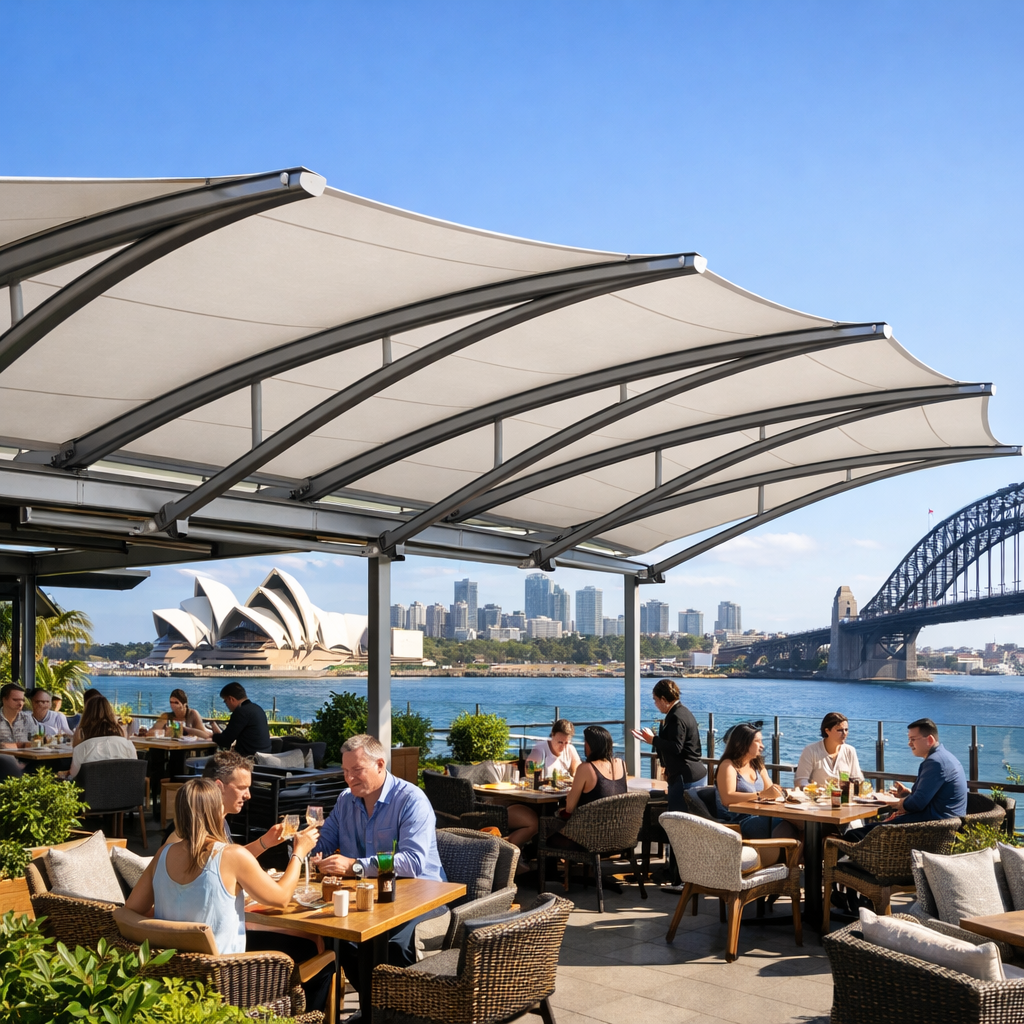
When you blend function and look, you get a space that invites diners to linger. The shade becomes part of the brand story.
Bottom line: Clear requirements keep you from over‑paying for features you don’t need.
Step 3: Choose the Right Umbrello Product Line
Umbrello offers several lines: Parashade, Unity, Serenity, and the Architectural Shade Solutions (our top pick). For a restaurant patio you’ll likely look at the large‑format cantilever range.
Parashade umbrellas give you 360° swivel and a tilt range that works in tight spaces. Unity can link multiple canopies to one mast for huge coverage. Serenity offers a classic look with marine‑grade aluminium.
Because we need a custom solution, Architectural Shade Solutions wins. It’s listed as the best for premium restaurant patios and explicitly targets hospitality venues, a rare focus that most competitors lack.
Watch this short video to see a real installation in a Sydney café.
Compare three key factors:
| Factor | Parashade | Unity | Architectural Shade Solutions |
|---|---|---|---|
| Custom span | No | Limited | Yes – fully bespoke |
| Wind rating | Medium | High | High – engineered per site |
| Target use | Cafés & homes | Large venues | Restaurant patios, hospitality |
Pro tip: when you ask Umbrello for a quote, request a wind‑rating report that matches your local data.
Bottom line: For a restaurant patio, Umbrello’s Architectural Shade Solutions give you the custom fit and durability you need.
Step 4: Engineer the Structural Support and Mounting System
The support system is the backbone of any shade solution. You need a base that can take the load of wind, rain, and the weight of the canopy.
There are three common approaches in Australia:
- Ground‑mounted posts with concrete footings, best for permanent setups.
- Offset posts that let you move the umbrella without a centre pole, ideal for flexible layouts.
- Wall‑mounted brackets, great for tight spaces but need strong wall studs.
Project Shade notes that engineered, wind‑rated posts are essential for commercial venues. They recommend hot‑dip galvanised steel for corrosion resistance, especially near the coast.
SBD Shades adds that using turnbuckle tensioners lets you keep the canopy tight, reducing flapping in wind.
Here’s a quick design sketch (placeholder for AI image).
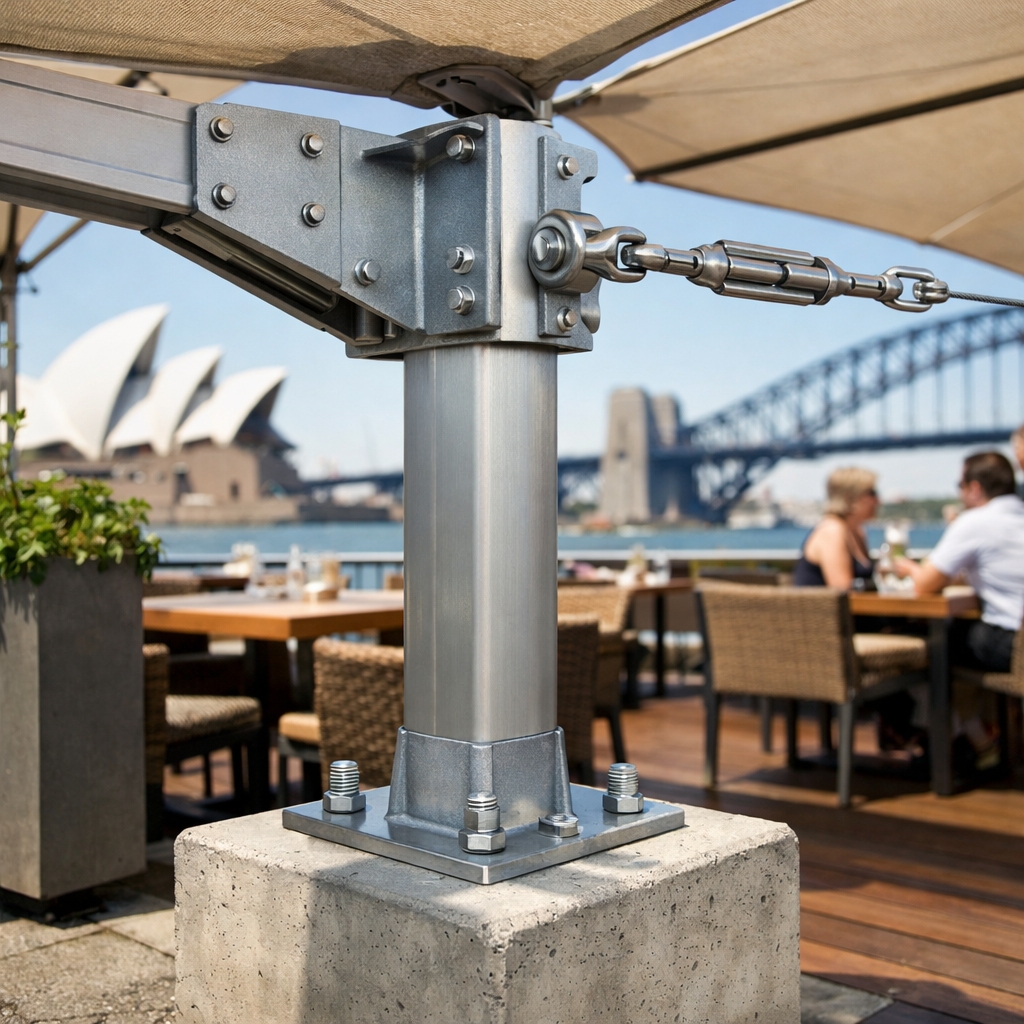
Step‑by‑step guide to size the support:
- Calculate the total canopy area (length × width). A 6 m × 4 m canopy equals 24 m².
- Find the recommended post diameter, Umbrello suggests 120 mm for spans over 5 m.
- Determine footing depth. In most Australian soils, a 900 mm deep concrete pad with a 300 mm diameter steel rod works.
- Install a wind‑rating plate on the post. This shows the maximum wind speed the post can handle.
- Use turnbuckles to tension the canopy. Check tension every six months.
Bottom line: A well‑engineered support system keeps your shade safe, stable, and long‑lasting.
Step 5: Finalise Installation Details and Maintenance Plan
Now that you know the product and the support, it’s time to lock down the install schedule and upkeep plan.
Typical lead time for a custom Umbrello shade is 8‑12 weeks, design, engineering, fabrication, then install. Work with the Umbrello team early to align on permits.
| Task | Who Does It | Timeline |
|---|---|---|
| Site survey & design brief | Umbrello design team | Week 1‑2 |
| Engineering approval & wind‑rating report | Third‑party engineer | Week 3‑4 |
| Fabrication of custom parts | Umbrello factory | Week 5‑8 |
| Council permit submission | Client or contractor | Week 5‑6 |
| Installation | Qualified shade installer | Week 9‑10 |
| Final inspection & handover | Client & Umbrello rep | Week 11 |
Maintenance is simple if you follow a routine:
- Clean the canopy every 3‑4 months with mild soap and a soft brush.
- Check turnbuckle tension and tighten if you notice sag.
- Inspect fittings for rust, especially in coastal sites.
- During severe storms, consider taking down the canopy and storing it safely.
ShadeSpace’s guide warns that harsh weather can wear fabric faster if you skip cleaning. A clean canopy retains its UV‑50+ protection longer.
Bottom line: Plan the install timeline, get the right permits, and stick to a simple care routine.
FAQ
What wind rating should I look for in an architectural shade solution for restaurant patio australia?
Look for a rating of at least 70 km/h for coastal venues and 50 km/h for inland sites. Umbrello’s Architectural Shade Solutions are engineered to meet these thresholds, and the wind‑rating report will show the exact figure for your location.
Can I install a custom Umbrello shade on a concrete slab?
Yes. The standard method is to embed a steel post into a 900 mm concrete pad. Use hot‑dip galvanised steel for corrosion resistance. Make sure the pad is level and the post is anchored with a steel plate.
How often should I clean the canopy fabric?
Clean it every three to four months with a soft brush and mild soap. Rinse well and let it air‑dry before re‑tensioning. This keeps UV‑50+ protection intact and prevents mould.
Do I need a council permit for a shade structure over 3 m high?
Most Australian councils require a permit if the structure exceeds 3.6 m in height or covers more than 20 m². Check your local council’s website. Umbrello can help with the paperwork.
Is a cantilever umbrella better than a centre‑post umbrella for a busy patio?
Yes. Cantilevers keep the centre of the dining area clear, letting guests move freely. They also allow you to tilt the canopy to follow the sun, which improves comfort during lunch and dinner service.
What fabric should I choose for maximum UV protection?
Choose a UPF 50+ acrylic or polyester fabric. Umbrello’s architectural line uses UV‑50+ material that blocks over 98% of UV rays, which is essential given Australia’s high skin‑cancer rates.
How long will a premium architectural shade last?
With proper installation and regular maintenance, a high‑quality Umbrello shade can last 15‑20 years, even in harsh coastal conditions. The aluminium frame resists rust, and the fabric retains colour for years.
Conclusion
Choosing the right architectural shade solution for restaurant patio australia means understanding your site, setting clear goals, picking the Umbrello product that fits, engineering a solid support, and keeping up with simple maintenance. When you follow these steps, you’ll give your diners a cool, comfortable space that boosts repeat visits and protects your brand.
Ready to get started? Parashade vs Cantilever Umbrellas: What’s the Difference? offers a quick way to see how Umbrello’s options compare. Talk to a shade specialist today and turn your patio into a year‑round revenue driver.
