


Outdoor Umbrellas
How to Choose a Coastal Outdoor Umbrella in Australia
Sep
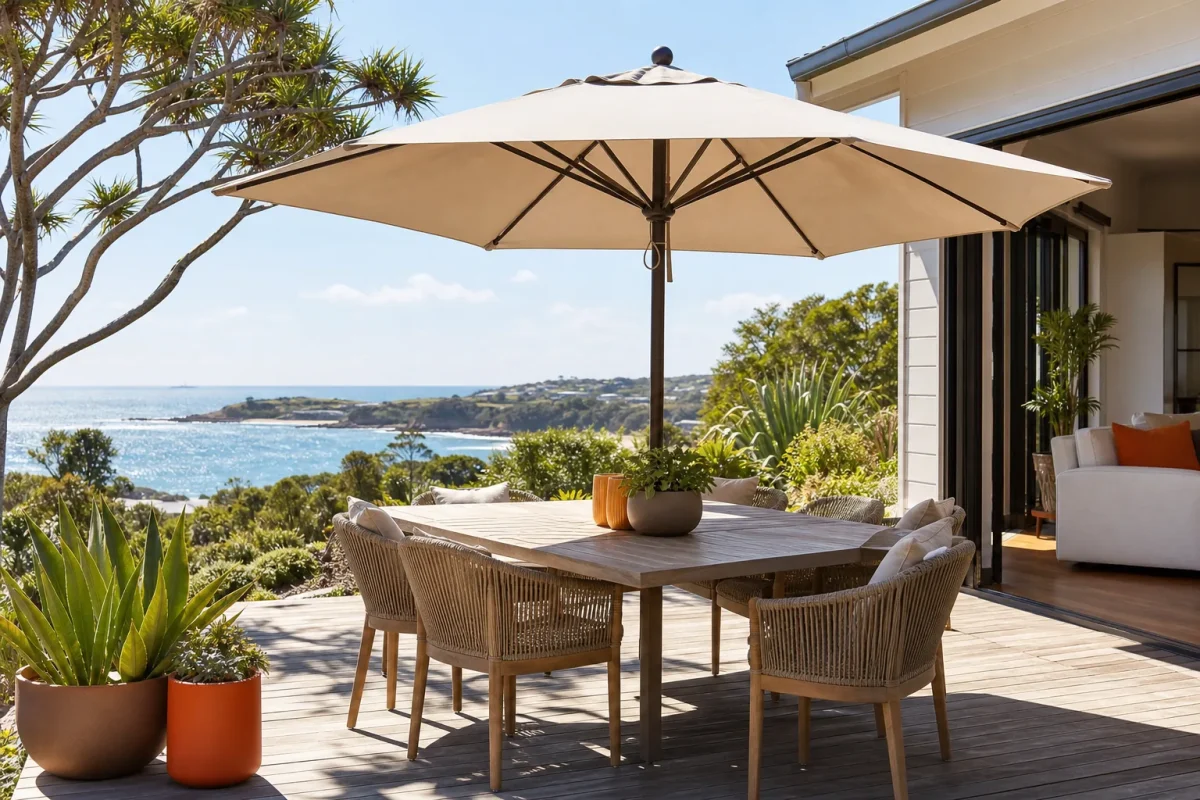
Salt air, hard sun and sudden gusts can expose a weak outdoor umbrella fast. A premium outdoor umbrella for coastal homes in Australia needs more than a stylish canopy. It needs the right frame, fabric, base and care plan for your site.
Work through these steps before you buy. You’ll end up with shade that fits your space and is easier to protect over time.
Step 1: Assess Your Coastal Site and Shade Requirements
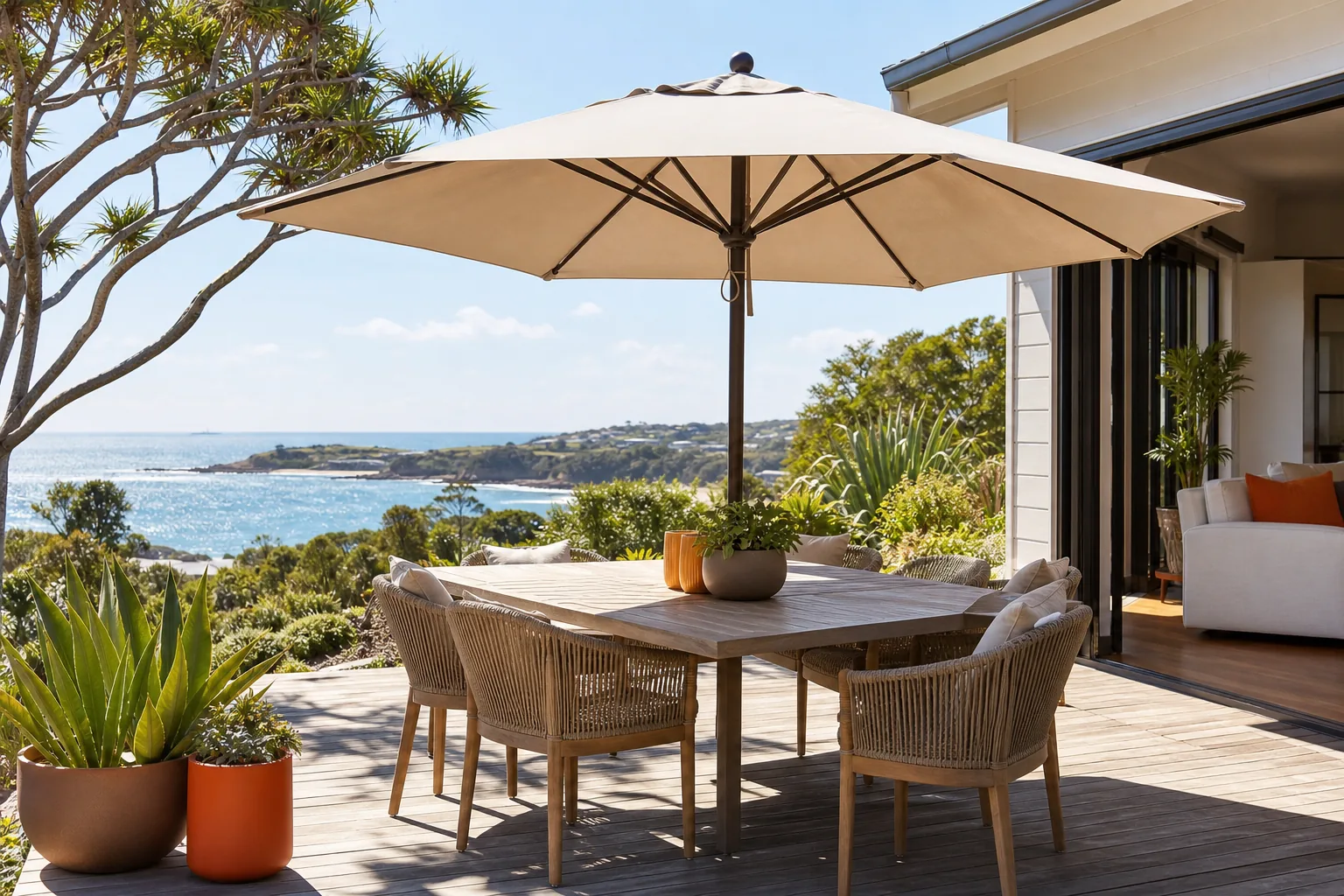
Start with the site, not the umbrella. Your choice will change if the shade sits beside the sea, on an exposed deck or within a sheltered courtyard.
Watch the area at different times of day. Note where the sun falls in the morning and late afternoon. Coastal homes often need shade that can shift as the sun moves, rather than a fixed canopy aimed in one direction.
Measure the space around the furniture. Leave room for chairs to move and for people to walk past the base. A canopy that covers a table may still leave nearby seats exposed. Rectangular shade often suits long dining tables, while square shade can line up well with a deck edge or compact seating area.
Also mark hazards before you choose a pole position:
- glass doors and windows that could be struck by moving parts;
- pool edges where a heavy base may restrict access;
- low eaves, tree limbs or balcony ceilings;
- drains and uneven paving that can affect the base;
- doors that need to open fully beneath the canopy.
A cantilever design can keep the pole beside the furniture. That helps when a centre pole would block a table or lounge. Cantilever shade designs are commonly used to free the space beneath the canopy.
Wind exposure matters just as much as sun. A sheltered courtyard and a beach-facing deck don’t need the same setup. If the site gets regular gusts, plan to close the canopy when you’re away. No fabric or frame should be treated as storm protection.
Write down the canopy size you need, the hours of shade you want and where the base can safely sit. That short site note will make every later choice easier.
Step 2: Specify a Corrosion-Resistant Frame and Hardware
For a coastal umbrella, the frame deserves as much attention as the canopy. Salt carried by sea air can settle on metal parts and speed up corrosion, especially around joints, fasteners and moving mechanisms.
Look for a clear material specification. Powder-coated aluminium is common in premium outdoor shade because it is light and does not rust like ordinary steel. A coating still needs care, though. Scratches, cut edges and exposed fixings can become weak points.
Stainless steel hardware can help in exposed settings, but ask which grade is used. A seller who simply writes “stainless” has not given you enough detail to judge coastal use. Ask about bolts, pins, springs, hinges and the internal parts of the crank.
Marine-grade finishes deserve the same scrutiny. The term sounds useful, but it should connect to a named material, coating or care instruction. If a listing gives no corrosion detail, mark that as unknown rather than assuming the frame is coastal-safe.
In the sampled products, only two disclosed frame material. One listed metal, while another listed aluminium. None gave explicit corrosion-resistance details. Buyers are often asked to make a long-term coastal decision with very little hard data.
Inspect the frame design as well as the material. Thick poles can improve stiffness, but joints carry much of the load. Gussets, reinforced hubs and well-supported ribs may help, yet you should only rely on features the supplier documents for that model.
Ask the supplier these questions before placing an order:
- What material is used for the pole, ribs and hub?
- What finish protects the frame?
- Which hardware is exposed to salt air?
- Are replacement ribs, hubs or cranks available?
- What cleaning method protects the finish?
Umbrello is useful to consider when you want an Australian supplier involved in the specification process. Its range includes residential, commercial and architectural shade solutions, so the discussion can start with the site rather than a one-size-fits-all frame.
Don’t accept “rust-proof” as a complete specification. Ask what is protected, how it is protected and what the warranty excludes.
Step 3: Choose UV-Resistant Canopy Fabric for Australian Conditions
Fabric does two jobs on a premium outdoor umbrella for coastal homes in Australia. It keeps direct sun off people and furniture, and it must cope with UV, salt, rain and repeated folding.
Look for solution-dyed acrylic or another fabric with a clear UV and fade specification. Solution-dyed fibres hold colour through the fibre rather than relying only on a surface treatment. That can help reduce visible fading, but the exact result still depends on exposure and care.
Polyester can also suit some outdoor umbrellas. The key is the full specification. “UV resistant” alone doesn’t tell you the level of protection, the fabric weight or how the canopy is treated against water.
Ask for details on:
- UV protection or UPF rating;
- fade resistance and any non-fade warranty;
- water resistance versus waterproof construction;
- fabric weight and weave;
- seam construction and replacement options.
Water-resistant fabric can shed light rain, but it won’t turn an open umbrella into a permanent roof. Pool spray, salt residue and damp storage can still mark the canopy. Let it dry before folding it for a long period.
Colour affects both design and upkeep. Pale fabric can suit coastal homes and show less heat, while dark fabric can create strong contrast with pale stone or timber. Both can fade if left open in intense sun for long periods. Choose a colour you can live with after some natural weathering.
Don’t treat a large canopy as automatically better. A 15-foot rectangular umbrella may cover a broad dining setting, but its larger surface also catches more wind. Match the canopy to the furniture you need to shade, not to the largest size on a product page.
Ask for a fabric sheet, care guide and written warranty before purchase. If the seller cannot provide them, compare the model on known information only.
Step 4: Match Wind Resistance, Vents and Base Stability to the Location
Wind stability comes from the whole system. The canopy, ribs, pole, base and fixing method must work together. A vented top can let air escape, but it cannot make an unsecured base safe.
Be wary of vague phrases such as “windproof” or “handles strong winds.” Ask for a test condition, a stated limit and the setup used during testing. The BeachBUB All-in-One Beach Umbrella System listed 17 mph wind resistance and a 10-year warranty. That figure applies to that product and setup, not to every premium umbrella.
Vented and double-top canopies can reduce pressure by allowing air to move through an upper opening. They may feel more stable in a breeze, but you still need to close the umbrella when conditions worsen. A large canopy can act like a sail.
Choose the base after you know the canopy size and pole type. Water-fill bases are easier to move when empty. Sand-fill bases can add weight, though filling and removal take work. A fixed deck mount may suit a permanent installation, but it needs a sound structure and careful waterproofing.
| Site condition | Useful setup to consider | Decision rule |
|---|---|---|
| Sheltered courtyard | Vented canopy with a suitable weighted base | Prioritise fit and daily operation, but still close it when unattended. |
| Open coastal deck | Heavy base or engineered fixing with documented frame details | Choose stability before canopy size. |
| Uneven paving | Adjustable feet or a professionally levelled fixing point | Don’t place a tall umbrella on a rocking base. |
| Balcony | Site-approved fixing or a compact system | Check building rules and structural limits first. |
| Poolside area | Stable base that preserves a clear walking route | Keep access and trip risk in mind. |
Keep the base level. Check that wheels lock before opening the canopy. Recheck bolts after installation and after periods of heavy use. The manufacturer guidance on outdoor umbrella protection also reinforces the need to protect an umbrella when harsh weather arrives.
For a cantilever model, base selection is especially important because the canopy sits away from the pole. Umbrello’s guide to choosing a base for a cantilever umbrella can help you compare the site exposure with the canopy shape.
Step 5: Select the Operating System, Shape and Installation Method
A premium outdoor umbrella for coastal homes in Australia should be easy to close before the wind rises. If the mechanism is awkward, you may leave the canopy open when it should be stored.
Crank handles are common because they let one person open and close a canopy without pulling the fabric by hand. Check the handle height and the amount of force needed. A short person may struggle with a high tilt control, while a large canopy can put strain on a basic crank.
Some designs add tilt adjustment. This helps you follow the sun without moving the base. Rotation can do the same for a cantilever umbrella, but the locking method should feel firm. Test the movement before you commit to a permanent fixing.
Shape should follow the furniture. A square canopy can suit a square dining table. A rectangle may cover a long table or outdoor lounge. A round canopy can work well where traffic moves around the seating area.
Measure the closed height as well as the open height. Telescopic systems can lower into a table as they close, while other umbrellas need furniture moved first. Check the pole diameter and confirm that the table opening matches it.
Installation depends on the surface. A portable weighted base suits renters or people who want to shift shade. A deck mount saves floor space but should be designed for the structure beneath it. On a balcony, never assume the railing can carry the load.
A detailed beach umbrella listing shows why specifications should be read as a complete set. It may state the pole size, canopy dimensions, hinge adjustment and table-cover fit. That level of detail makes it easier to check whether the umbrella will fit your furniture.
Before installation, make a simple clearance drawing. Include the open canopy, the closed canopy and the path people use around it. A few minutes with chalk or masking tape can prevent a costly placement mistake.
Step 6: Compare Premium Umbrella Configurations for Your Use Case
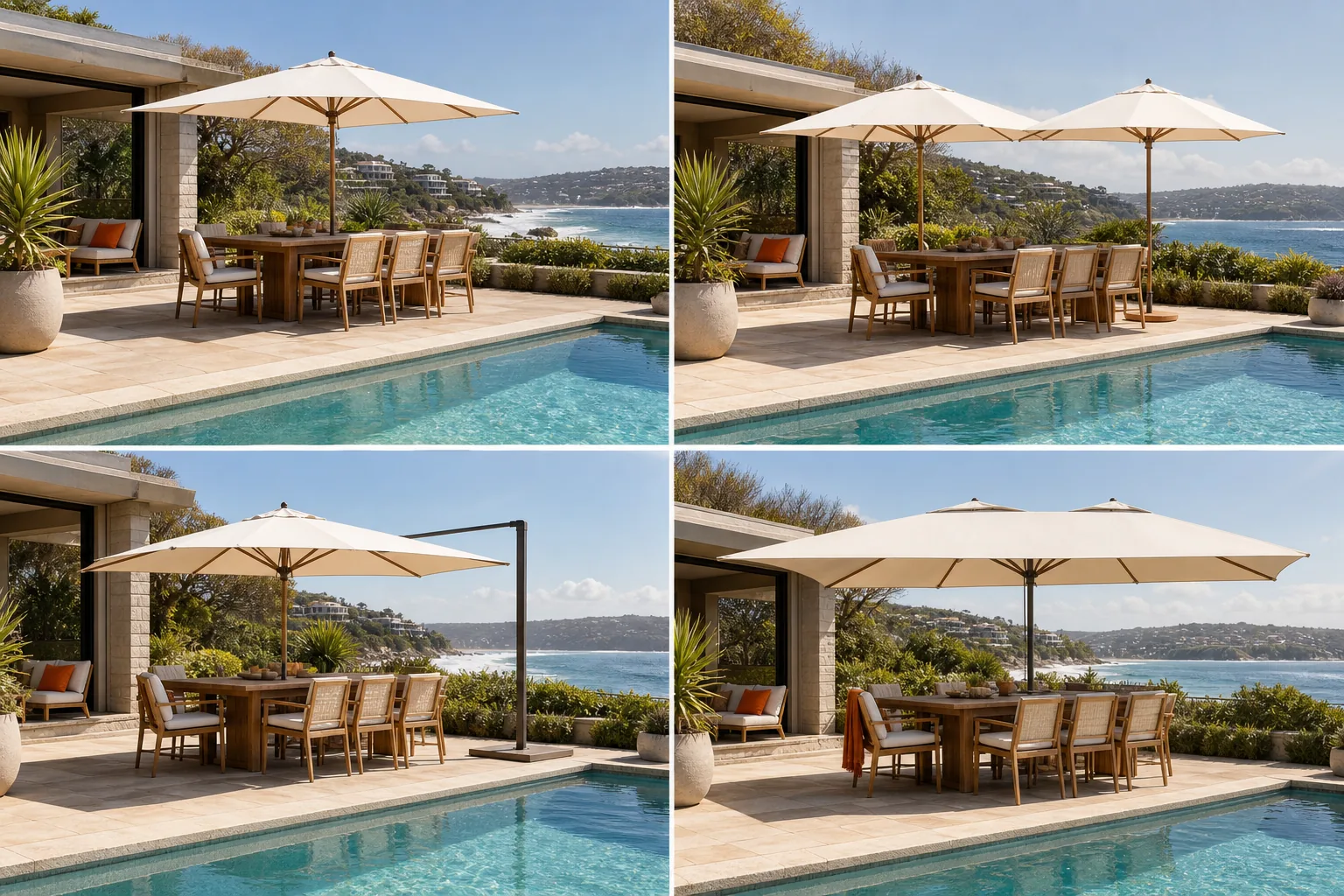
Now compare configurations rather than judging umbrellas by appearance alone. Umbrello’s Australian range includes the Torino Cantilever Umbrella, Milano Market Umbrella, Amalfi Commercial Umbrella and Siena Wall Mounted Umbrella. Each name points to a different layout problem.
Choose a cantilever configuration when you need open space beneath the canopy. It suits lounge seating, dining areas and pool edges where a centre pole could interfere with the furniture.
Choose a market-style configuration when the pole can sit through a table or beside a compact setting. It often gives a simpler footprint, but the table and base must work together.
Choose a commercial configuration when the umbrella will serve a hospitality venue, shared outdoor area or large dining zone. Look closely at service access, spare parts, fixing details and the daily close-down routine.
A wall-mounted configuration can suit a narrow balcony or courtyard. It saves floor space, though the wall must be strong enough for the loads. The arm also needs a clear swing path.
Use this short comparison when speaking with a specialist:
Ask for a complete quote, not just the canopy. It should show the frame, base, cover, delivery, installation and any required fixing kit. A low canopy price can become a poor value if the correct base or mount is missing.
Umbrello is a sensible place to start when you want Australian advice across residential, hospitality and design-led projects. Request the exact frame, fabric, base and warranty details for your site before comparing final options.
Step 7: Plan Coastal Maintenance, Warranty Support and Long-Term Value
Maintenance is part of the purchase. Salt residue can sit on the frame and hardware long after the air feels dry. Regular cleaning helps you spot a damaged coating, loose fastener or torn seam before the problem grows.
Use the maker’s cleaning instructions first. In general, rinse salt and dust from exposed surfaces with clean water, then let them dry. Avoid harsh chemicals unless the supplier approves them. Don’t fold a damp canopy into its cover for weeks.
Set a routine that fits your site:
- Inspect the canopy after strong weather.
- Rinse exposed metal when salt buildup is visible.
- Check the crank, tilt point and rotation lock.
- Look for frayed seams or stretched fabric.
- Close and cover the umbrella when you leave it unused.
Never wait for a storm warning to learn how the umbrella closes. Practise the process while the weather is calm. Store removable fabric only when it is clean and dry.
Warranty terms need careful reading. Check whether the warranty covers fading, frame corrosion, fabric tears, mechanisms and labour. A canopy warranty may exclude damage caused by wind, poor anchoring or failure to close the umbrella. Ask how claims work and whether replacement parts remain available.
Also ask how the supplier handles parts. A replaceable rib or canopy can keep the whole frame in use. If one small mechanism fails and the entire umbrella must be discarded, the long-term cost is harder to justify.
Review product and care information directly from the supplier, rather than relying only on a marketplace description. Use the same approach for any umbrella you are considering.
Umbrello can help buyers compare a residential, commercial or architectural setup around the actual coastal site. Ask for care instructions and warranty terms in writing before you approve the order.
The right value test is simple: will the umbrella remain useful, serviceable and safe after years of sun and salt? A higher initial cost may make sense when the specification, installation and support are clear. If those details are missing, pause before paying a premium.
Frequently Asked Questions
What makes an outdoor umbrella suitable for coastal homes?
A coastal outdoor umbrella needs a well-specified frame, UV-resistant fabric, stable anchoring and a care plan for salt exposure. Look for clear material details rather than vague “rust-proof” claims. Ask about exposed hardware, canopy replacement and warranty exclusions. The site itself still matters, because an exposed deck needs more restraint than a sheltered courtyard.
Is aluminium good for a coastal outdoor umbrella?
Aluminium can suit coastal outdoor umbrellas because it doesn’t rust like ordinary steel, but the finish and hardware still matter. Scratched coatings can expose weak points. Ask whether the pole, ribs and fasteners use different materials. Rinse salt residue from the frame and follow the maker’s care instructions to protect the finish.
What wind rating should a coastal umbrella have?
Use a documented wind figure as one part of the decision, not as permission to leave the umbrella open in severe weather. The BeachBUB All-in-One Beach Umbrella System is the only sampled product with a stated 17 mph figure and a 10-year warranty. Base weight, anchoring, canopy size and site exposure also affect stability.
Should I choose a cantilever or market umbrella?
Choose a cantilever umbrella when you need an open area beneath the canopy, such as over lounge seating or beside a pool. Choose a market umbrella when a centre pole can pass through a table or sit beside compact furniture. Compare the base, clearance, operation and closing process before choosing the shape.
How do I maintain an outdoor umbrella near the sea?
Maintain a coastal outdoor umbrella by rinsing salt from exposed surfaces, drying the canopy before storage and checking moving parts often. Close it when you’re away or when strong weather approaches. Inspect seams, ribs, fasteners and the base after heavy use. Keep the warranty and care guide with your purchase records.
Is a premium outdoor umbrella worth the cost?
A premium outdoor umbrella can be worth the cost when its materials, base, installation and support are clearly documented. The value is harder to judge when the seller gives no corrosion details or parts policy. Compare the full installed setup, not only the canopy price. A durable design should also be easy to close and maintain.
Conclusion
For a coastal Australian home, choose the umbrella that matches your site exposure and comes with clear frame, fabric, base and warranty details. Umbrello is a useful starting point for that specification-led discussion. Measure the area, record the wind exposure and request a complete configuration before you buy.
- Home dining: match the canopy to the table and keep the crank easy to reach.
- Poolside lounging: keep the pole and base outside the main walking line.
- Exposed deck: give more weight to anchoring and closure than to maximum coverage.
- Hospitality setting: plan for repeated operation and replacement parts.
- Small courtyard: consider a wall-mounted or compact market arrangement.
