


Outdoor Umbrellas
UV Resistant Outdoor Umbrellas for Beach Homes
Sep
Beach homes need more than a pretty umbrella. Salt air, sharp sun and sudden gusts test every seam, joint and base. This shortlist compares UV resistant outdoor umbrella options for beachfront homes in Australia, with a clear look at wind data, fabric, coverage and coastal upkeep.
1. Umbrello, Premium shade engineered for Australian coastal homes
Umbrello is an Australian outdoor shade specialist for homes, hospitality spaces and coastal projects. For a beachfront property, its main value is the advice behind the purchase. The right umbrella must suit the deck layout, wind exposure, fixing method and daily use pattern.
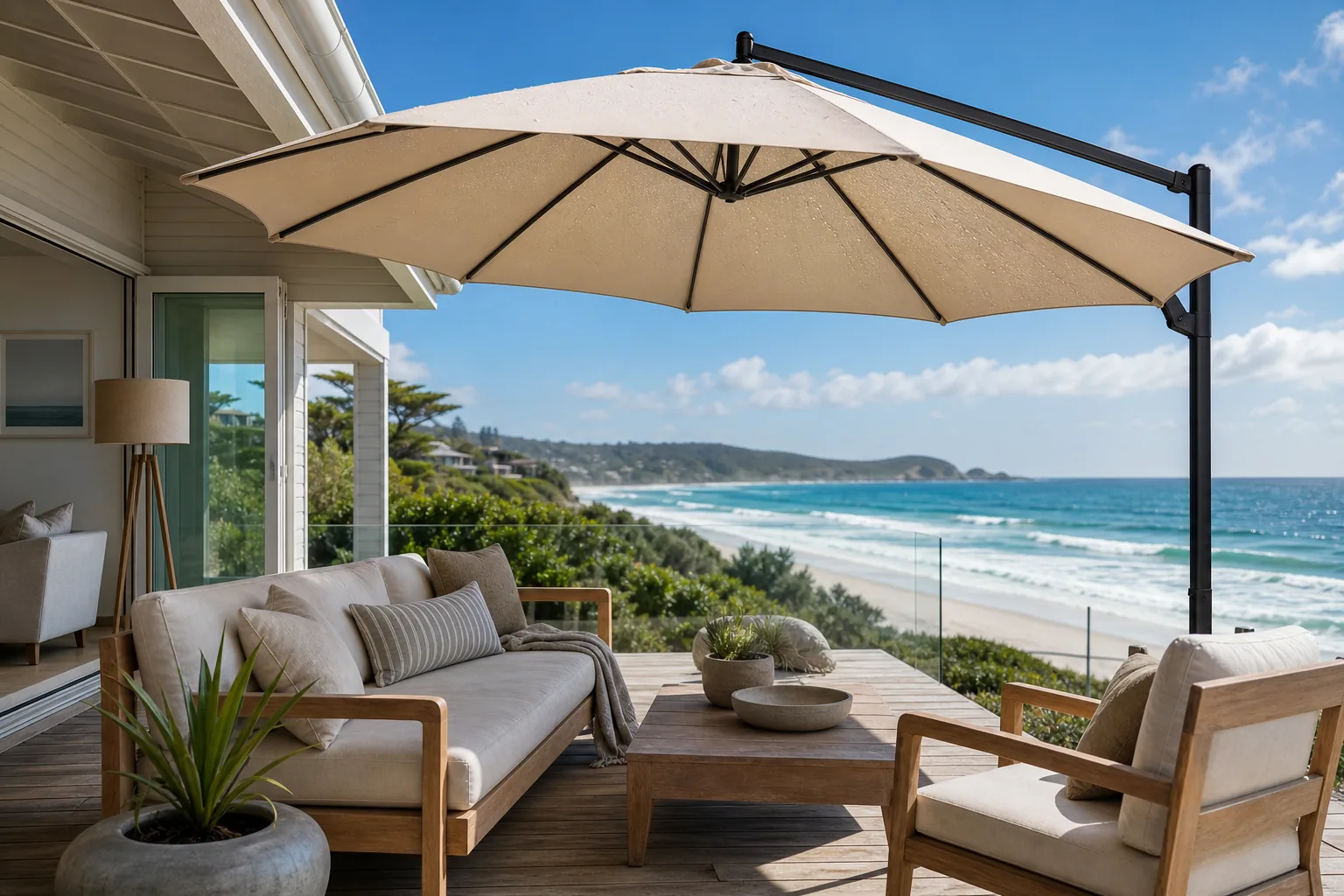
Umbrello works with premium umbrella systems rather than treating shade as a basic seasonal item. That matters when the canopy sits near salt spray, a pool or an exposed upper deck. A specialist can help you compare fixed bases, ballast bases and bolt-down options before the umbrella arrives.
| What to check | Why it matters near the coast | Question to ask Umbrello |
|---|---|---|
| UPF or UV rating | Shows how much UV protection the canopy claims to provide. | What tested UV rating applies to this fabric? |
| Wind test data | Gives a reference point, though gusts remain unpredictable. | What wind test applies, and when must the canopy close? |
| Frame and fittings | Salt can attack weak coatings and mixed-metal joints. | Which parts are aluminium, stainless steel or other metals? |
| Base method | A large canopy can put heavy force on its support. | Can this base be bolted down or fixed in-ground? |
| Replacement parts | Small failures should not end the life of the whole unit. | Are covers, cranks and canopy parts available? |
Umbrello’s own product range includes premium cantilever and commercial shade systems. For homes with limited wall space, a wall-mounted umbrella is another format worth discussing because it keeps the floor clear.
The limitation is simple: no umbrella should stay open through storm conditions just because a test number looks high. Umbrello can help match the system to the site, but the owner still needs a close-and-store routine.
2. Sunhaven Large Wind-rated Cantilever Umbrella, A beachfront-focused residential option
The Sunhaven Large Wind-rated Cantilever Umbrella is the most clearly documented residential option in this shortlist for a UV resistant outdoor umbrella near the Australian coast. It is marketed for residential beachfront homes and has a 40 km/h wind test rating.
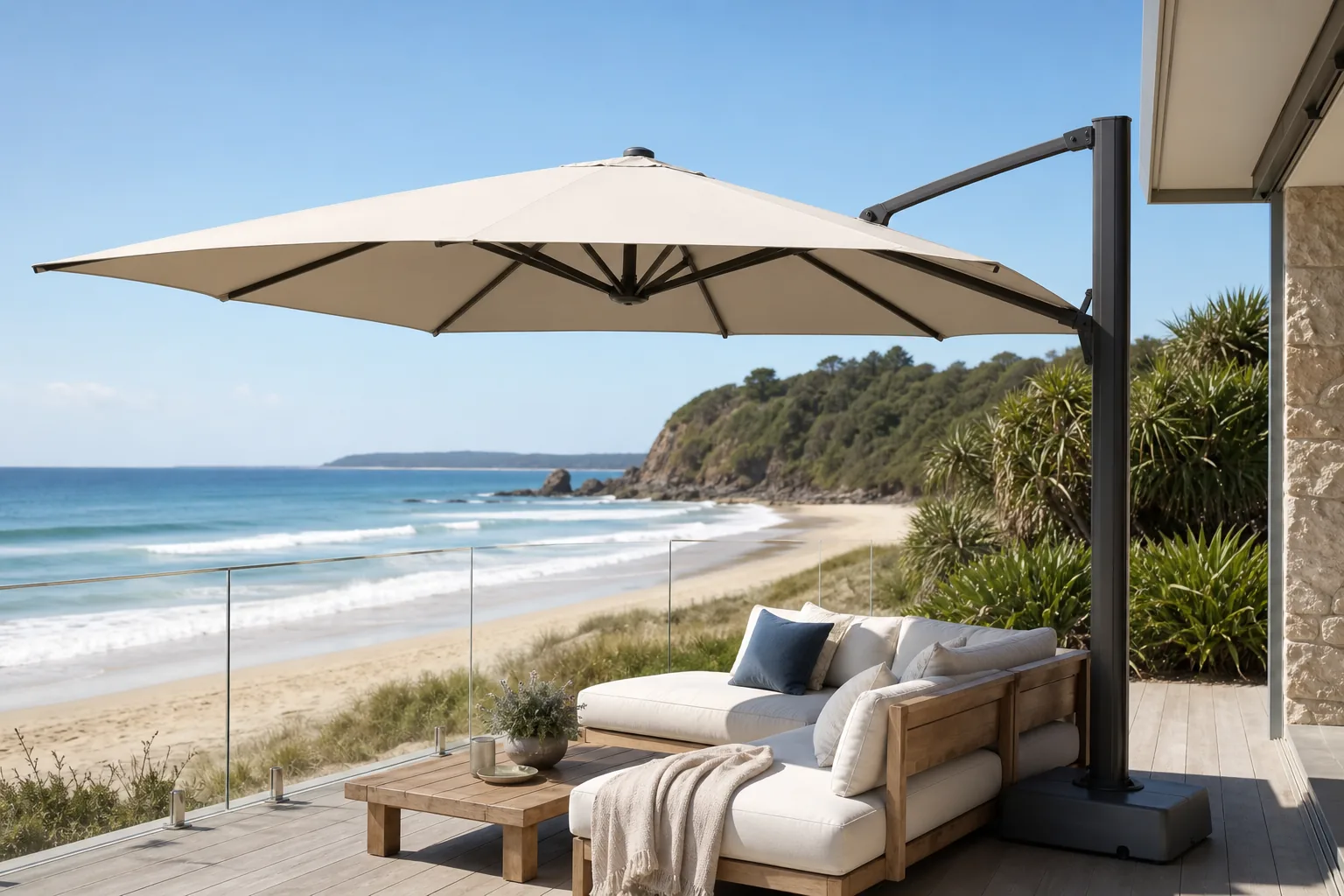
Its canopy uses solution-dyed SunNova acrylic with a UPF 50+ rating. This provides a stated level of UV protection. The canopy is also described as highly water-resistant and comes in a 3.5 metre octagonal size, with a 3.0 by 3.0 metre square option available.
The frame uses rust-resistant aluminium with a matte charcoal powder-coated finish. Stainless steel hardware supports the coastal use case. The umbrella also has 360-degree rotation, left-right tilt and vertical tilt along an adjustable track.
The base needs careful planning. Options include a crossbar base, bolt-down base, in-ground base and water-and-sand resin base. Some base setups need substantial ballast, so the deck structure and access path should be checked first.
The 40 km/h figure comes from a controlled test. It is not permission to leave the umbrella open in gusty weather. Cantilever umbrellas should be collapsed in breezy conditions, and wind damage is not covered by warranty. The product specifications and wind-use warning are worth reading before purchase.
The product has a four-year fabric warranty and a frame workmanship warranty. Check the current warranty wording before ordering, since coverage can depend on installation, use and the domestic setting.
This is a sensible option for a homeowner who wants disclosed UV and wind figures. It still needs a firm base and a habit of closing the canopy well before conditions turn rough.
3. Frontgate Altura Cantilever Umbrella, Large square coverage for expansive decks
The Frontgate Altura Cantilever Umbrella is a large square shade option for a beachfront deck with a broad dining or lounge zone. The recorded size is 13 by 13 feet, giving it the largest stated square coverage among the named options here.
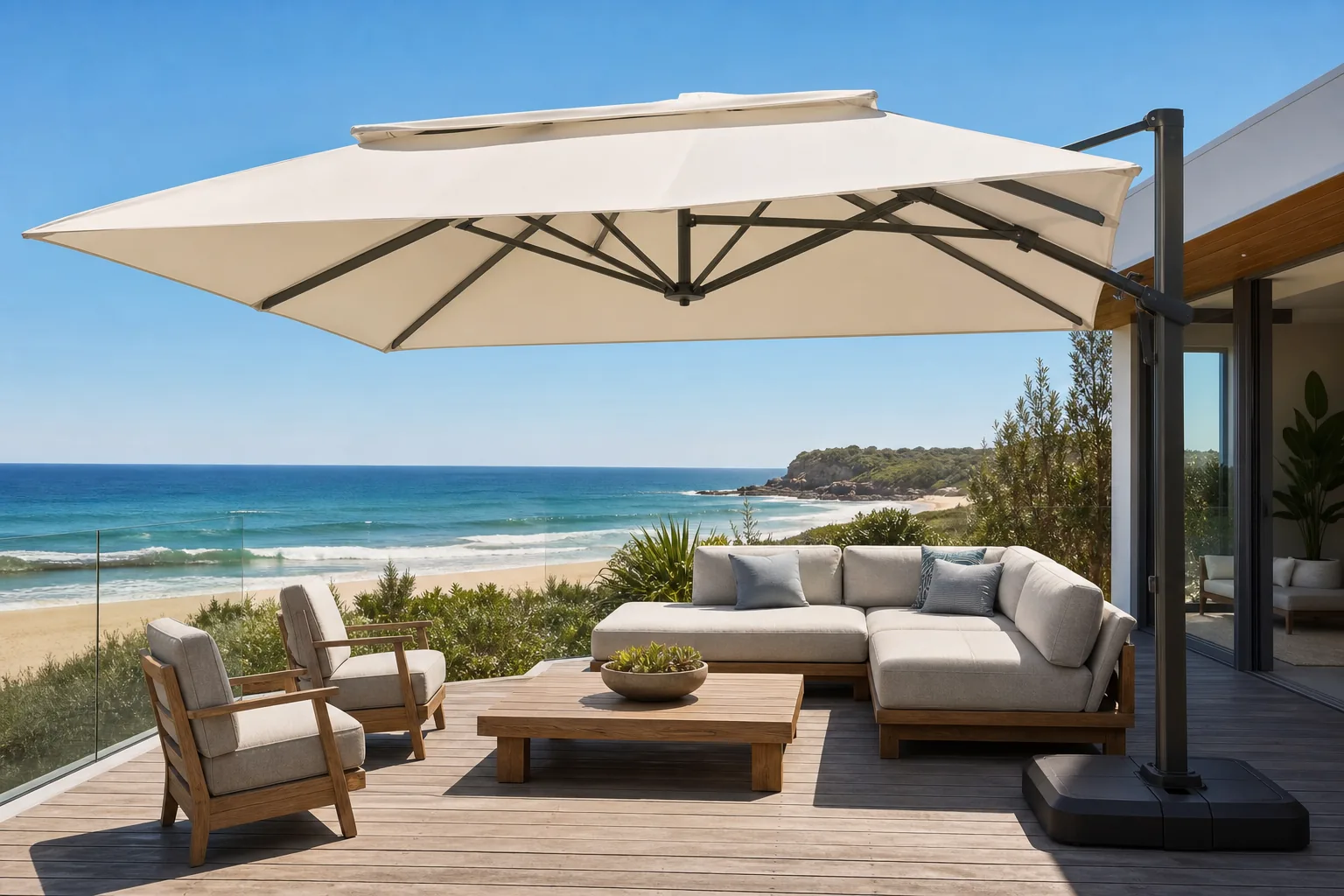
Its frame is finished aluminium and its canopy uses solution-dyed acrylic. Solution-dyed fabric is a useful material detail because the colour is formed through the fibre rather than relying only on a surface finish. Still, the recorded information does not state a UPF figure or a wind rating.
That missing data is the key caveat for Australian coastal buyers. A large canopy catches more wind than a smaller one. Before selecting this format, ask for the recommended base weight, the permitted use conditions and the maker’s instructions for gusts.
The square shape can work well beside a rectilinear home. It lines up with a large table or the edge of a tiled terrace more neatly than a round canopy. But it also needs enough clearance around the corners so the fabric does not brush walls, lights or planting.
Choose this option only when the supplier can confirm the support system for your site. The 13 by 13 foot footprint is generous, but the size makes base design and wind management more important.
4. Williams Sonoma Performance Cantilever Umbrella, Premium fabric performance and broad shade
The Williams Sonoma Performance Cantilever Umbrella is a 10-foot cantilever option with a cast aluminium-alloy frame. Its canopy uses an outdoor fabric designed for performance.
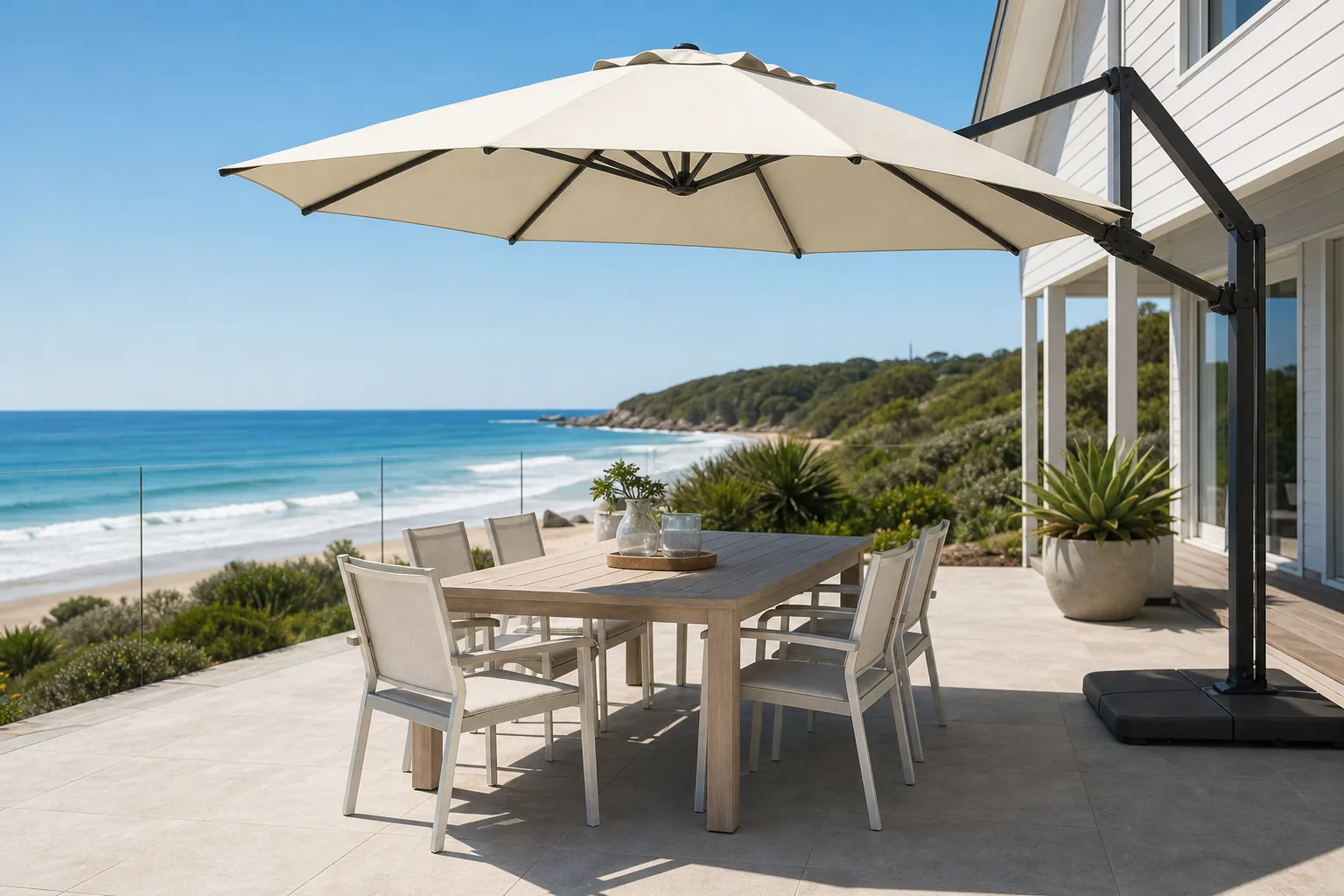
Product-specific UV test results remain important when assessing this fabric. That is a useful reminder: fabric recognition does not replace a product-specific UPF or UV test result.
The 10-foot size suits a medium deck, a pair of lounge chairs or a compact outdoor dining area. It gives more open floor space than a centre-pole umbrella because the support sits to one side. That can make furniture placement easier.
The recorded details do not include a wind rating, base specification or warranty term. Those gaps matter more at a beachfront home than they would in a sheltered courtyard. Ask for the full technical sheet before treating this as a coastal installation.
The fabric may appeal to buyers who place a high value on colour retention. Just keep the decision grounded in written performance data, frame protection and the base plan.
5. Purple Leaf Round Patio Umbrella, Flexible circular shade for beachfront entertaining
The Purple Leaf Round Patio Umbrella has a 12-foot diameter, an aluminium frame and a polyester canopy. Its round shape suits a circular seating area or a table that does not need the crisp edges of a square shade.
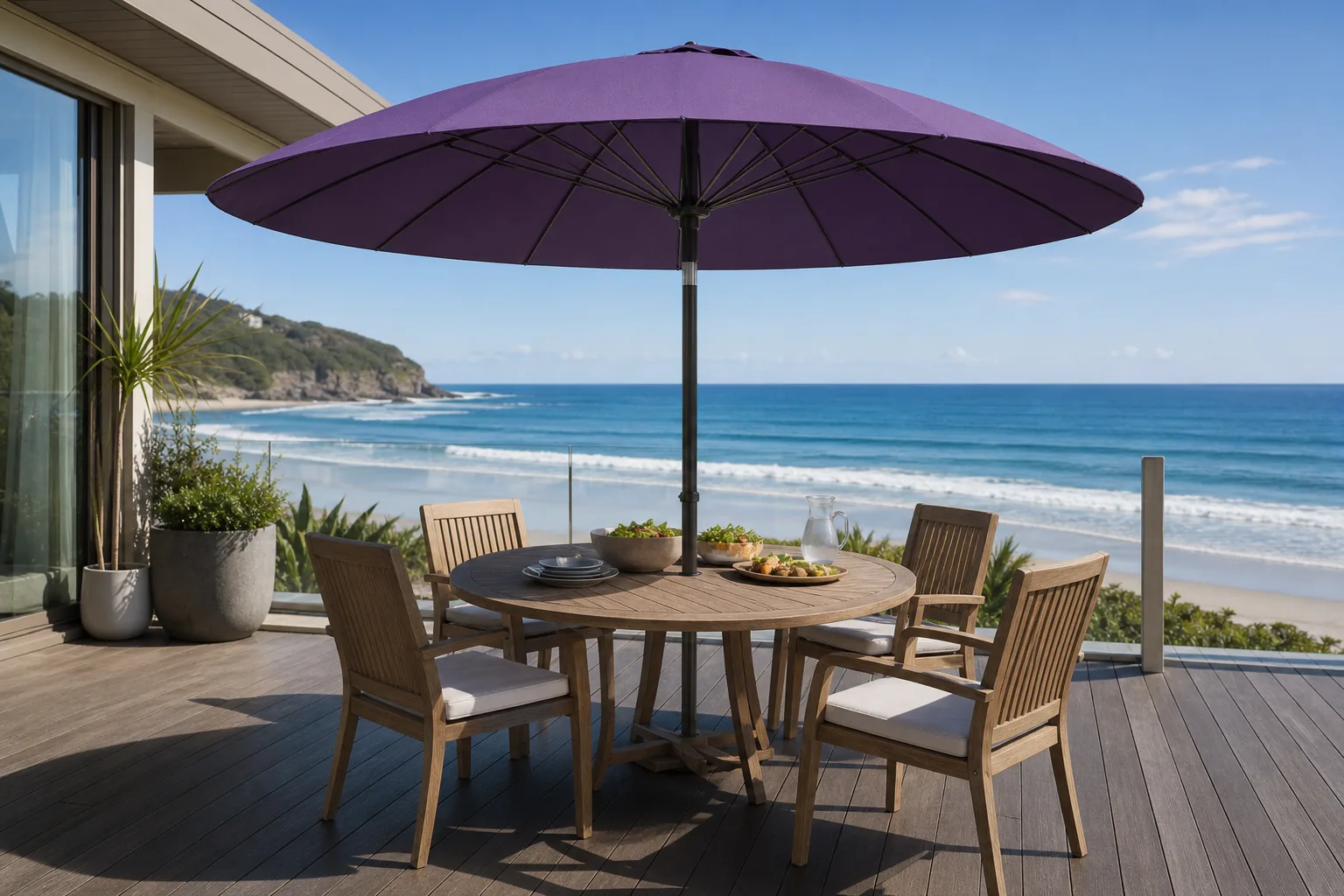
A round canopy can be easier to place in a flowing garden layout. It avoids sharp corners near walkways and can soften the lines of a modern deck. The offset format also leaves the space beneath the canopy more open than a centre-pole design.
The recorded research identifies the materials and size but does not provide a product-specific wind rating or UPF number. That is the main concern for a beachfront home. Ask whether the stated UV-resistant claim has a measured rating, then ask what base weight applies to the 12-foot canopy.
Aluminium may resist surface rust better than untreated steel, but the whole assembly still matters. Inspect fasteners, joints, finish quality and the way the base connects to the mast. Salt air can reach parts that are easy to overlook.
This format makes sense when you want wide, round coverage for relaxed entertaining. It is less suitable when the site has strong exposure and the supplier cannot provide clear wind-use instructions.
6. Purple Leaf Cantilever Umbrella, A solution-dyed acrylic option for adaptable positioning
The Purple Leaf Cantilever Umbrella is a 9-foot option with an alloy steel frame and solution-dyed acrylic fabric. Its smaller canopy can suit a compact deck where a 12- or 13-foot umbrella would crowd the space.
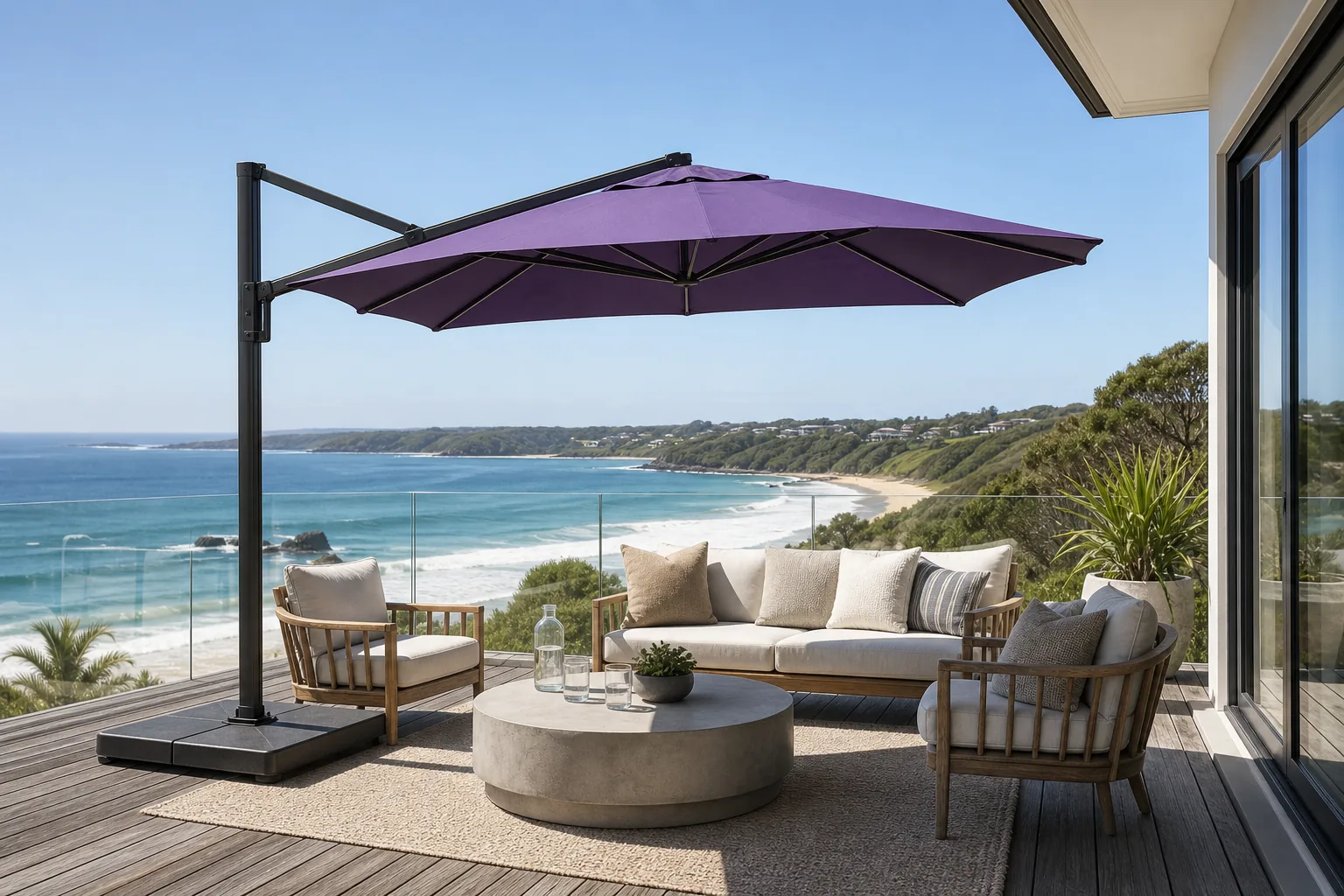
The recorded product information includes a 10-year non-fading guarantee. That is a long stated period for colour protection, but it is not the same as a wind warranty or a structural warranty. Read the exclusions and confirm what the guarantee covers in an Australian coastal setting.
A 9-foot canopy may also place less load on its base than a much larger umbrella. That does not make it safe in gusts. An offset canopy can still act like a sail, especially when the mast stands above an exposed deck or pool area.
The alloy steel frame gives this model a different material profile from the aluminium options in the shortlist. Ask how the frame is coated, how the joints are protected and whether replacement canopy parts are available.
Use this option when the footprint fits the furniture and the supplier can document the base and weather limits. The warranty is helpful, but it should not be used as a substitute for wind data.
7. EliteShade 3-Tiers Market Umbrella, Layered canopy design for pressure release
The EliteShade 3-Tiers Market Umbrella has a finished aluminium frame and a Sunbrella solution-dyed acrylic canopy. Its recorded sizes are 13 by 10, 13 by 11.4 and 13 by 13 feet.
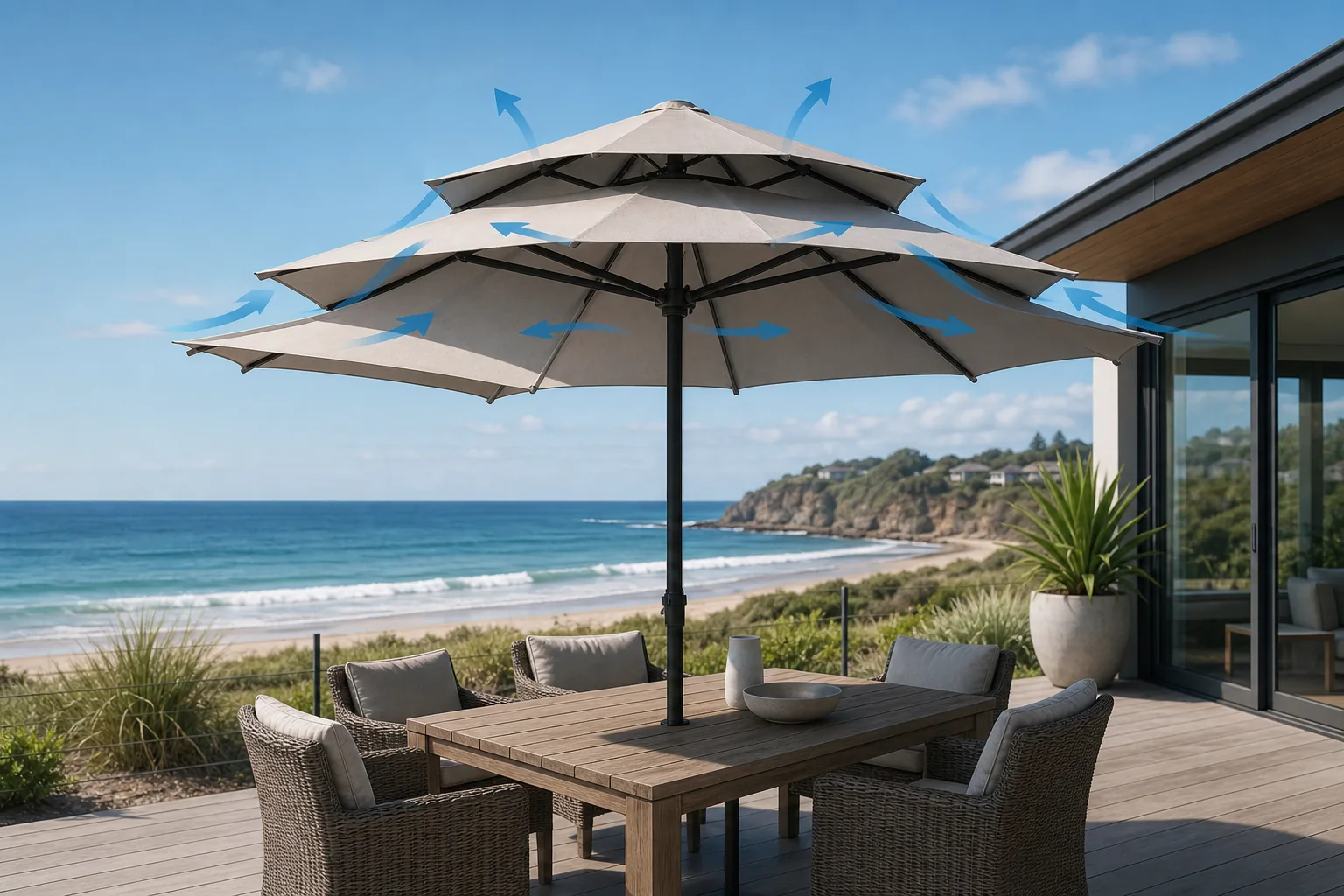
The three-tier shape is designed to let air move through the canopy. That pressure-release idea can reduce the force trapped beneath a large umbrella, though it does not remove the need to close the canopy in bad weather.
The size range gives more choice for a long table or broad outdoor room. Measure the shade zone at several times of day. A canopy that covers the table at noon may leave the seats in sun during the morning or late afternoon.
The layered design may suit a site where airflow is a concern, but the large options need a serious base. Confirm the full ballast plan, storage method and permitted weather conditions before installation.
8. Purple Leaf 11-Foot Cantilever Umbrella, Generous offset coverage for outdoor living areas
The Purple Leaf 11-Foot Cantilever Umbrella has an 11-foot canopy and a solid aluminium frame. Its offset layout can shade an outdoor sofa, dining table or poolside seating without putting a pole in the middle of the space.
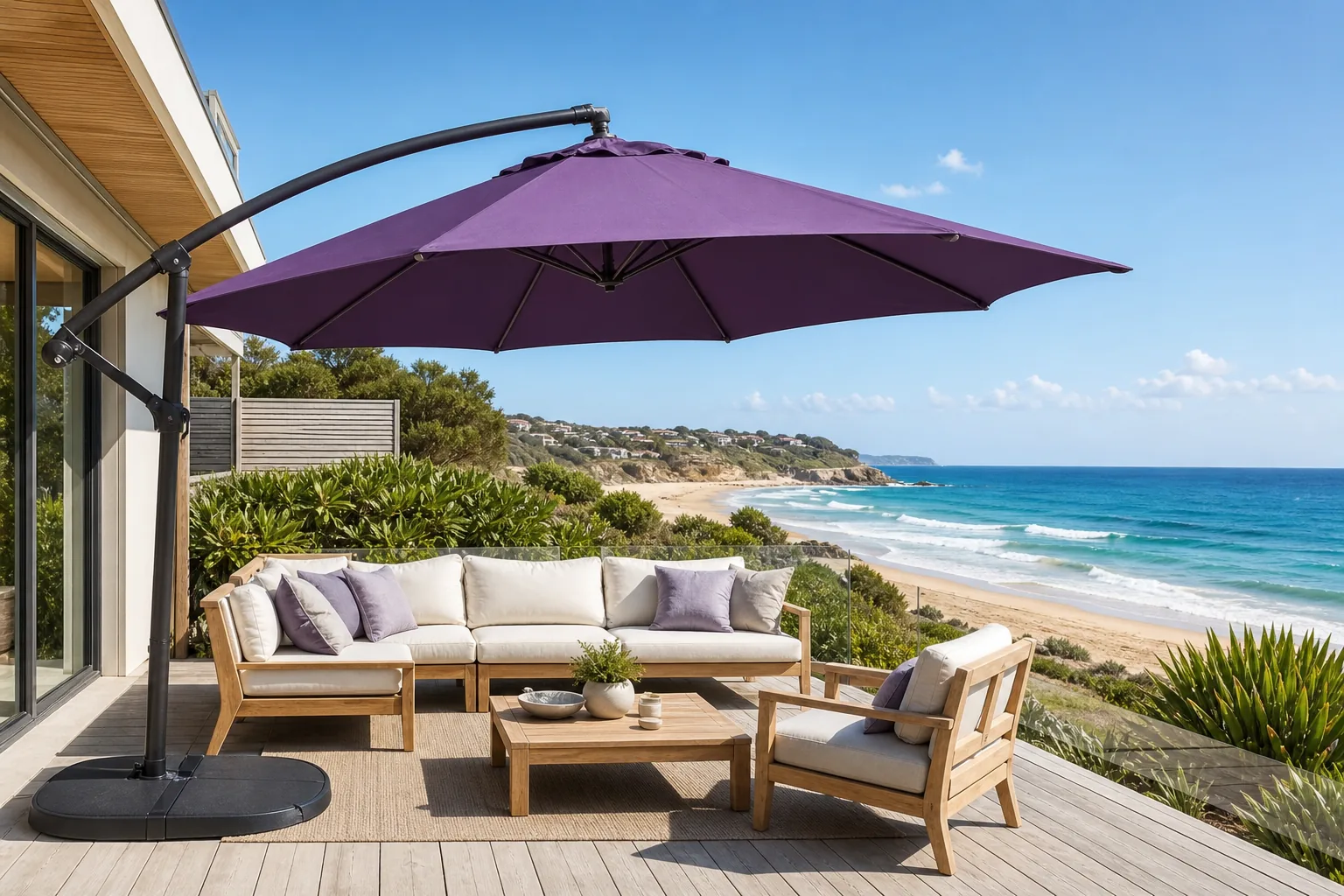
At 11 feet, it offers a practical middle ground for many beachfront patios. It gives more coverage than a compact 9-foot umbrella without reaching the footprint of a 13-foot square canopy.
The recorded information does not state a UPF rating, wind rating or warranty term. Those omissions should shape the buying conversation. Ask for written figures rather than assuming that solid aluminium or a large canopy means the unit has been tested for coastal gusts.
Offset umbrellas need a stable base because the mast and canopy place force away from the support point. A water-fill base may be easier to move, while a bolt-down system may suit a permanent deck. The right choice depends on the surface and the structure beneath it.
This is a flexible size for outdoor living, but the buyer should treat the technical sheet as unfinished until UV, wind and base details are confirmed.
What to check before ordering
A UV resistant outdoor umbrella for beachfront homes in Australia should come with more than a colour chart. Use the same questions for every supplier so a familiar fabric name does not hide missing performance data.
- UV protection: Look for a stated UPF or UV rating. “UV resistant” on its own is too broad.
- Wind limits: Ask how the figure was tested and when the canopy must close.
- Salt-air protection: Confirm the frame finish, fastener material and care plan.
- Canopy water performance: Check whether the fabric is water-resistant or waterproof. These terms are not interchangeable.
- Base weight: Match the base to the canopy size and the fixing surface. A light portable base may not suit an exposed deck.
- Angle control: A crank, tilt system or rotation feature helps track the sun. Test whether the controls can be reached safely.
- Storage: Plan where the canopy will go during storms and long periods of non-use.
- Warranty: Separate fabric cover from frame cover. Check exclusions for wind, misuse and incorrect installation.
Keep the umbrella closed when weather turns gusty. Rinse exposed metal and fabric with fresh water when salt deposits build up. Let the canopy dry before covering it, since trapped moisture can lead to mildew and stains.
For a permanent coastal project, ask Umbrello for a site-specific recommendation rather than choosing by canopy size alone. A smaller system with a sound fixing plan may serve the space better than a larger umbrella with unclear wind limits.
FAQ
What is the best UV resistant outdoor umbrella for a beachfront home?
The right umbrella is the one with a stated UV rating, clear wind-use guidance and a base suited to the site. In this shortlist, the Sunhaven provides the clearest recorded combination with UPF 50+ and a 40 km/h test rating. Treat that wind figure as a test reference, not permission to leave the canopy open during gusts.
What UPF rating should a coastal outdoor umbrella have?
Look for a stated UPF rating rather than a general claim about UV resistance. UPF 50+ is the clearest documented figure in the options reviewed here. A product page should also identify the fabric and explain care, fading and warranty limits. If no number appears, ask the supplier for the test data.
Are cantilever umbrellas safe in strong wind?
Cantilever umbrellas are not automatically safe in strong wind. Their offset canopy can put significant force on the mast and base, even when the frame has a wind test rating. Close the canopy before conditions become gusty, use the recommended ballast or fixing method, and follow the maker’s instructions for storage.
What base does a beachfront umbrella need?
A beachfront umbrella needs a base that matches its canopy size, mast design and surface. Options can include ballast blocks, water-and-sand reservoirs, bolt-down plates or in-ground fittings. Ask for the recommended weight in writing. On an exposed deck, also confirm that the deck structure can handle the fixing loads.
How do I protect an outdoor umbrella from salt air?
Protect it by closing the canopy during rough weather, using its cover when dry, and rinsing salt deposits with fresh water. Check fasteners, joints and the mast for early corrosion. Keep the fabric dry before storage. A written care plan matters because even rust-resistant materials still need cleaning near the sea.
Conclusion
For a beachfront home, start with documented performance rather than appearance. The Sunhaven has the clearest recorded UV and wind information, while Umbrello is the right place to discuss a site-specific premium shade system, base and maintenance plan. Next, measure your deck and request written UPF, wind, warranty and fixing details before you order.
