


Outdoor Umbrellas
Wind Resistant Umbrella for Coastal Patios
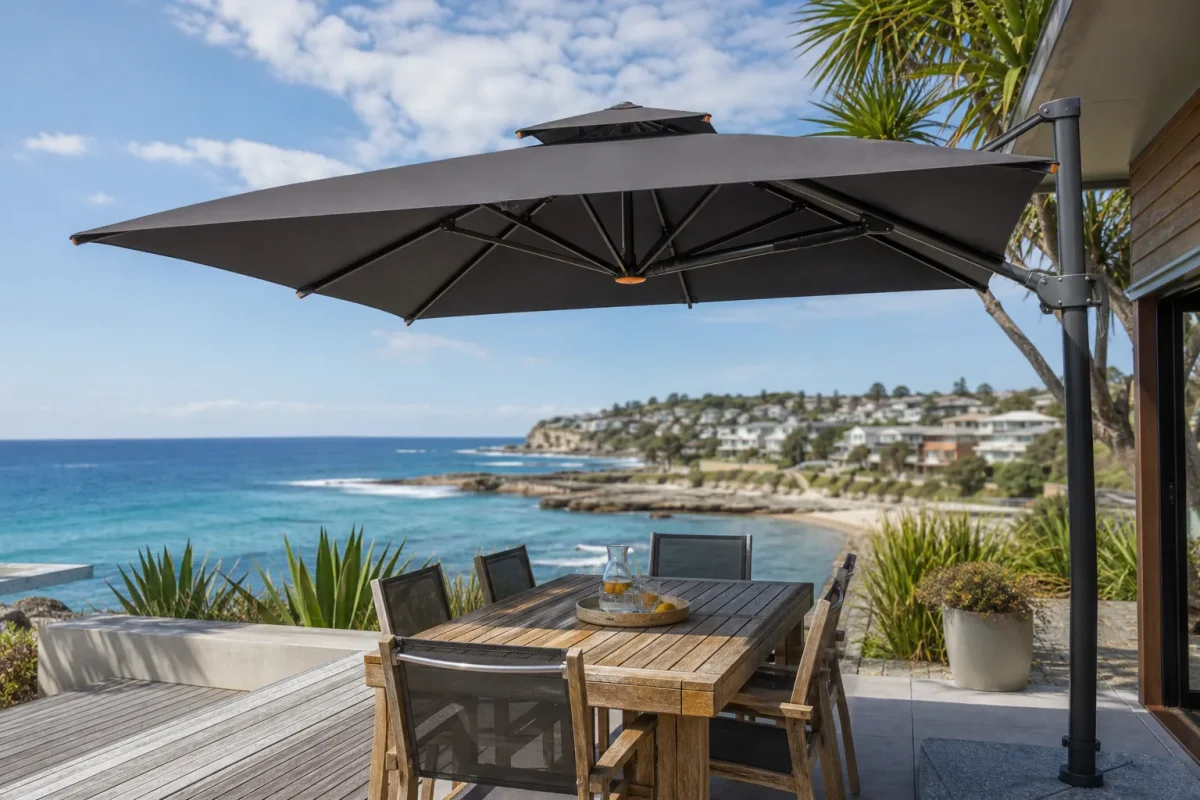
Sep
Coastal wind can turn a patio umbrella inside out before you’ve finished lunch. The hard part is that many products say “wind resistant” without showing a tested wind speed. Use this guide to choose the right umbrella type, check its frame and canopy, set the base correctly, and protect it from salt air.
Step 1: Match the Umbrella Type and Size to Your Coastal Patio
A wind resistant umbrella for a coastal patio in Australia must fit the space before you assess its materials. A large canopy catches more wind, so size and anchoring must be planned together.
Start by measuring the area you want to shade. Note the table width, chair positions, nearby walls, pool edges and walking paths. A canopy that extends well past the furniture may give better shade, but it also adds more wind load.
| Patio need | Umbrella type | What to check |
|---|---|---|
| Dining table with a centre opening | Standard centre-pole umbrella | Pole size, rib count, vented canopy and a firm base |
| Open dining or lounge area | Cantilever or offset umbrella | Side mast, rotation range, tilt control and ballast method |
| Permanent deck or wall edge | Wall-mounted shade | Structural fixing, wall strength and clearance for movement |
| Large hospitality or public area | Commercial umbrella system | Site assessment, wind data, replacement parts and installation detail |
For a 2.7 to 3.0 metre round canopy, plan around a four to six-seat table. Larger canopies in the 3.3 metre range suit broad lounge areas or poolside spaces, but they need more room around the mast and a heavier base.
Umbrello is a sensible starting point when the patio has unusual dimensions or higher exposure. Its range covers residential, hospitality, commercial and architectural shade needs, so the advice can begin with the site rather than a one-size-fits-all product.
Also decide how you will move the shade. A crank makes daily opening easier. Tilt lets you follow a low sun. Rotation helps on a cantilever model, but it doesn’t replace a secure base.
Step 2: Check Wind Resistance, Canopy Design and Coastal Materials
When comparing a wind resistant umbrella for a coastal patio in Australia, don’t stop at the words “heavy duty.” Ask for the test speed, test method and conditions behind the claim.
Research for this topic found that only one of 24 sampled umbrella listings gave a wind-speed rating. That single listing reported 64.36 km/h. This gap matters because a label alone doesn’t tell you how the umbrella behaved in gusts, which direction the wind came from, or whether the umbrella stayed open during the test.
A useful rating should state whether the test used a steady wind or gusts. It should also explain whether the canopy was fully open, how the base was loaded, and whether damage was allowed. Treat any number as a guide, not permission to leave the umbrella open during a storm.
Look for a canopy that lets air escape. A double-top canopy creates an outlet above the main fabric. A single top vent can also reduce trapped air. Rib design matters too. Flexible ribs may bend under a gust instead of snapping, while reinforced joints help spread force across the frame.
For coastal sites, inspect every exposed part. Powder-coated aluminium can resist weather when the coating stays intact. Marine-grade aluminium and stainless steel hardware are stronger clues for salty air than a vague claim about outdoor use. Fibreglass ribs may also flex under pressure, but the supplier should state the material and its test basis.
Canopy fabric needs its own check. Solution-dyed acrylic or UV-protected polyester can help with fade resistance and sun exposure. UV protection is not listed consistently across the market, so ask for a UPF figure or a clear fabric specification. A high UPF claim describes sun protection. It doesn’t prove wind strength.
For a closer look at marine-grade construction, compare manufacturer documents and materials rather than treating a retailer’s short feature list as a full specification.
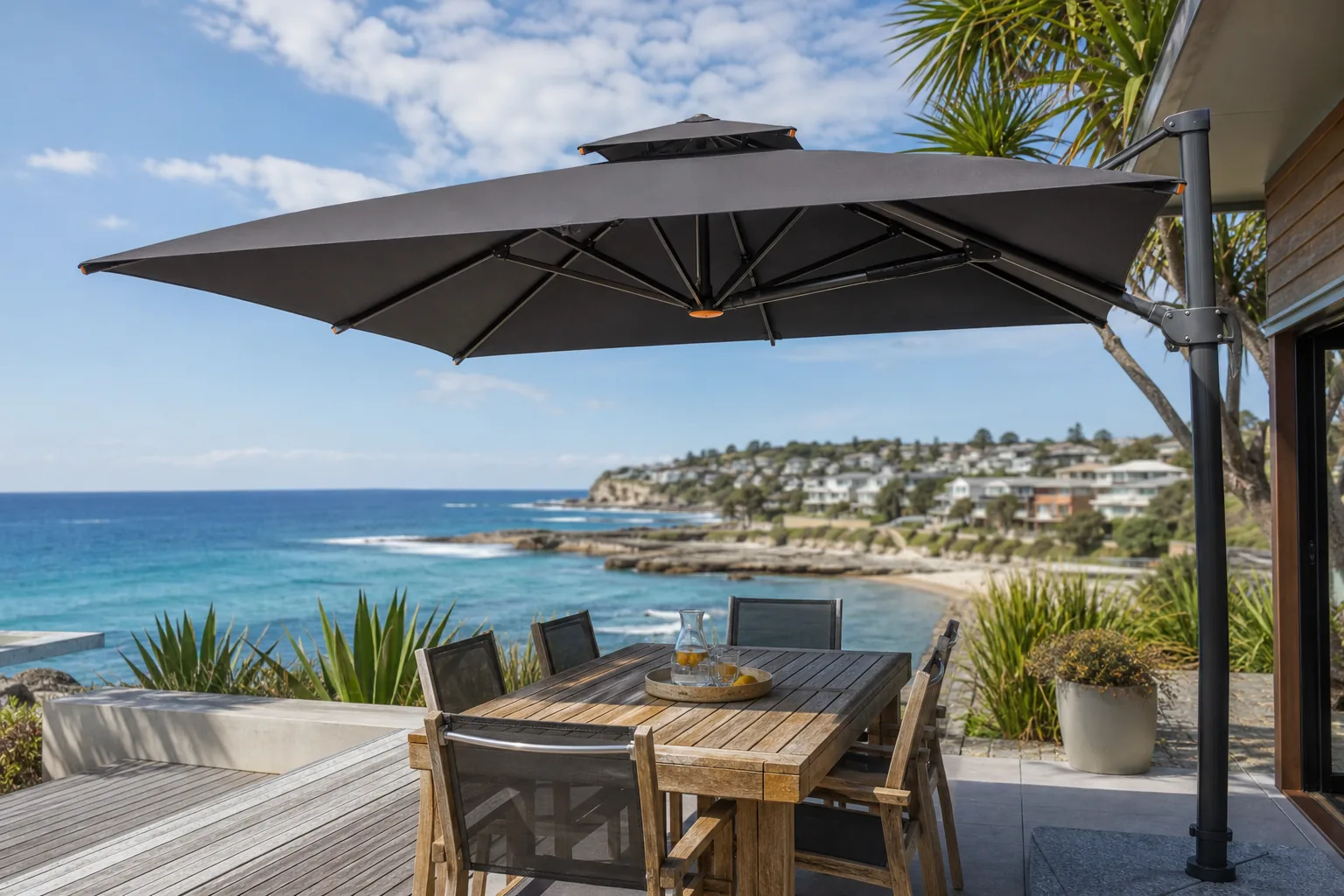
Umbrello can help match the canopy, frame and control system to the exposure. For a café or resort, also ask about spare ribs, replacement fabric and the parts that can be changed without replacing the full frame.
Make one rule non-negotiable: close the umbrella when strong or changing wind arrives. No canopy design removes the need for good judgment.
Step 3: Calculate the Base Weight and Install the Umbrella Correctly
A strong frame won’t help if the base slides, tips or lifts. For a wind resistant umbrella on a coastal patio, the base and fixing method deserve as much attention as the canopy.
First, read the supplier’s base instructions. Don’t guess from the canopy diameter alone. An offset umbrella places the load away from the base, so it usually needs more ballast than a centre-pole model of similar size.
Choose the fixing method that suits the surface:
- Concrete slab: use a bolt-down plate only when the slab has enough depth and reinforcement for the specified anchors.
- Deck: fix into the structural frame, not just the surface boards. A deck may need a purpose-built support below.
- Pavers or ballast blocks: use the size and count set by the supplier. Keep them seated and level.
- Water or sand-filled base: fill every chamber as directed, then check for leaks and movement.
- In-ground fixing: use a base designed for that umbrella and confirm drainage before installation.
A supplier specification may give a recommended ballast range. One documented cantilever system, for example, lists options from roughly 130 to 160 kg for a water-and-sand resin base, with heavier block arrangements available for other base frames. Don’t transfer that figure to another umbrella. The mast design and anchor points may be different.
Place the base on a level surface. Keep the mast upright while you tighten each connection. Check that the canopy clears walls, branches and power lines through its full tilt and rotation range.
If you’re buying a cantilever umbrella, the cantilever umbrella base guide can help you compare ballast and fixing options before you order. This is worth doing early, because a heavy base may need a permanent position.
After installation, test the frame with the canopy closed. Push the mast gently from several directions. There should be no rocking at the fixing point. Open the canopy only after the base, mast and joints pass that check.
For a commercial site, record the installation date and base type. Give staff a clear closing procedure. A short checklist near the operating point can prevent someone from leaving a large canopy open after the venue closes.
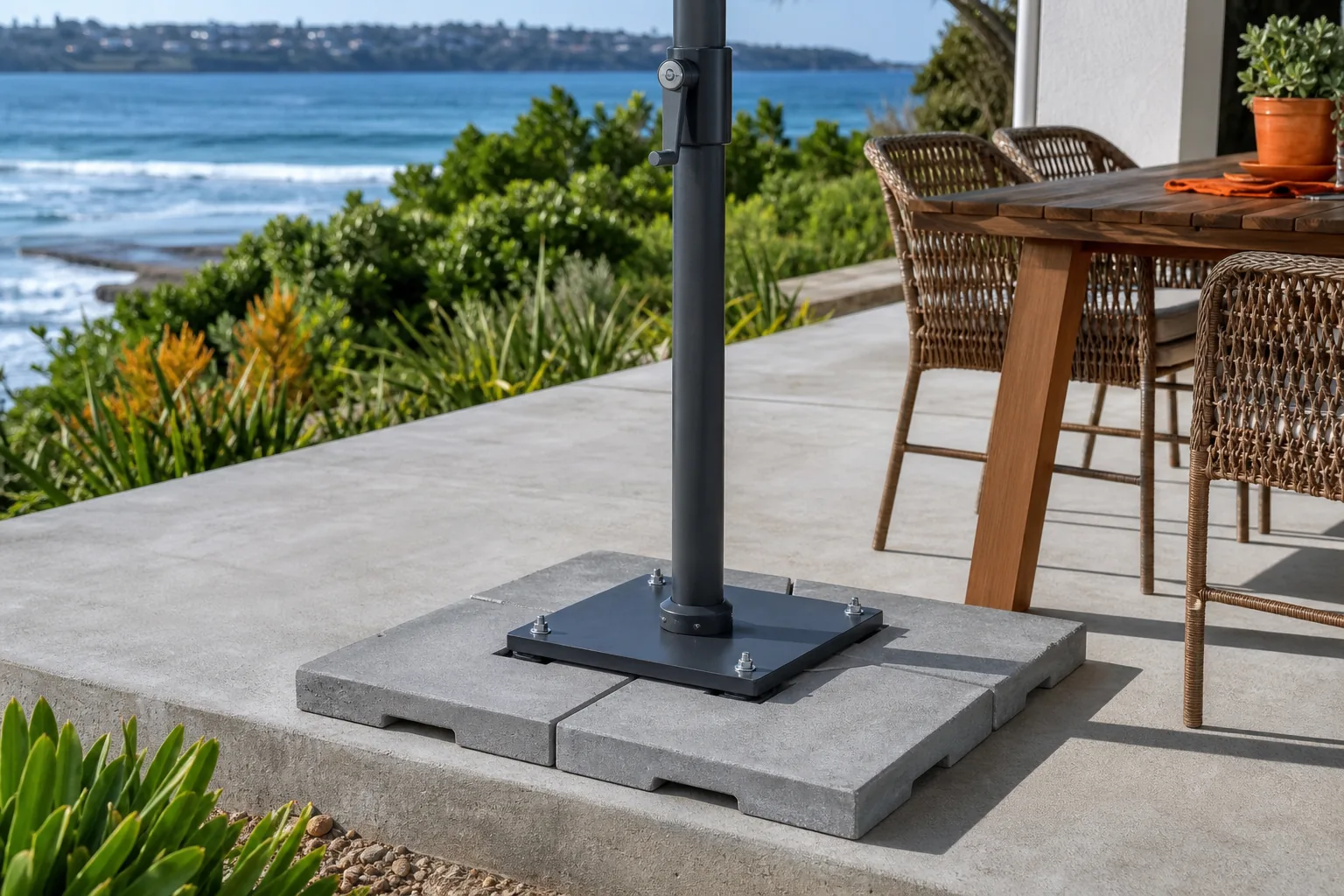
Remember that wheels improve movement, not wind safety. If a weighted base has castors, lock them before opening the canopy.
Step 4: Operate, Protect and Maintain the Umbrella in Salt Air
Salt air can shorten the life of a patio umbrella even when the wind is mild. A simple care routine helps protect the frame, fabric and moving parts.
Close the canopy before wind picks up. Don’t force a crank that feels stiff. Lower the umbrella first, then check for trapped fabric, grit or a bent rib. A small problem is easier to fix before the next gust puts force through the frame.
Rinse exposed metal and fittings with fresh water after salty weather. Let the frame dry before fitting its cover. Salt left around joints can speed corrosion, especially where a coating has been scratched.
Clean the canopy with a soft brush and mild soapy water. Follow the fabric maker’s care instructions. Avoid harsh bleach or abrasive pads unless the fabric specification allows them. Let the canopy dry fully before closing it for storage, since trapped moisture can lead to mildew.
Use the cover whenever the umbrella is closed for a long period. A cover shields the fabric from dust, bird marks and some sun exposure. It also reduces the need to scrub the canopy later.
Inspect the system at the start of each warm season:
- Check seams and fabric tension.
- Look for chipped powder coating or white corrosion.
- Inspect bolts, pins and stainless hardware.
- Test the crank, tilt lock and rotation control.
- Check that the base still sits level and does not leak.
Keep a record of parts that need attention. Umbrello’s specialist approach is useful for projects where fabric, ribs or operating parts may need support over time, especially in hospitality settings with frequent daily use.
Controls also affect safety. A crank is easier to use than a lift system on a large canopy. Push-button tilt can help with sun angle, but make sure the lock engages before you walk away. A 360-degree rotation feature is useful only when the base stays firm during movement.
For a home patio, inspect the umbrella after each major weather event. For a venue, assign the check to a named role. The best maintenance plan is the one someone can follow in less than a few minutes.
Frequently Asked Questions
What is the most wind resistant umbrella for a coastal patio?
The most suitable option depends on the site, base and exposure, not the canopy label alone. Look for a stated test method, vented canopy, corrosion-resistant frame and a suitable fixing system. Umbrello can help assess those details for a residential, hospitality or commercial coastal patio before you select a size.
What wind speed can a patio umbrella withstand?
There is no single safe wind speed for every patio umbrella. A published rating must be read with its test conditions, canopy position and base setup. Close the umbrella when wind becomes gusty or unpredictable.
Are cantilever umbrellas good for windy coastal areas?
Cantilever umbrellas can suit coastal patios when their mast and base are designed for the load. The offset canopy keeps a pole out of the seating area, but it also puts more force on the base. Choose a vented canopy, use the specified ballast and close it before strong weather arrives.
What material is best for a coastal patio umbrella?
Marine-grade aluminium, powder-coated aluminium, stainless steel hardware and suitable fibreglass ribs are useful materials to investigate. The right mix depends on the design and coating quality. For the canopy, ask about solution-dyed acrylic or UV-protected polyester, then check the care rules for salt and moisture.
How heavy should a patio umbrella base be?
The required base weight depends on the umbrella type, canopy size, mast design and fixing method. Offset umbrellas often need more ballast than centre-pole models. Follow the supplier’s written specification instead of copying a weight from another product. On exposed sites, a permanent bolt-down or in-ground base may suit better.
Conclusion
Choose a coastal umbrella by checking its test data, venting, frame materials and base system as one package. For a tailored recommendation, share your patio size, surface and wind exposure with Umbrello before ordering, then plan the installation and closing routine at the same time.
