


Outdoor Umbrellas
UV-Resistant Cantilever Umbrellas in Australia
Sep
A premium cantilever umbrella can look right and still leave key questions unanswered. UV rating, wind limits, fabric type and base weight all affect how well it works outdoors. Use these five steps to assess Umbrello and other options for homes, hospitality venues and commercial sites across Australia.
Step 1: Match the Project to Umbrello’s Cantilever Solutions
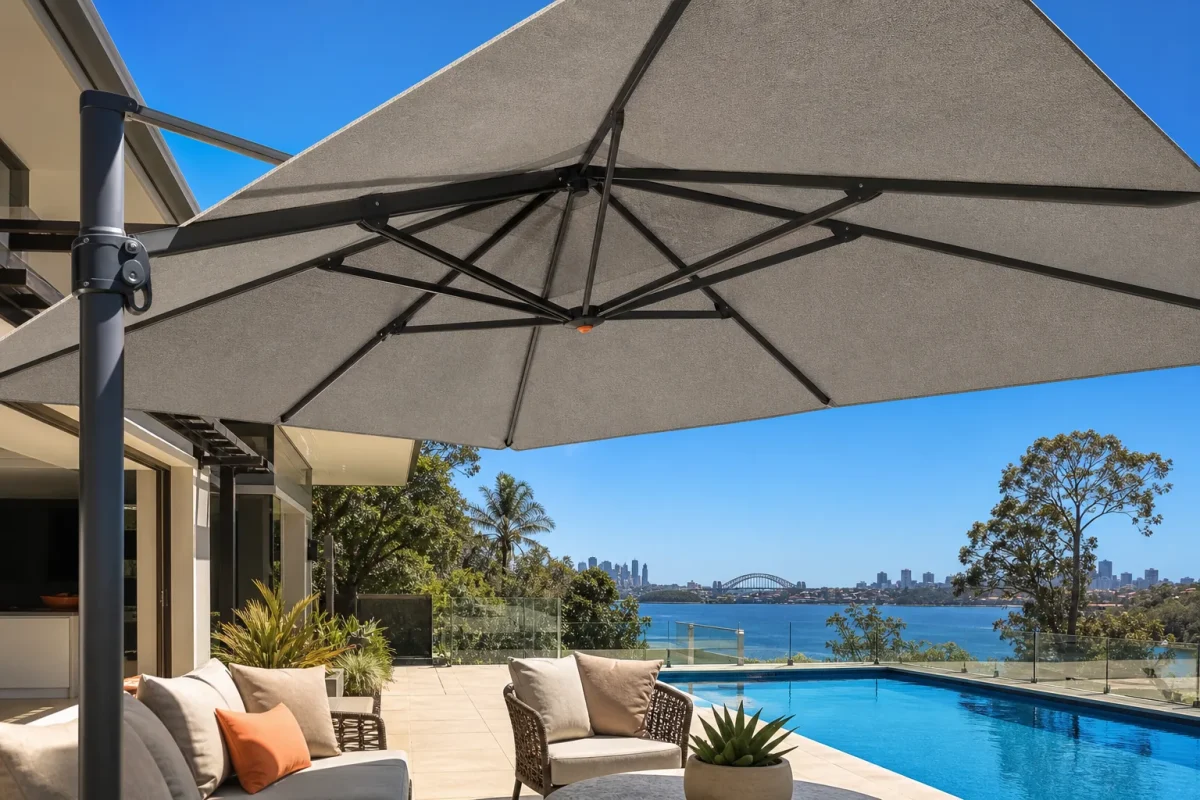
The right choice starts with the space, not the canopy colour. A cantilever umbrella suits areas where a centre pole would get in the way, such as beside a pool, over outdoor seating or across a clear patio zone.
Start by measuring the area that needs shade. Mark the table edge, pool edge, door swing and main walking paths. Then check where the umbrella base will sit. A large canopy may cover the target zone, but its base still needs room and a firm support point.
Umbrello works across residential, hospitality, commercial, architectural and public-space projects. That range matters because a backyard installation has a very different duty cycle from a café terrace. A venue may open and close the umbrella each day. A council or school may need a fixed design with controlled access and a clear maintenance plan.
Write down four details before asking for a recommendation:
- Shade area and canopy size needed.
- Surface type, such as concrete, paving, timber decking or soil.
- How often the umbrella will be opened and moved.
- Typical wind exposure, including roof height and nearby open water.
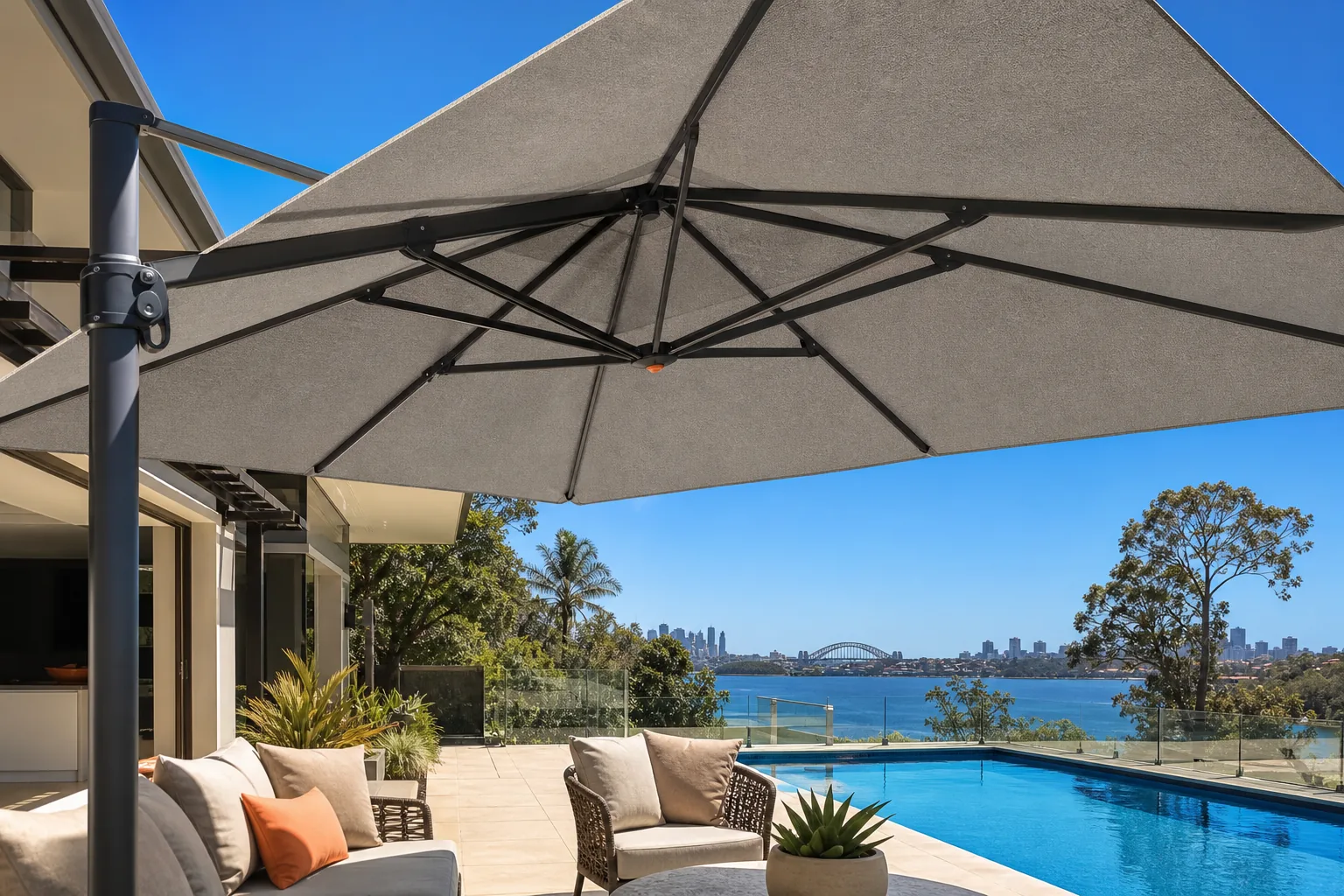
For a pool, the side pole can keep the space below the canopy clear. For a restaurant, the same layout can leave room for chairs and tables without a post through the middle. For a home, rotation and tilt can help track the sun across the afternoon.
Umbrello’s cantilever umbrella guide for Australian settings can help you compare the main layout questions before you request a specification.
Do not choose a canopy size first and solve the base later. That order often leads to blocked paths, weak support or a layout that looks fine on paper but feels cramped in use.
Step 2: Check the Canopy’s UV Protection and Materials
For anyone seeking a UV-resistant cantilever umbrella in Australia, the canopy specification deserves close attention. Look for a stated UPF rating or a tested UV-blocking claim. Colour alone tells you very little about sun protection.
UPF 50+ is a clear claim because it gives the buyer a stated protection level. Some sellers instead use broad phrases such as “UV resistant” without listing a test method or result. Treat those claims as incomplete until the seller supplies more detail.
Fabric type also affects day-to-day use. Ask whether the material is solution dyed, UV stabilised, water repellent, mould resistant or designed to resist stretching. These features are separate. A canopy may resist fading but still need to be closed during rain or strong wind.
A product page may provide specific fabric details, but buyers should assess those claims against supporting test information. This shows the level of information buyers should ask for.
Umbrello’s own cantilever product page does not list a UV rating or wind rating. That does not prove the canopy lacks protection. It means a buyer should request the missing specification before making a project decision.
Ask for these details in writing:
- UPF rating or percentage of UV blocked.
- Fabric fibre and weave.
- Colourfastness or fade-resistance information.
- Cleaning instructions and storage limits.
- Warranty terms for the canopy and frame.
Be careful with comparisons. A stated UPF 50+ claim is useful, but it does not tell you how much shade reaches the ground at different sun angles. Canopy height, tilt and gaps at the edges still affect coverage.
For a home, ask how the fabric will cope with long periods of sun. For a venue, ask how staff will clean it and where spare parts come from. For a coastal site, ask how salt and damp conditions affect the frame and fixings.
Step 3: Specify Wind Stability, Frame Strength and the Right Base
Wind stability is a system question. The frame, mast, ribs, fixing method and base must work together. A heavy canopy on a light portable base can still tip or move.
Start by asking for a wind rating and the conditions behind it. Find out whether the rating assumes a set base weight, an anchored footing, stabiliser bars or a closed canopy. A rating without its installation conditions is hard to apply on site.
Installation changes the result. A base plate fixed to a suitable concrete slab is different from a freestanding base filled with loose material. Decking may need support at the joists. Soil may need a designed footing rather than a surface-mounted base.
One commercial umbrella supplier states that its wind rating applies only when the umbrella is installed according to the maker’s instructions. It also says wind ratings are guides and recommends closing umbrellas before strong winds or storms. That is a sound rule for any cantilever umbrella, including one marketed for windy areas.
Base choice should follow the site:
- Use a fixed footing where the umbrella will stay in one place.
- Use a heavy freestanding base where movement is needed and the surface can carry the load.
- Use wheels only when they lock securely and the base remains stable during use.
- Check the slab, deck or ground before choosing the fixing method.
Frame material matters too. Aluminium can reduce weight and resist corrosion, but wall thickness, joints and fasteners still affect strength. Powder coating may help protect the surface, yet scratched areas near the coast need prompt care.
Commercial architectural projects may specify the footing, fabric, size and configuration together. That approach is more useful than treating the base as an accessory added at checkout.
A useful decision rule is simple: if the site sees strong or shifting wind, get a written installation plan before ordering the canopy.
Step 4: Test Suitability for Your Location and Use Case
The best UV resistant cantilever umbrella Australia buyers choose for a city courtyard may not suit a beachside deck or a rooftop. Test the product against its location, not just its brochure description.
For coastal sites, inspect every exposed metal part. Ask about corrosion protection, drainage and cleaning. Salt air can reach joints and fasteners even when the canopy looks clean. A cover helps, but it does not replace regular washing and inspection.
For rooftops, check the fixing method and building structure first. A freestanding base may add a large point load. A fixed plate may need an engineer or builder to confirm the substrate. Do not assume a roof deck can take the same base as a ground-level slab.
For hospitality, test the staff workflow. Can one person open and close the umbrella safely? Is the crank or tilt control easy to reach? Can staff move around the base without creating a trip hazard? The answer should come from a site walk, not a product image.
An independent review of the Purple Leaf Cantilever Umbrella found that it held up well in breezy afternoons but tipped over in stronger gusts. That result is a useful reminder that calm-weather performance does not equal storm safety.
Use a short site test before final approval:
- Stand where the main users will sit.
- Track the sun at the busiest time of day.
- Mark the base and check access around it.
- Confirm where the closed canopy will be stored.
- Set a clear rule for closing the umbrella in wind.
For a school, council or public area, include a lockable or controlled operating process where needed. For a home, focus on easy daily use. For a restaurant, focus on repeatable staff handling and safe customer movement.
Step 5: Plan Installation, Maintenance and Long-Term Value
A premium umbrella only keeps its value when the owner can care for it. Before purchase, ask who will install it, who will inspect it and where replacement parts come from.
Read the installation instructions before choosing the base. Confirm the slab depth, anchor type or footing size. If the site is a timber deck, have the structure checked before drilling. If the base sits on soil, allow for settlement and drainage.
Create a basic care schedule:
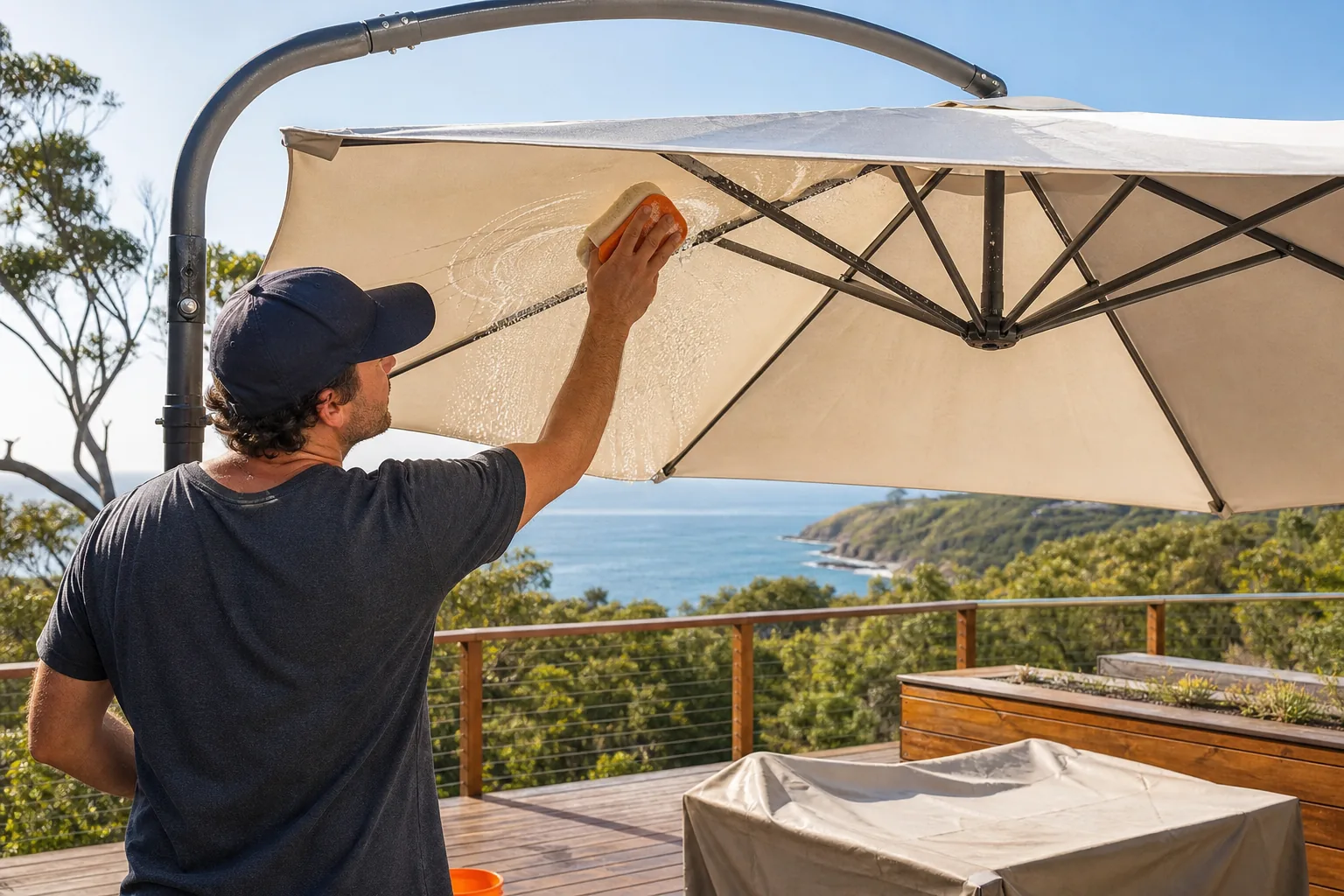
- Brush away loose dirt before it settles into the fabric.
- Wash the canopy with mild soap and water when needed.
- Rinse the frame so salt and grit do not stay in joints.
- Let the canopy dry fully before folding or covering it.
- Close the umbrella before strong wind, storms or long periods without use.
Do not use harsh chemicals unless the fabric maker allows them. Strong cleaners can affect colour, coatings or water repellence. Do not pack a damp canopy into its cover. That can encourage mould and leave marks that are harder to remove later.
Long-term value also depends on what happens after installation. Ask whether the canopy, ribs, crank, mast and base have separate warranty terms.
Keep a record of the product model, installation date and care work. For a commercial venue, add the umbrella to the site maintenance log. A staff member can then report loose bolts, fabric damage or rough movement before the issue becomes a safety problem.
Umbrello is a sensible place to start when the project needs a premium shade solution with advice matched to the site. Request the full technical sheet before approval, especially when the product page does not state UV or wind data.
FAQ
What should I look for in a UV-resistant cantilever umbrella?
Look for a stated UPF rating, fabric details and clear care instructions. UPF 50+ is easier to assess than a broad “UV resistant” claim. Also check the canopy size, tilt range and height because those affect the shade that reaches the ground. Ask for wind and warranty details before you buy.
Is UPF 50+ enough for an Australian cantilever umbrella?
UPF 50+ is a useful stated protection level, but it is not the only factor. Shade changes as the sun moves, so canopy position and gaps matter too. Keep the umbrella closed in strong wind and use sunscreen, clothing and other sun-safe habits when outdoors.
Can a cantilever umbrella stay open in wind?
A cantilever umbrella should be closed before strong wind or storms. A wind rating is only meaningful when you know the base weight, fixing method and test conditions behind it. Even a heavy frame can move if the base or footing does not suit the surface.
What base does a cantilever umbrella need?
The base depends on canopy size, wind exposure and the ground beneath it. A fixed footing may suit a permanent commercial site. A heavy freestanding base may suit a movable patio setup. Decks, rooftops and soft ground need extra checks before installation.
Is Umbrello suitable for commercial shade projects?
Umbrello supplies outdoor shade solutions for residential, commercial, hospitality, architectural and public-space projects. Suitability still depends on the site and selected configuration. Ask Umbrello for the canopy, base, fixing and maintenance details needed for your project before you approve the design.
Conclusion
Choose the umbrella with the clearest evidence for your site, not the most polished product photo. Start with Umbrello, then request its UV, wind, fabric, base and warranty details in writing. That one step will make your comparison safer and far more useful.
