


Outdoor Umbrellas
Cantilever Umbrellas for Beachfront Properties
Sep
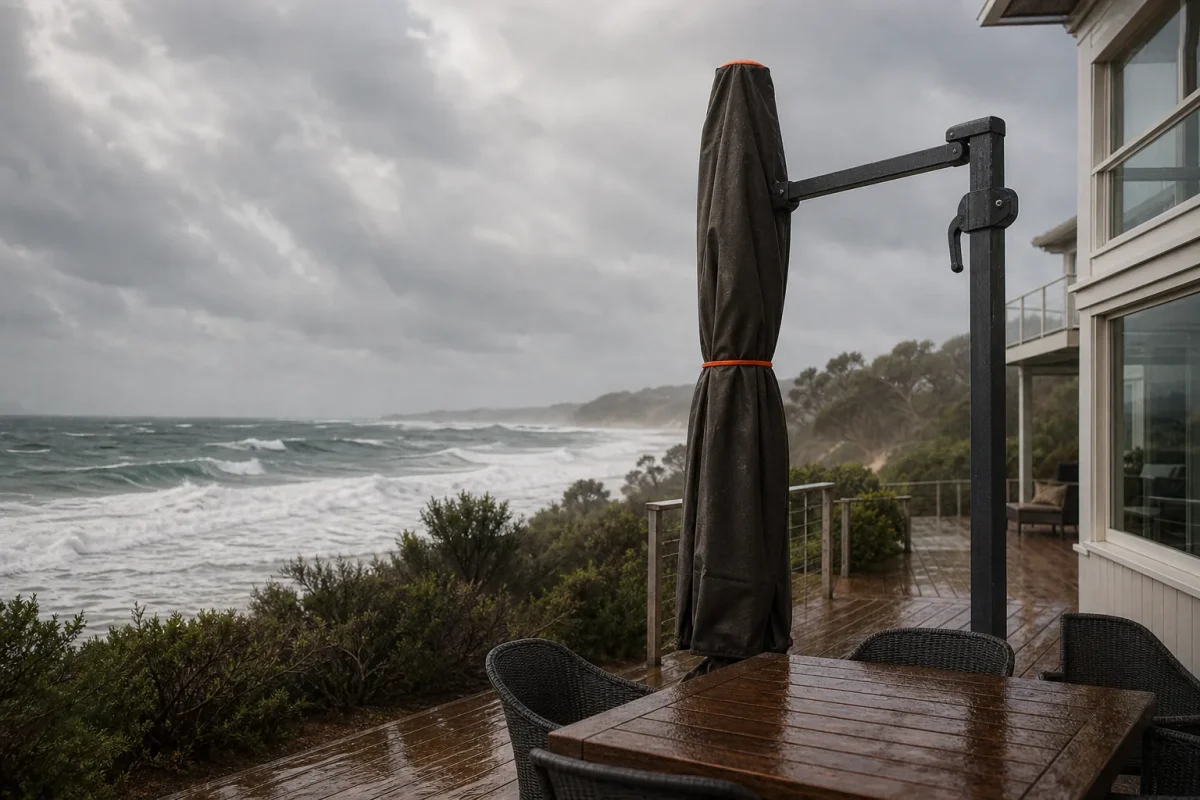
Beachfront shade faces three hard tests: gusts, salt air and strong UV. The right cantilever umbrella needs more than a wide canopy, so this guide focuses on frame metals, wind data, anchoring and daily use. Umbrello is the first option to assess, followed by a clear way to compare other models for coastal sites.
1. Umbrello
Start with Umbrello when the site needs premium shade for a home, resort, hospitality venue or public space. Its Cantilever Umbrella uses a marine-grade aluminium and stainless-steel frame. It also advertises the patented Shadowlock™ wind-protection system and full 360° rotation.
That combination addresses two common beachfront problems. Aluminium keeps the structure relatively light while helping resist corrosion. Stainless steel hardware is better suited to salty air than untreated steel. The Shadowlock™ system is aimed at wind control, while rotation lets you move shade as the sun crosses the site.
Think about the daily workflow. A resort manager may need to shift shade away from a walkway without moving the base. A homeowner may want to cover a lounge in the morning, then turn the canopy towards a dining table later. A designer may need the pole kept outside the main seating zone.
Umbrello works well for buyers who care about long service life and want advice before specifying a coastal umbrella. It is also suited to larger projects where the frame, base and site conditions need to be considered together.
There is one important limit. A wind-protection system cannot replace correct anchoring or a site shutdown plan. Ask for the product’s current technical details, then match the proposed installation to the property’s exposure.
For a beachfront property, start by documenting the site before you compare canopy colours. The next step is to test each option against the forces it will face.
Step 2: Prioritise wind, UV and salt-air performance
For the best cantilever umbrella for beachfront properties Australia search, wind and material data should come before looks. A model that lists a wind figure gives you more to assess than one that only says “wind resistant.”
Sunhaven lists 40 km/h. Ventus lists up to 60 km/h. Treat those figures as conditions, not blanket permission to leave an umbrella open in every storm.
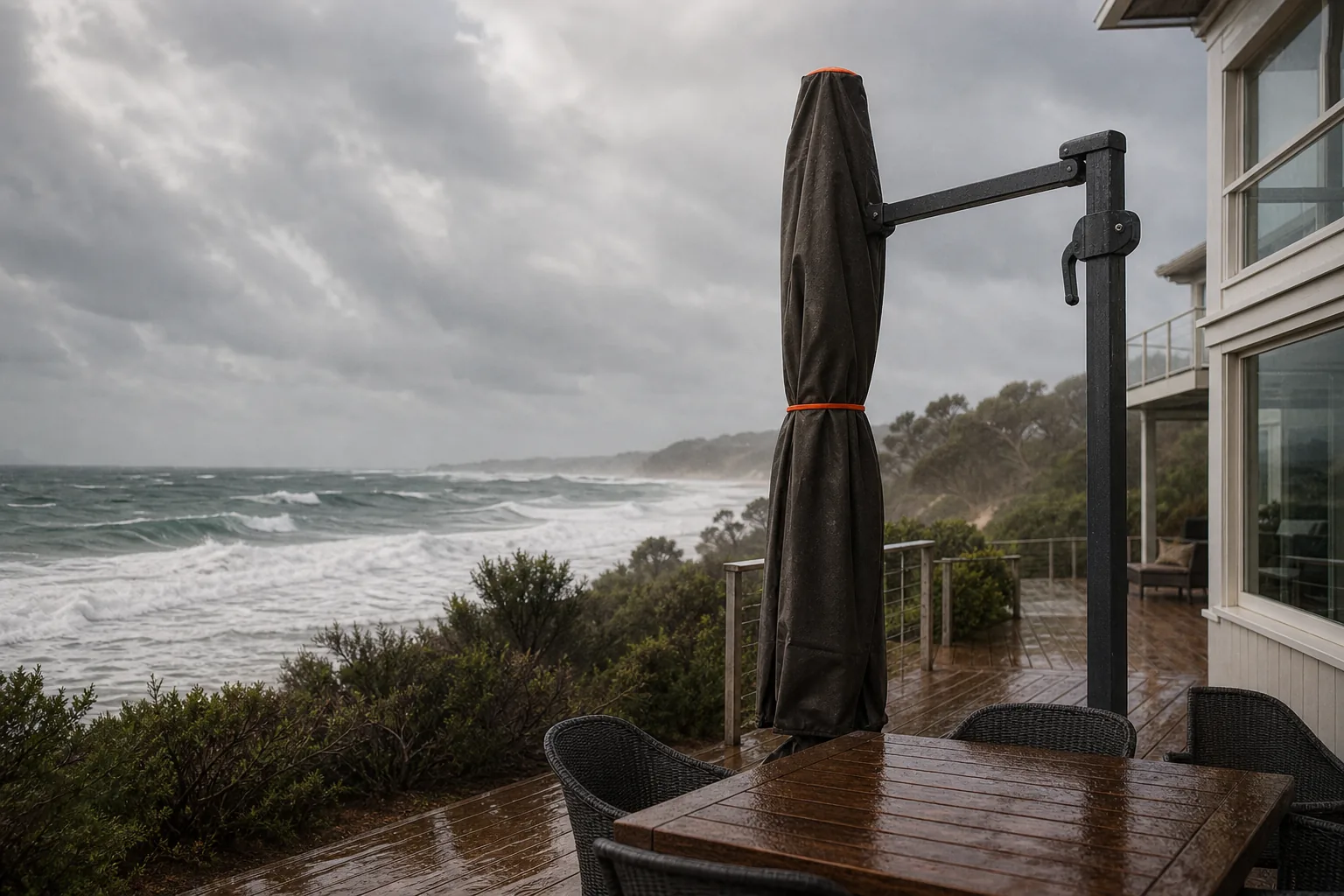
Canopy fabric deserves the same close check. Sunhaven lists solution-dyed SunNova fabric with UPF50+. Ventus lists a premium outdoor umbrella fabric and is designed and engineered for windy coastal conditions. Most of the other reviewed models did not disclose a formal UV rating, so don’t assume that “UV resistant” means the same thing across brands.
Vents can reduce trapped air beneath a canopy, while frame materials affect how the umbrella handles pressure and corrosion; see independent guidance on wind performance for additional context.
Use this short check when reading a specification sheet:
- Look for a stated wind figure and the base used during testing.
- Check whether the fabric has a stated UPF or UV performance rating.
- Look for aluminium, stainless steel or another clearly named corrosion-resistant material.
- Find out when the canopy must be closed and stored.
If a supplier cannot give a wind condition, base requirement or UV detail, mark that as an information gap. It doesn’t prove the umbrella will fail. It does mean you need more advice before placing it beside the sea.
Step 3: Match the canopy size and movement to the beachfront space
The best cantilever umbrella for beachfront properties Australia buyers choose must fit the space before it fits the mood board. Measure the area you want shaded, then mark the base, arm swing and canopy edge on the ground.
A cantilever frame keeps the support pole beside the seating area. That can free space around a dining table or pool lounge, but the offset arm creates a larger turning zone. Leave room for the canopy to rotate without hitting a wall, balustrade, light or tree.
Choose coverage by use
- For two lounge chairs, a smaller round canopy may keep the base compact.
- For a dining table, check the canopy edge against chair movement.
- For a resort or restaurant, map several umbrellas so their bases don’t narrow a path.
- For a pool deck, keep the arm and base clear of wet traffic and equipment.
Movement matters as much as diameter. A 360° rotation can track the sun, but it also needs a safe sweep path. Height and tilt controls help fine-tune shade when the sun sits low over the water.
Umbrello’s full rotation is useful where one fixed canopy must serve more than one seating zone. For a wider look at canopy types and use cases, compare the cantilever umbrella options in Australia before you settle on a shape.
Measure twice. A canopy that shades the chairs but blocks a gate is the wrong size for the site.
Step 4: Compare the strongest umbrella options for Australian coastal use
Use the table below to compare what each named option actually discloses. It separates coastal performance data from secondary features, which helps prevent a solar light or air vent from distracting you from the base and frame.
| Option | Frame or canopy detail | Published performance detail | Useful fit | What to confirm |
|---|---|---|---|---|
| Umbrello Cantilever Umbrella | Marine-grade aluminium and stainless steel frame | Shadowlock™ wind-protection system; 360° rotation | Premium residential, hospitality and coastal projects | Site-specific base, installation and operating limits |
| Sunhaven Cantilever Umbrella | Rust-resistant powder-coated aluminium with stainless steel hardware; SunNova acrylic fabric | 40 km/h wind rating; UPF50+ | Buyers who want stated wind and UV figures | Base conditions and salt-air care plan |
| Ventus Cantilever Umbrella, 3.5m Round, Black | Anodised aluminium frame; premium outdoor umbrella fabric | 60 km/h wind rating | Wind-exposed coastal areas | Site exposure and operating limits |
| Purple Leaf Cantilever Umbrella | Aluminium frame; 240 GSM yarn-dyed polyester | Double top air vent | Patios needing airflow and adjustable shade | Coastal wind figure, UV rating and base weight |
| Elite Shade Cantilever Patio Umbrella | Full aluminium frame; acrylic canopy | Three-tier canopy for airflow | Patios where ventilation is a key design need | Wind data and corrosion performance near the sea |
Sunhaven and Ventus are easier to compare on paper because they publish wind figures. Ventus has the higher stated figure. That distinction is more useful than a simple number on a product page.
For a hotel, resort or marina-side venue, shade is also part of site operations. A manager needs to know who closes the umbrellas, where covers are stored and what happens after a weather warning. A guide to coastal site operations can help teams think about shade as one part of a wider coastal site plan.
Contractors also need a clear enquiry trail when a project includes several trades. An after-hours enquiry service may help capture job details, but the umbrella specification still needs a human review before installation.
The decision rule is simple: choose the model with the clearest match between stated performance, base design and the actual exposure of your property.
Step 5: Plan anchoring, installation and ongoing maintenance
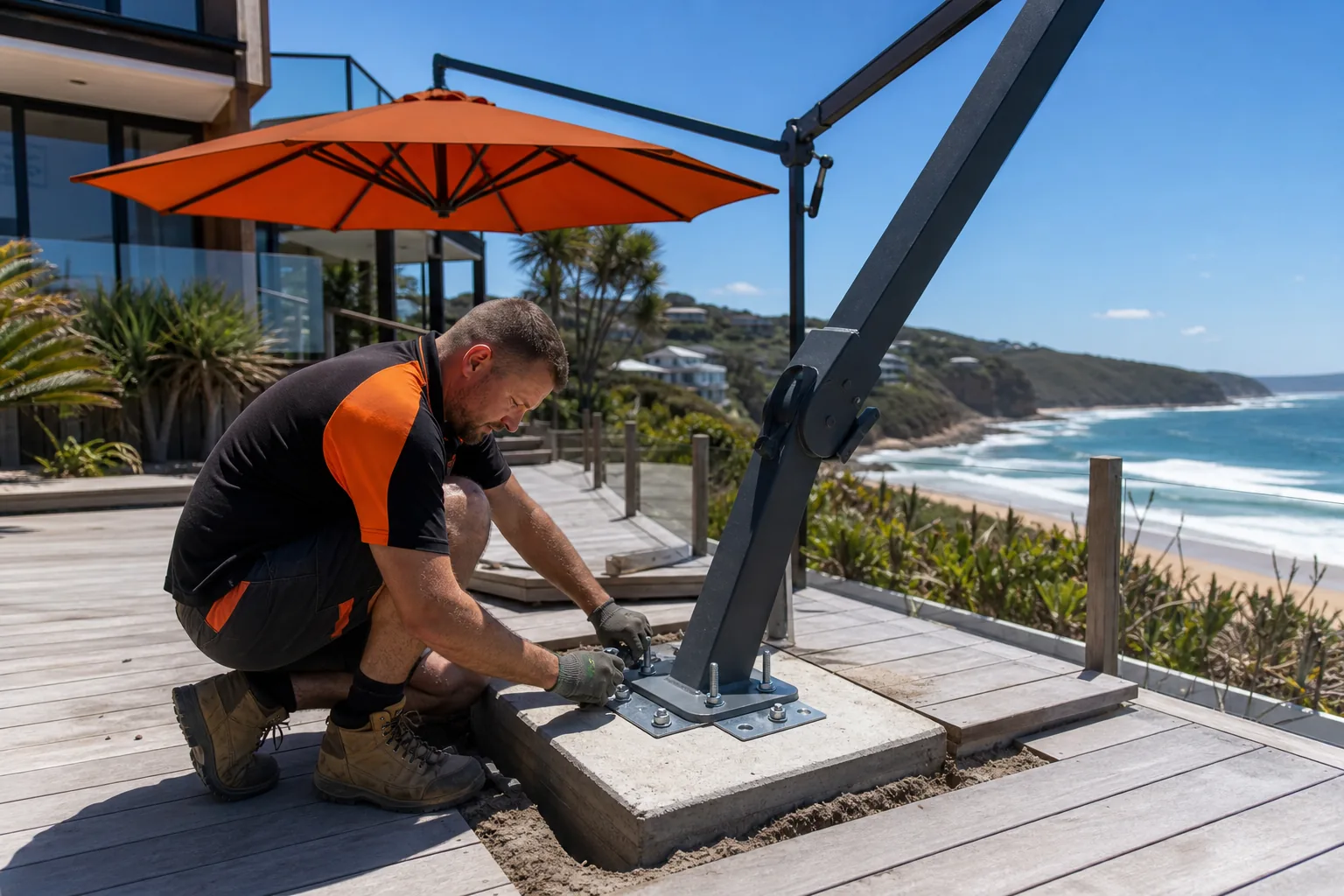
Even the best cantilever umbrella for beachfront properties Australia buyers can select will underperform if the base is wrong. Treat anchoring as part of the umbrella system, not as an accessory chosen at the end.
First, identify the surface. A concrete slab, timber deck, paver area and lawn each need a different fixing approach. Check the substrate depth and condition before you order. On a deck, locate the supporting structure rather than fixing only to the boards.
Next, mark the umbrella’s swept area. Open the canopy in the planned position, then check nearby doors, glass, railings and overhead lines. Make sure staff can close it without stepping into a narrow path or reaching over furniture.
Follow the umbrella’s installation requirements and wind guidance. Close and store the umbrella during high winds and heavy rain.
Build a maintenance routine
- Rinse salt residue from exposed metal with fresh water.
- Let the canopy dry fully before covering it.
- Inspect bolts, joints and the base after severe weather.
- Close the canopy when wind conditions exceed the product guidance.
- Store removable parts in a dry place during long periods of non-use.
Don’t wait for visible rust or a loose joint. Salt deposits can sit in fittings and around fasteners long before the damage is easy to see. A short inspection at the start of each busy season can prevent a small hardware issue from becoming a safety problem.
For a high-value property, ask Umbrello to review the intended location, base and use pattern before installation. A sound plan should state when the umbrella is open, when it is closed and who checks it.
FAQ
What should I look for in a beachfront cantilever umbrella?
Look for a corrosion-resistant frame, a stated wind condition, clear UV information and a suitable anchoring system. The best cantilever umbrella for beachfront properties Australia buyers choose should also fit the site’s walkways and seating. Give extra weight to suppliers that explain base requirements instead of making broad wind claims.
Are cantilever umbrellas safe in strong wind?
Cantilever umbrellas are safest when they use the specified base and are closed before conditions exceed the product guidance. A wind rating is not a promise that the canopy can stay open in every storm. Check how the figure was measured, then set a clear closure rule for staff or household members.
What frame material is suitable for salt air?
Aluminium and stainless steel are common choices for coastal shade because they can resist corrosion better than untreated steel. The finish and fasteners still matter. Rinse salt residue with fresh water, inspect joints and follow the care instructions. Umbrello’s marine-grade aluminium and stainless-steel frame is designed for this type of site concern.
Does a larger canopy work better beside the beach?
A larger canopy gives more coverage, but it also increases the area exposed to wind and needs more room to rotate. Measure the seating zone, base position and canopy sweep first. For a beachfront property, a smaller well-anchored umbrella may suit a tight deck better than a large model that blocks a path.
How often should a coastal umbrella be maintained?
Inspect a coastal umbrella at least at the start of each busy season and after severe weather. Rinse salt from the frame more often when the site sits close to breaking waves. Check fasteners, hinges, fabric and the base. Close the canopy whenever conditions reach the supplier’s stated limit.
Conclusion
For a premium beachfront installation, begin with Umbrello’s Cantilever Umbrella and assess the frame, Shadowlock™ system, rotation range and base as one package. Before ordering, send the site measurements and exposure details to a shade specialist so the anchoring plan matches the property rather than relying on a generic wind claim.
