


Outdoor Umbrellas
Shade Umbrella Options for Australian Homes and Venues
Sep
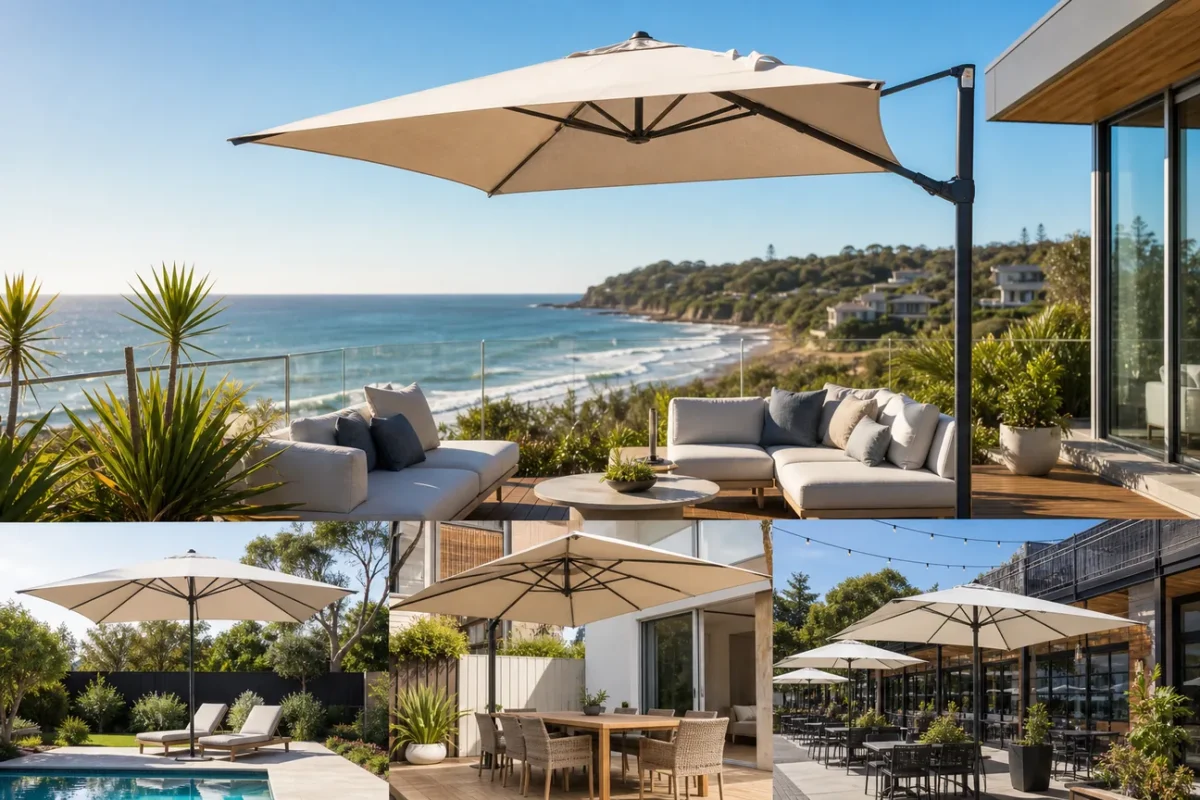
A shade umbrella can make a balcony, pool deck or outdoor dining area easier to use on sunny days. But the right fit depends on more than canopy shape: check the fixing method, fabric details and any stated wind or UV data before you choose.
Here are eight named options for Australian spaces, starting with Umbrello, plus a comparison of what each listing does and doesn’t tell you.
1. Umbrello: Premium shade options for homes and commercial spaces
Umbrello is an Australian outdoor shade business for residential, commercial and hospitality projects. Its Premium Outdoor Umbrella lists a UV-resistant acrylic or white polycotton canopy. Frame choices include Indonesian teak or black powder-coated aluminium.
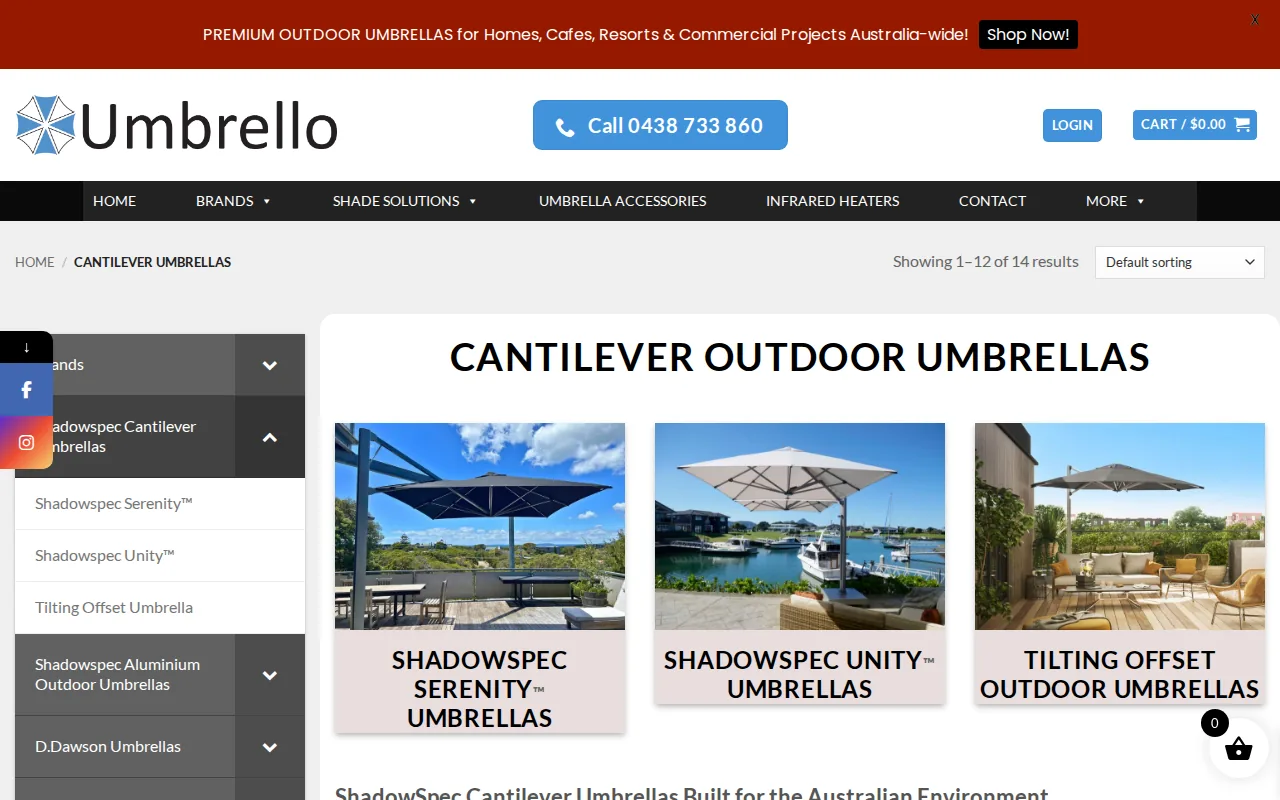
That detail gives buyers a clear place to start when comparing canopy and frame materials. A homeowner planning a garden setting may weigh the timber look against the aluminium option. A designer or venue manager may also want to check the exact configuration, dimensions and installation needs for the space.
Umbrello also supplies shade solutions for commercial and hospitality settings. For a project where the pole needs to sit outside the shaded area, its cantilever outdoor umbrella range is a relevant category to review alongside your site plan.
Specifications can vary by model. Confirm the canopy choice, frame build, base or fixing method, and any wind or UV rating for the exact umbrella you’re considering.
2. Umbrosa Paraflex: A wall-mounted option for compact spaces
Umbrosa Paraflex is a wall-mounted shade umbrella made for places where a central pole or heavy base would get in the way. Its stated use includes balconies and small courtyards, where floor space is often limited.
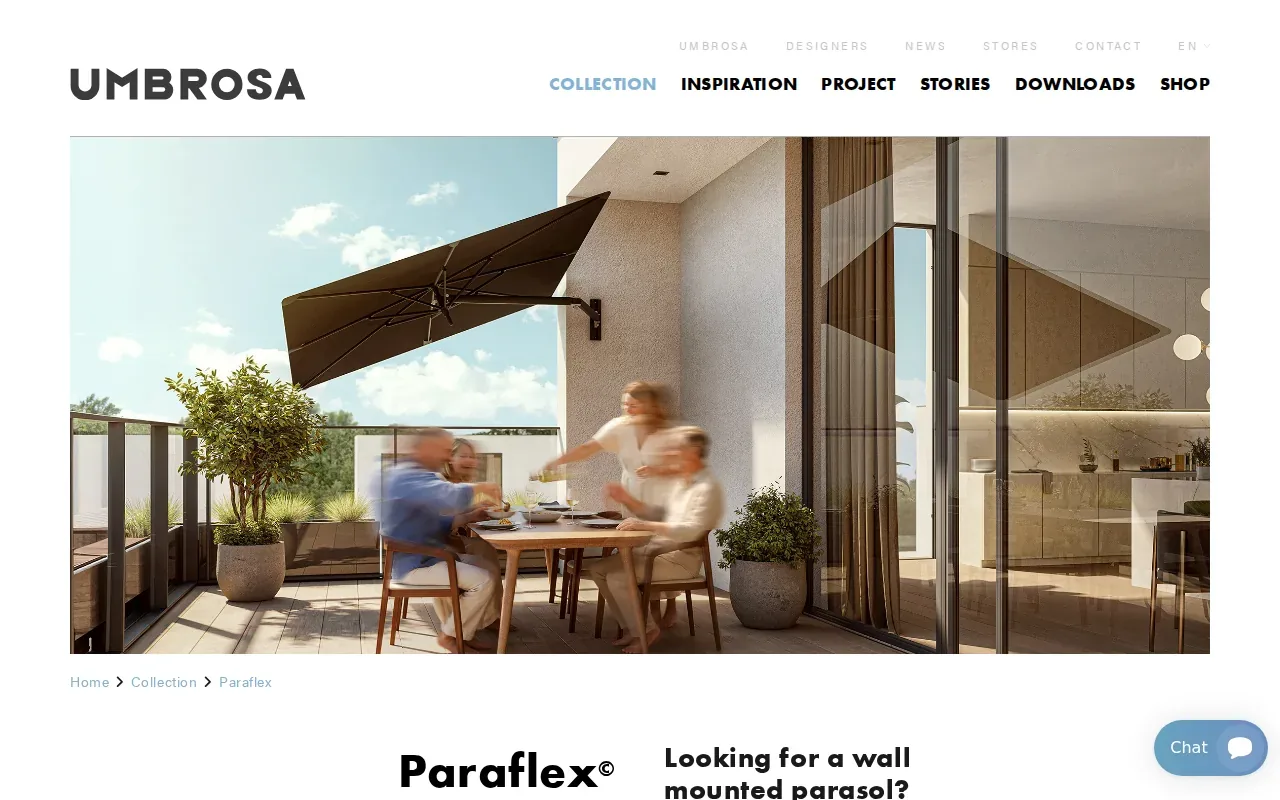
The mount is part of the decision, not a small detail to leave until delivery. The Australian installation information says the bracket can be fixed to a wall. For timber decking, it notes that extra support beneath the deck may be needed. Check the structure and fixing plan before choosing this format.
A wall mount can suit a small table or a compact seating area, but the position is fixed. Think about where the sun falls at different times and whether the canopy can reach the area you want shaded. A wall-mounted umbrella may not suit a layout that changes often.
Wind guidance for this range says ratings are guides only. It also advises closing umbrellas before strong winds or storms and not leaving them open unattended. Treat that as an operating reminder, not a reason to skip checking the mount and site conditions.
3. Shadowspec Unity: A cantilever model with documented material details
Shadowspec Unity is a cantilever shade umbrella with its support pole set to the side of the canopy. That layout can leave more usable room underneath for poolside seating or outdoor dining.
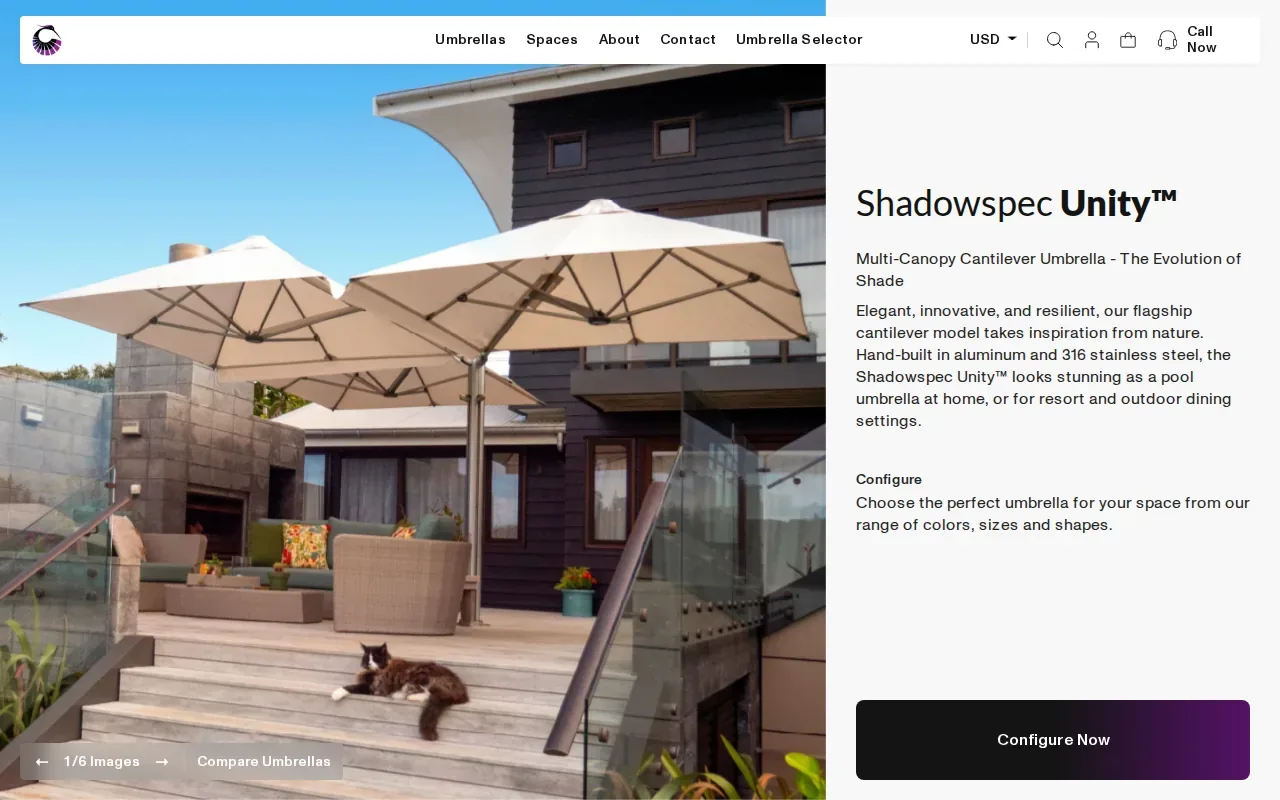
Its stated UPF rating is 80+. This is useful to compare when UV protection matters to your project.
Shadowspec reports that Unity survived typical Sydney Harbour winds at Beaufort 5 without damage. That is a specific reported result, not a promise that the umbrella will be safe in every gust or at every site. A waterfront deck, a sheltered courtyard and an exposed rooftop have different conditions.
Ask what base or fixing is needed for the chosen size and location. If the umbrella will sit near salt air, confirm the care instructions for the materials and fittings before you buy.
4. Regis by Shelta: Patio and poolside shade with UPF 50 fabric
The stated UPF rating gives buyers a point to check: the canopy’s UV protection.
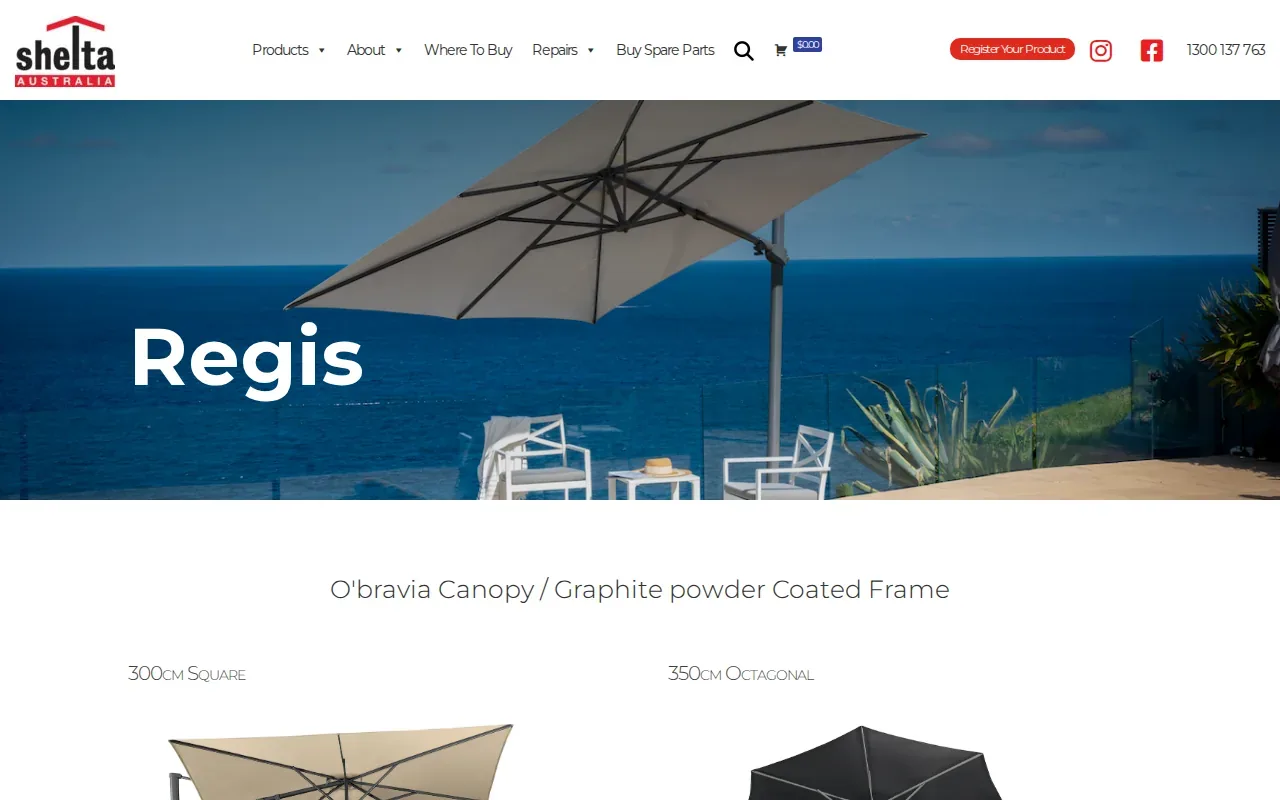
UPF 50 is a stated product rating; it should not be treated as a guarantee of total sun protection in every use. Shade also depends on canopy position, sun angle and how much of the area it covers.
For a pool deck, map where loungers or chairs will sit before selecting a size and mounting point. Consider whether the umbrella’s support will block a walkway or interfere with access around the pool. The information provided here doesn’t specify a wind rating, so ask for the exact model’s current technical details if wind performance matters to the site.
Regis may suit a buyer focused on a patio or poolside layout who wants the listed fabric and frame facts in hand. Verify dimensions and fixing requirements for the version you plan to order.
5. Shelta Australia: A brand range to compare across umbrella formats
Shelta Australia is a brand to include when you’re comparing shade umbrella formats. Its listed cantilever range gives buyers a starting point for looking at umbrellas with an offset support pole.
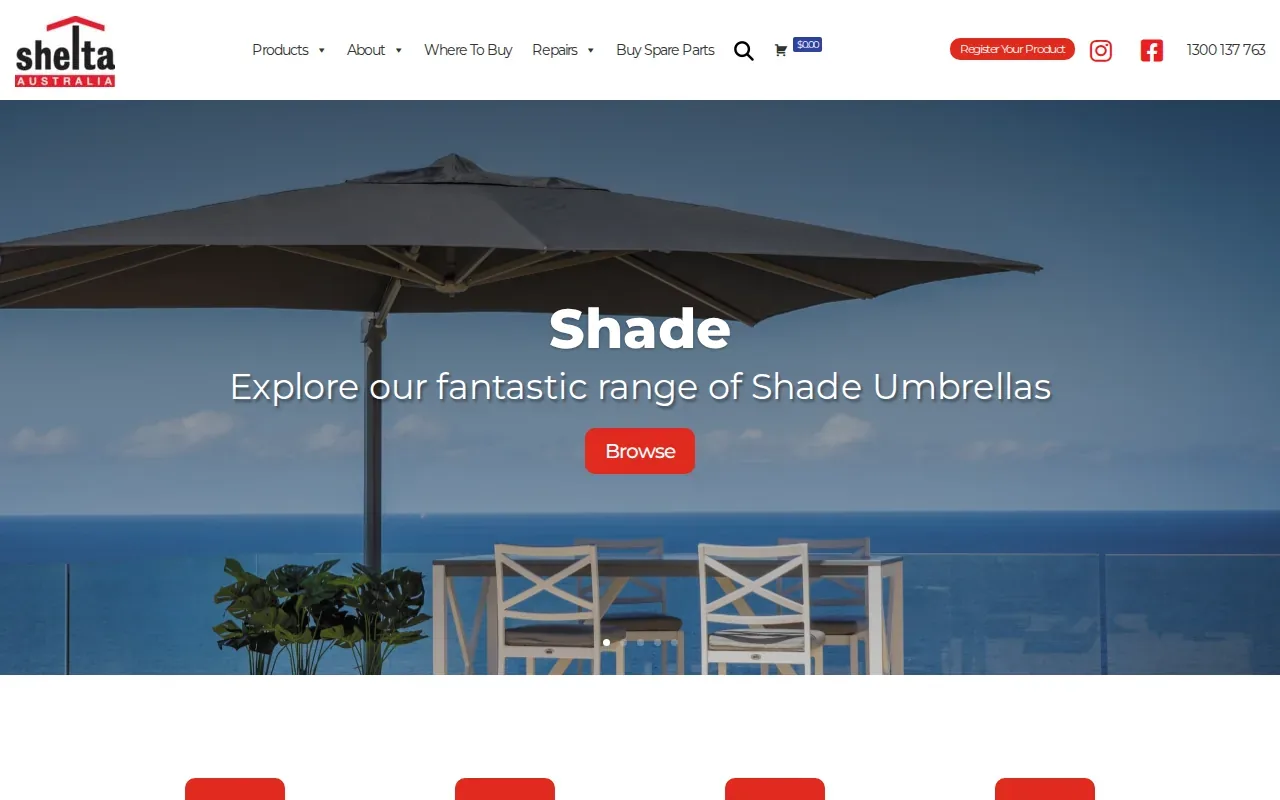
That format can leave the area beneath the canopy more open than a central-pole design. It may be worth comparing for a lounge setting or a table layout where a pole in the middle would be awkward. Still, the format alone doesn’t confirm canopy size, fabric, wind performance or base requirements.
Use the exact model name when asking for specifications. A brand-level range page may cover more than one size or build, so check that the details apply to the item in your quote. If a wind rating or UPF value isn’t shown for the model, request it rather than assuming that another umbrella in the range has the same rating.
For a fair comparison, line up the model, canopy material, frame details and installation method. That keeps a broad brand range from being mistaken for a single set of specifications.
6. Basil Bangs: Design-led umbrellas for beach, garden and hospitality use
Basil Bangs lists premium umbrellas for beach, garden, patio, commercial and custom use. Its stated settings include homes and hospitality venues, so the range spans more than one kind of outdoor space.
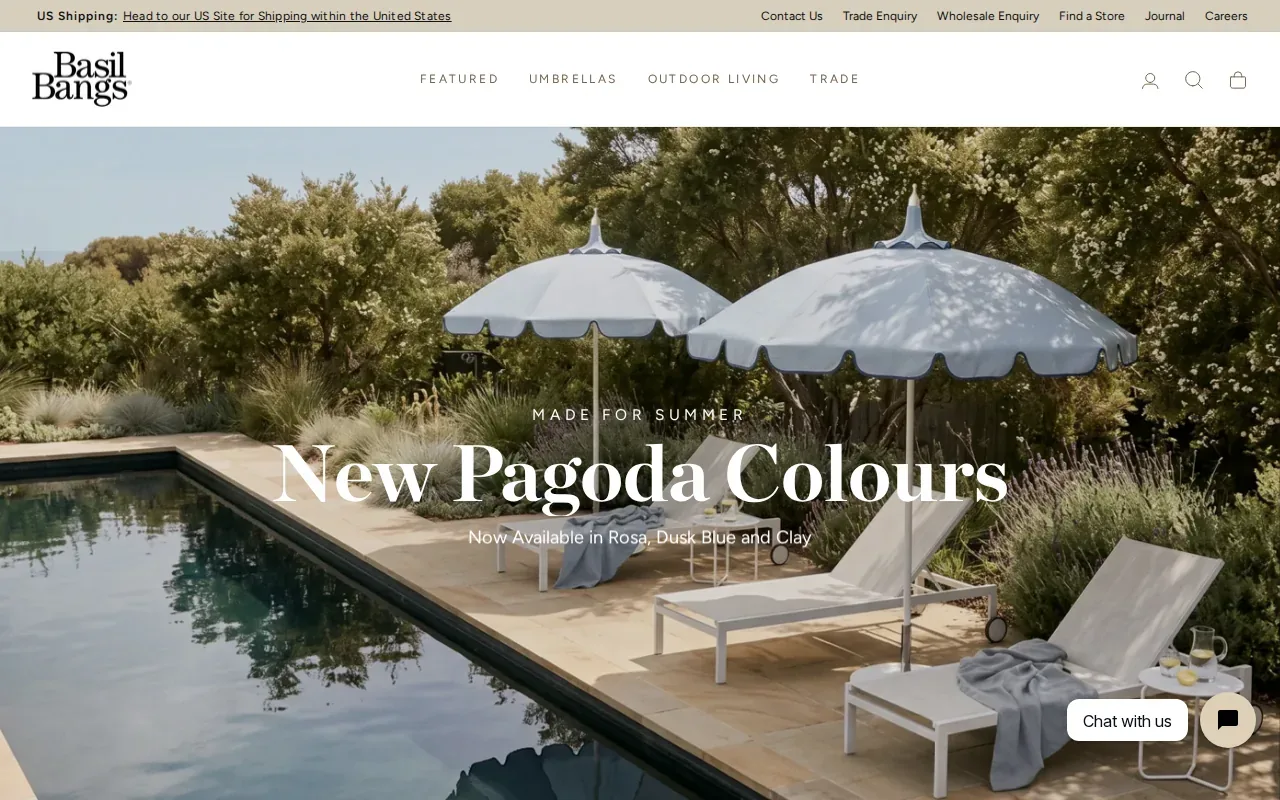
That breadth is useful if you’re comparing a beach shade with a fixed patio umbrella or a venue installation. But the category descriptions don’t tell you the technical details for every model. Check the individual umbrella for its fabric, frame, UV information, anchoring method and any wind guidance before settling on a format.
For a hospitality space, also consider how staff will open, close and secure the umbrella during the day. A product that suits a private garden may not suit a busy venue with regular use. Ask for the operating and care details for the specific model, especially if it will be left in place between service periods.
Custom options may suit a project with a particular look or use, but confirm what can be specified before you build the umbrella into the design.
7. Boss Shade: A shade option to assess for site-specific needs
Boss Shade is an Australian shade umbrella supplier with options described for residential and commercial spaces. Its stated settings include patios, cafés and resorts.
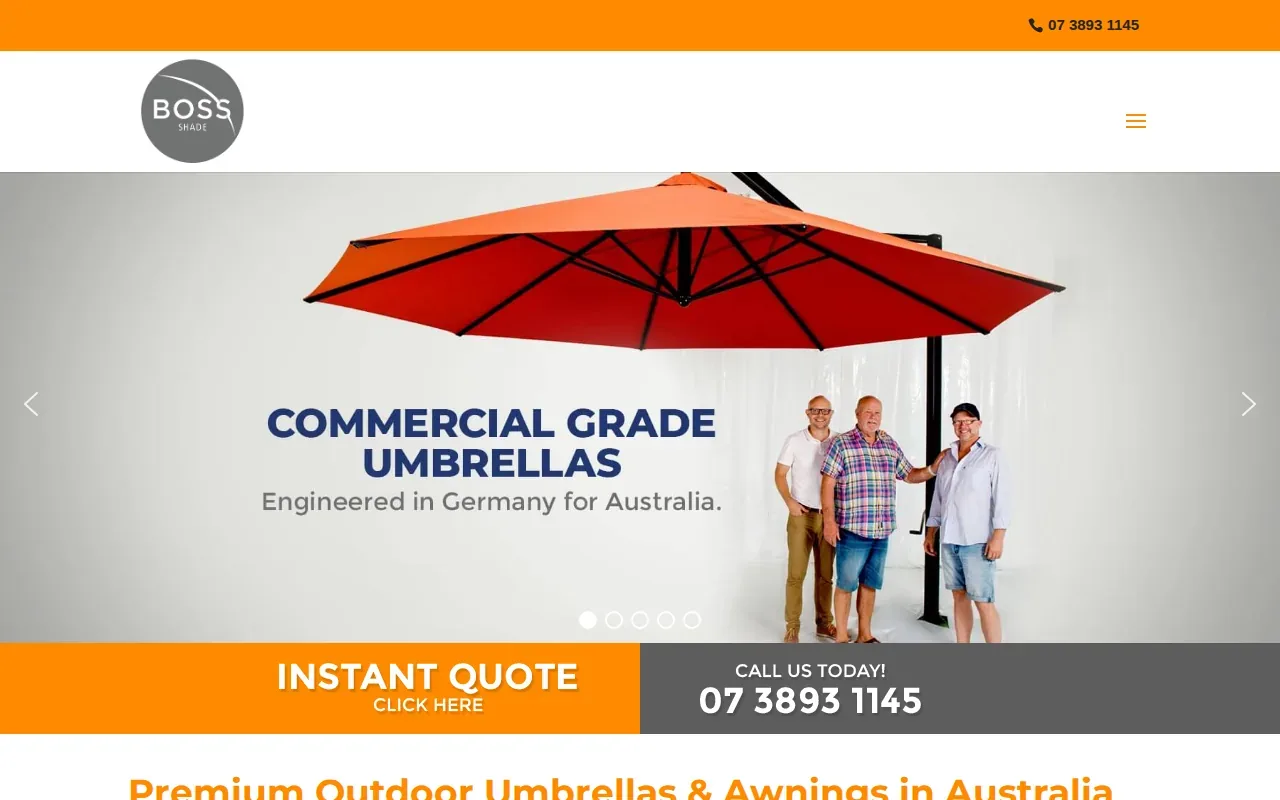
Check the conditions behind any wind rating, including the required installation and base. A rating doesn’t mean the umbrella should stay open in all wind or storm conditions. A rooftop or coastal site may need a different assessment from a sheltered backyard.
Boss Shade also lists centre-post umbrella formats, including commercial-grade aluminium models. When comparing those with a cantilever, think about where the pole will sit and how the base will affect foot traffic or furniture placement. Ask for details for the exact format and size you’re considering.
8. Eclipse® Commercial Cantilever Umbrella by Instant Shade Umbrellas: Rotating coverage for pool areas
Eclipse® Commercial Cantilever Umbrella by Instant Shade Umbrellas is a rotating cantilever option listed for pool areas and rooftops, as well as backyards and decks.
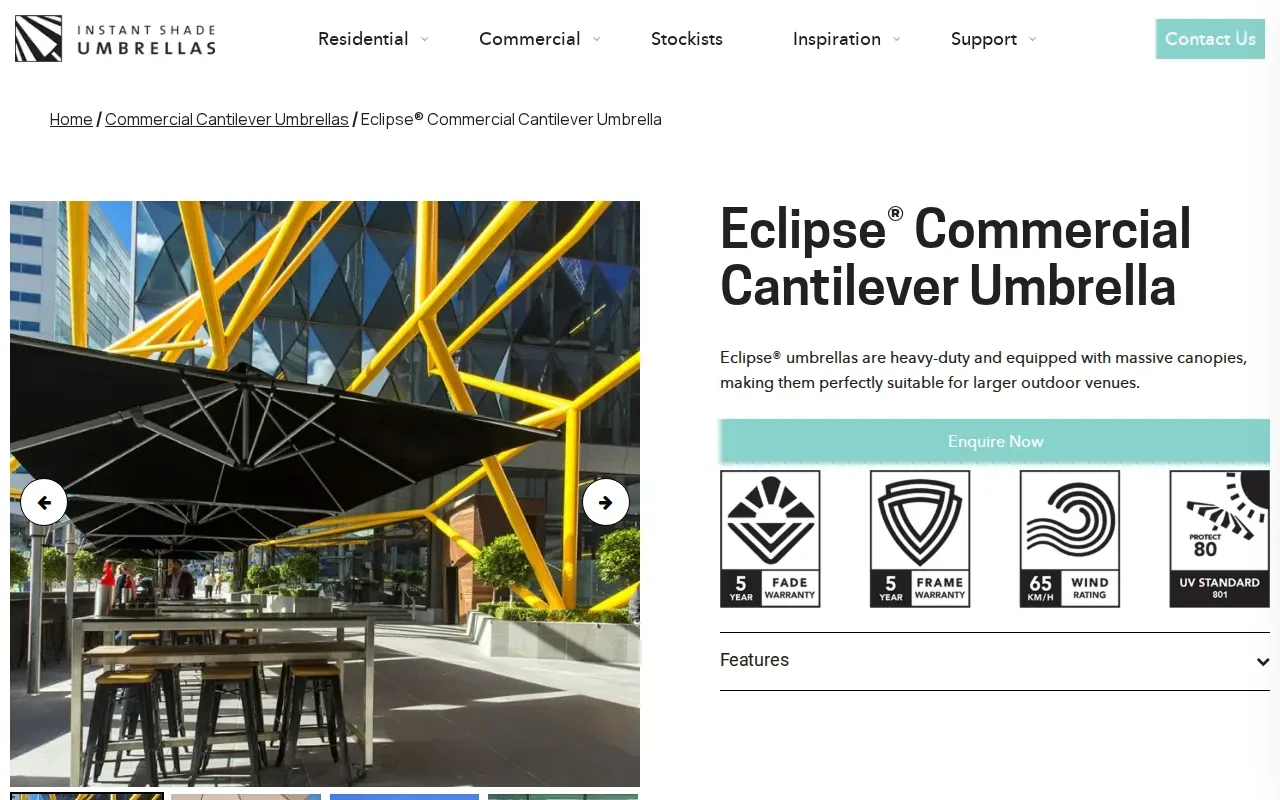
Its installation choices need close attention. The product information describes a base plate for suitable concrete or reinforced decking, plus an in-ground fitting for soft ground or some paved areas. It also describes a filled freestanding base for certain sizes, while noting that some canopy sizes require installation rather than that base.
Follow the installation instructions and close the umbrella when conditions call for it.
For a pool layout, consider how coverage will shift as the sun moves and whether the base can remain in place. Before specifying it, confirm the canopy size, installation method and wind details for the exact configuration.
Shade umbrella comparison: format, use case and details to verify
This table compares the format and stated details available for these shade umbrella options.
| Option | Format or stated use | Details provided | Verify before choosing |
|---|---|---|---|
| Umbrello | Residential, commercial and hospitality shade | Acrylic or white polycotton canopy; teak or aluminium frame | Exact model, dimensions, fixing and performance ratings |
| Umbrosa Paraflex | Wall-mounted; balconies and courtyards | Wall mount system | Wall or deck support and canopy reach |
| Shadowspec Unity | Cantilever; home, resort and dining | Recasens acrylic; aluminium and 316 stainless steel; UPF 80+ | Base, site exposure and model-specific wind information |
| Regis by Shelta | Patios and pool decks | O’Bravia fabric; aluminium frame; UPF 50 | Dimensions and wind rating |
| Shelta Australia | Cantilever range listed | — | Model-level fabric, frame and ratings |
| Basil Bangs | Beach, garden, patio and commercial use | Custom umbrellas listed | Individual model specifications and anchoring |
| Boss Shade | Residential and commercial formats | One listed model states 2 × 4 m and wind resistance up to 70 km/h | Installation conditions and exact model data |
| Eclipse® Commercial Cantilever Umbrella by Instant Shade Umbrellas | Pool areas, rooftops, backyards and decks | 360-degree rotation; UPF 80 | Size-specific base and wind details |
As you compare options, keep the use case in view. A portable beach umbrella has different needs from a cantilever umbrella fixed beside a pool. Easy assembly, adjustable height or tilt, a carry bag and small accessories may matter for portable use, while fixed settings call for careful attention to anchoring and operating guidance.
For any style, check whether the canopy can be aimed where shade is needed. Ask how the base is secured, and whether the stated UV or wind information applies to the exact model. Close an umbrella when strong winds or storms are expected, and don’t leave it open unattended.
Shade umbrella FAQs
Which type of shade umbrella works for a small balcony?
A wall-mounted shade umbrella can suit a small balcony when a floor base or central pole would take up too much room. Umbrosa Paraflex is described for balconies and compact courtyards. Check the wall or deck structure first, then confirm the canopy can reach the seats at the times you use them.
Is UPF 50 enough for a shade umbrella?
UPF 50 is a stated fabric or product rating, but the rating alone doesn’t tell you how much shade your setup will provide throughout the day. Canopy angle, sun position and coverage area all affect the shaded space. Compare the stated rating for the exact umbrella and ask how it was assessed if that detail matters to you.
Can I leave a cantilever shade umbrella open in the wind?
Don’t assume a cantilever umbrella can stay open in every wind condition, even when a wind figure is listed. Ratings depend on the model and installation. Close the canopy when strong winds or storms are expected, follow the maker’s instructions and avoid leaving an open umbrella unattended.
What should I check before buying a shade umbrella for a pool?
Check the canopy size, shade position and how the base will be fixed before buying a poolside shade umbrella. Make sure the pole and base won’t block a path or interfere with furniture. Then confirm the model’s fabric details, stated UPF rating and wind guidance, if those details are available.
Conclusion
Start with the layout and installation method, then compare the model’s stated fabric, frame and performance details. Umbrello is a sensible first conversation for Australian residential or commercial shade planning; next, match the site dimensions to a specific model and request any missing specifications.
