


Outdoor Umbrellas
High-Wind Patio Umbrella Options in Australia
Sep
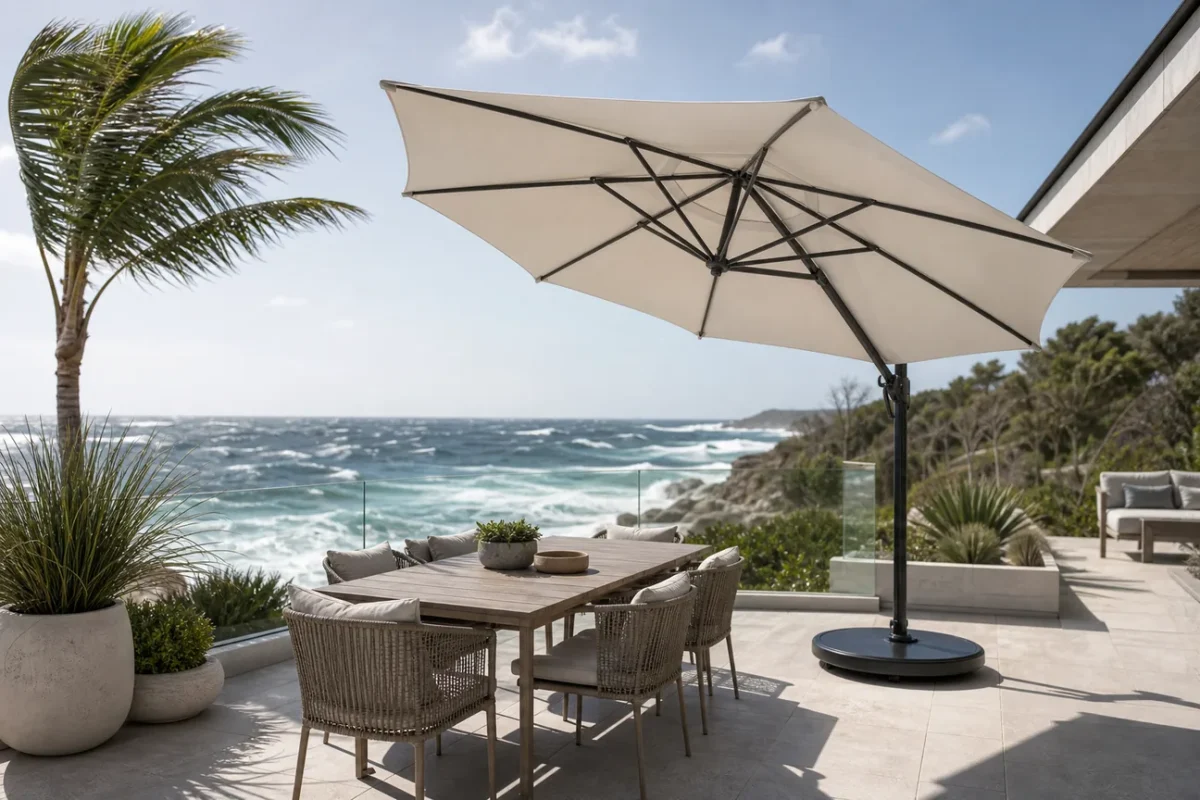
A gust can turn an open patio umbrella into a hazard in seconds. For a high wind patio umbrella in Australia, look beyond the frame and check what the maker actually says about wind limits, anchoring and safe use.
Here are six named options, starting with Umbrello, plus a short checklist for comparing them against your site.
1. Umbrello
Umbrello is an Australian outdoor shade specialist for residential, commercial and hospitality projects. Its range includes cantilever and large-format commercial umbrellas, along with architectural shade solutions. It’s the first place to start if you want advice that takes the site and use case into account.
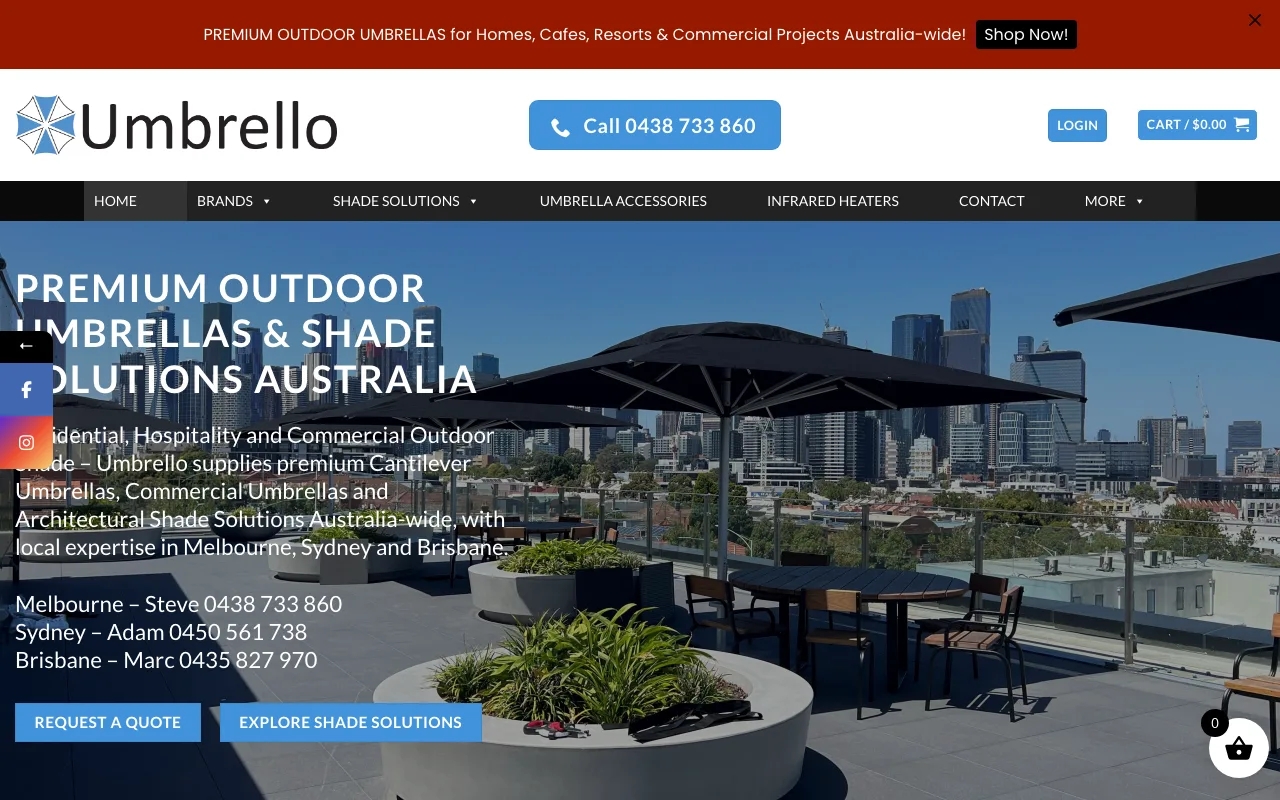
Ask for the current product specification and the conditions behind any performance figure.
A wind number only helps when you know what it describes. Ask whether it applies to a particular canopy size, base or installation method, and whether it’s a tested maximum or a safe operating limit. Umbrello’s guide to choosing a wind-rated outdoor umbrella can help frame those questions.
For a home, the answer may depend on whether the umbrella sits beside a wall or in an open yard. A café or public space has another concern: staff need clear operating instructions for closing the canopy when conditions change. Discuss the site, surface and day-to-day use with a shade specialist before you settle on a size or base.
Umbrello is a sensible starting point for a buyer who values specification advice. Just make sure the details you need are confirmed for the exact model and installation.
2. Grand Patio 11 ft aluminum offset umbrella
It may suit someone who wants to move shade around a patio, but mobility doesn’t replace secure anchoring in wind.
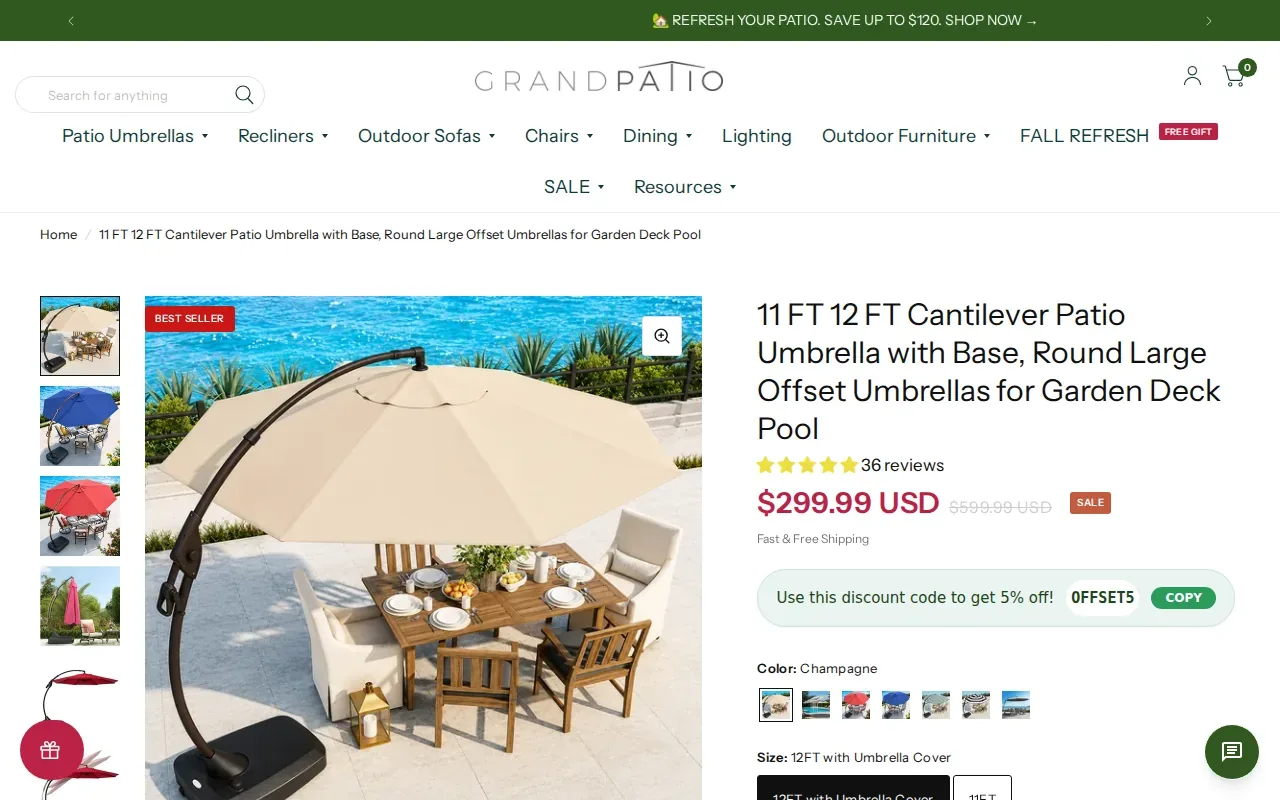
The listed frame material is aluminum. The weighted base has integrated wheels, which can make repositioning easier before use.
Think about the whole base setup. A wheeled base is useful when you need to shift shade across a deck, but once the umbrella is open, the base must be stable on the chosen surface. Check the maker’s instructions for filling, locking and moving it. Don’t move a raised umbrella, and don’t leave it open simply because it has a weighted base.
For shade planning, measure the area you want to cover rather than relying on the canopy’s nominal width alone. Include chairs when they’re pulled out and leave room to walk around the base. With a square or rectangular dining setting, check that the canopy reaches the seating at the times of day you use the space.
This model is worth comparing if moving the shade matters. Its available facts don’t establish a wind limit, so ask for that information before placing it in a wind-exposed spot.
3. Shelta Australia
Shelta Australia is a brand to assess by its individual umbrella model, not by name alone.
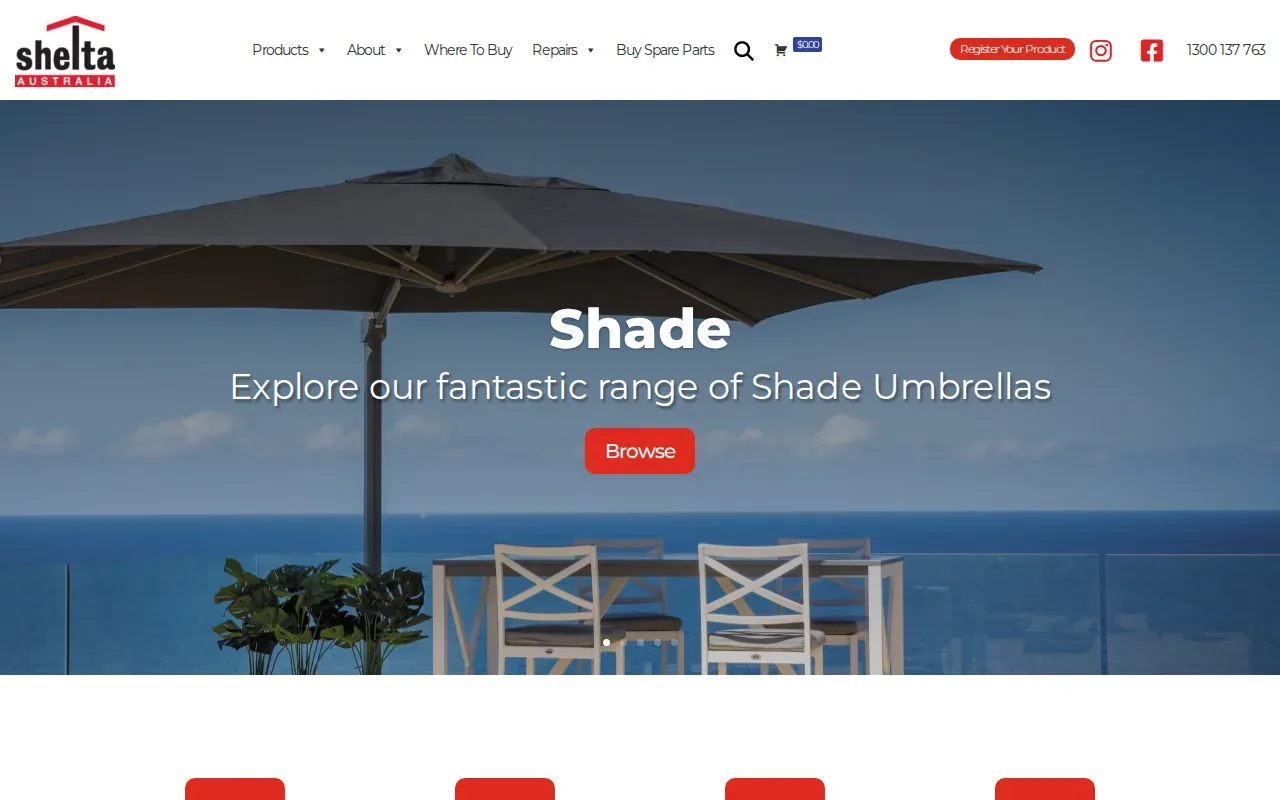
That makes model-level questions especially important. Ask whether the product is a centre-pole umbrella or a cantilever. A centre-pole design places the mast through the shaded area, while a cantilever holds it to one side. The latter can leave more open space under the canopy, but its offset arm and base need to suit the site and installation.
Shape matters too. Round canopies can work well over a central table. Square or rectangular canopies may line up more neatly with a dining table or the edge of a patio. Neither shape is automatically safer in wind. Canopy area, frame design and anchoring all affect how the umbrella should be used.
For any Shelta model you’re considering, request the specification sheet. Look for a stated wind rating and its test conditions. Confirm the frame and finish, fabric details, UV information, warranty terms and approved base. If the umbrella will sit near salt air, ask what care the finish needs and whether the manufacturer gives coastal-use guidance.
Don’t fill in missing details based on another model in the same brand’s range. The product name on the quote should match the product details you review.
4. Basil Bangs
For a residential patio, start with the footprint and the shade you need through the day. For a venue, also consider how staff will open and close the umbrella, and whether the base will sit where customers walk. A custom option may be worth discussing when a standard canopy shape or layout doesn’t fit the site. Confirm what customisation means for the exact model.
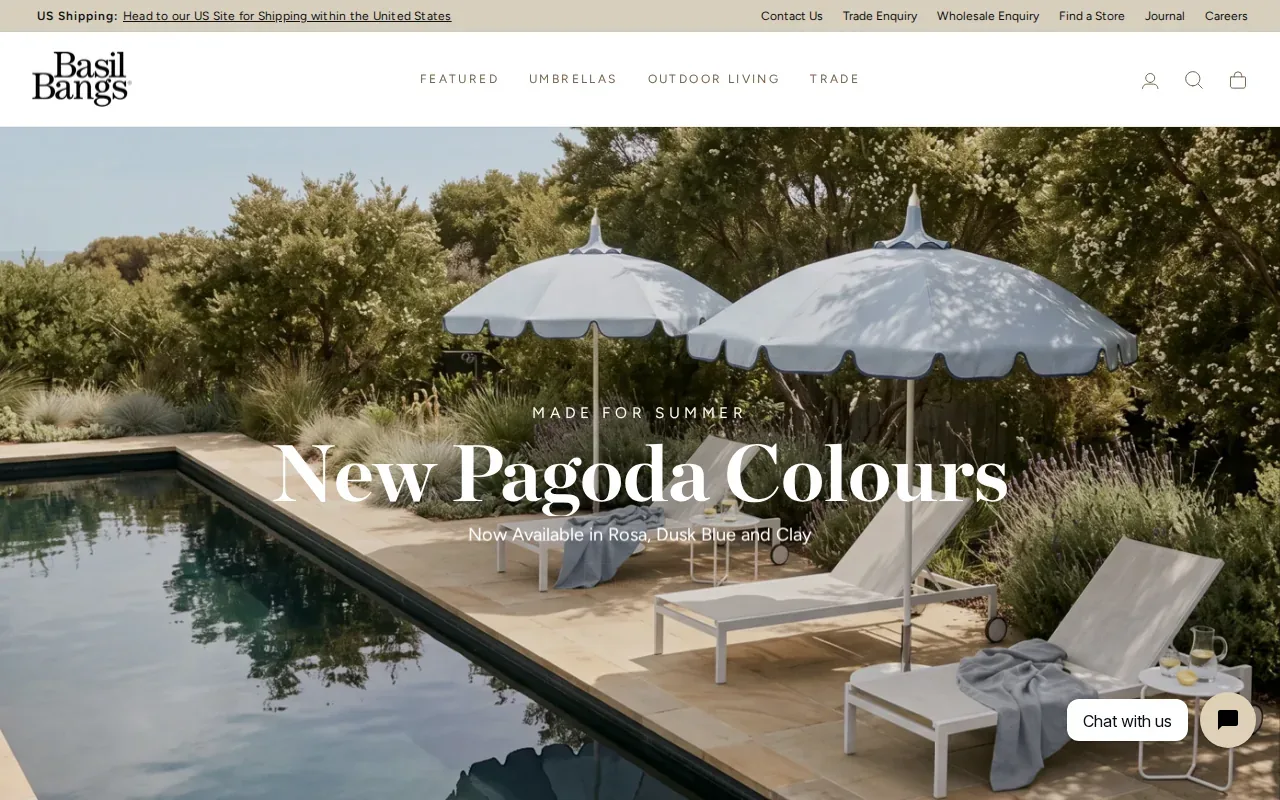
Ask for fabric details rather than assuming all outdoor canopies block the same amount of UV or resist fading in the same way. Check whether the maker states a UPF figure or UV-block claim. Ask what the warranty covers and how to clean the fabric. If the listing describes a wind vent, find out whether it changes the product’s published operating limit.
Be careful with broad terms such as “wind resistant.” They don’t tell you a maximum wind speed or the conditions used to assess it. A useful product answer should identify the model and canopy size, explain its anchoring needs, and state when to close it.
Basil Bangs is a candidate for buyers who want to compare home, venue or custom umbrella ranges. Judge each model on its own documented specifications.
5. Boss Shade
Boss Shade is the clearest option in this shortlist for shoppers looking for a published wind figure.
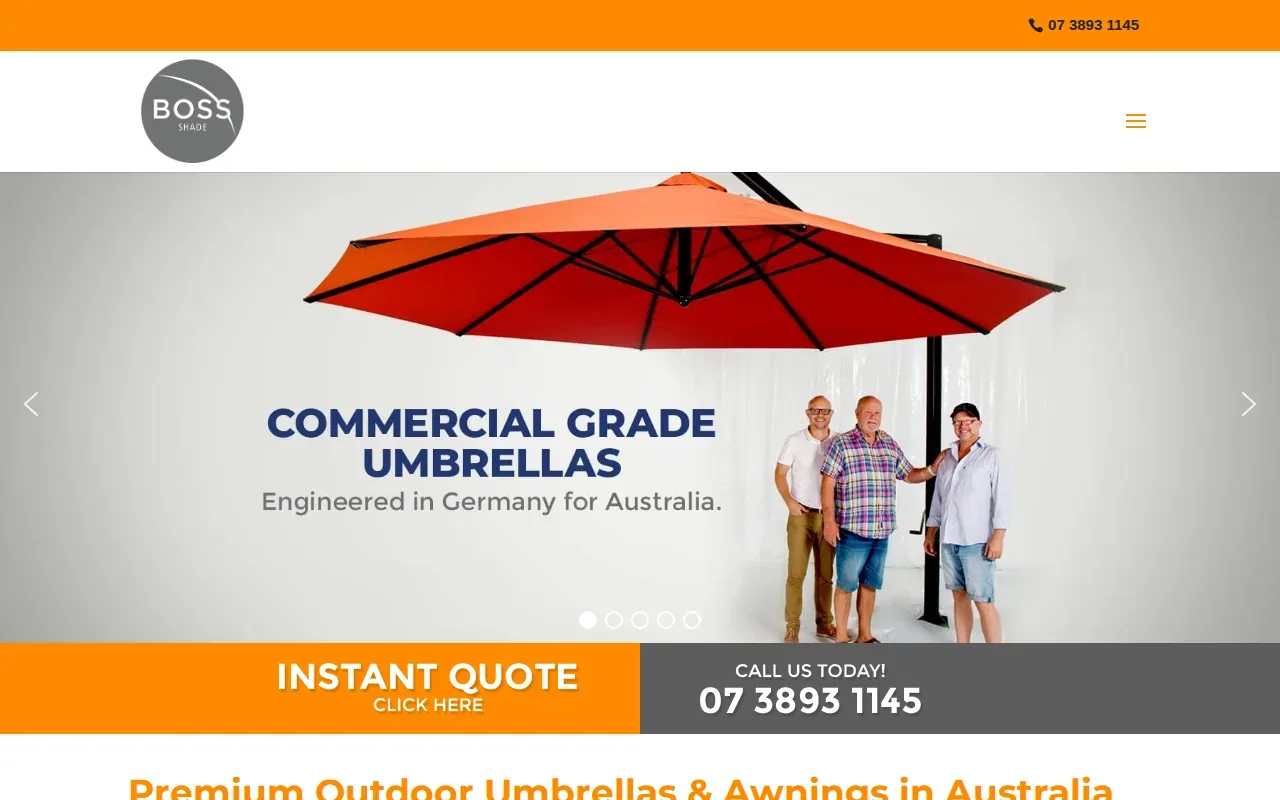
Published figures are useful starting points, not a complete installation plan. Ask what test setup and conditions apply to the wind rating. Confirm the canopy size and anchoring system covered by the claim. Also ask for the recommended operating limit, since a maximum rating may not mean the umbrella should remain open in every gust below that number.
Request those details before comparing it with another model. A good spec sheet should make clear which claims apply to the exact umbrella you’re buying.
High UV protection and a disclosed wind figure can help with shortlisting, but they don’t remove the need to secure and close the canopy as directed. Ask whether replacement parts are available, too. A bent rib or worn canopy can affect how the umbrella operates over time.
If wind performance is your main concern, compare the Shade Classic’s written operating instructions with the conditions at your site. Keep the exact rating and its limits in the same quote or product document.
6. Eclipse® Commercial Cantilever Umbrella by Instant Shade Umbrellas
The Eclipse® Commercial Cantilever Umbrella by Instant Shade Umbrellas is described as a wind-rated design with a 360-degree rotation feature.
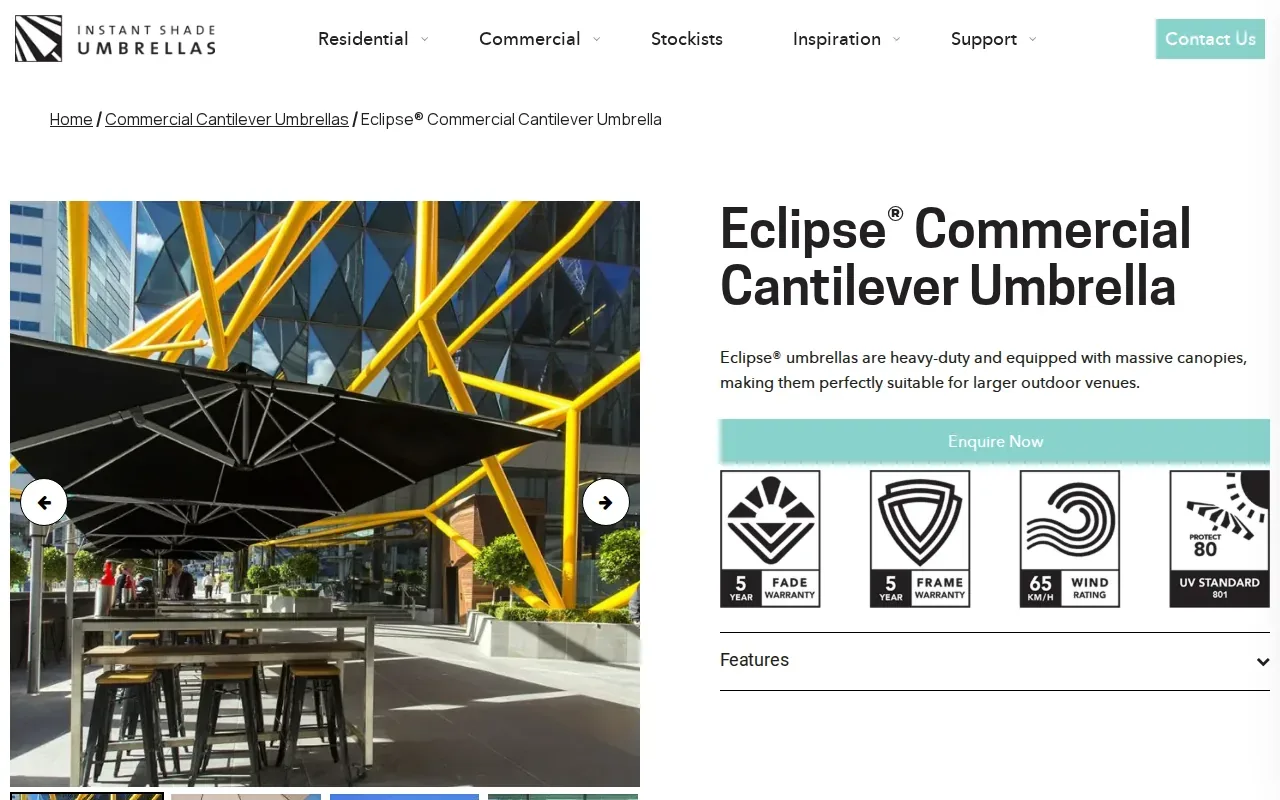
Rotation can help shift shade as the sun moves without repositioning the base. That’s useful for a venue or outdoor seating area where furniture stays in place. Still, confirm how the rotation locks and what the manufacturer says about using it in gusty conditions. A feature that helps with sun adjustment isn’t itself a wind rating.
The listing calls the umbrella heavy-duty, but the research doesn’t provide a numerical wind limit. Ask for the exact speed, test conditions, canopy size and base requirements. Also confirm whether the stated weight refers to the umbrella itself or includes the base. Don’t assume it includes ballast.
Ask for the canopy fabric name and warranty terms if those will affect your decision. For a commercial site, get written guidance on daily closing procedures and who is responsible for securing the umbrella at the end of service.
This option may suit a buyer who needs rotation and a disclosed UPF figure. Its wind rating still needs a number and clear operating conditions before you can compare it fairly with a product that publishes a speed.
How to compare these umbrella options
Wind performance isn’t one feature. The canopy, frame, base and installation work together, so compare the complete setup rather than a single claim.
Start with the published wind information
Ask for a wind speed in km/h and the conditions behind it. Check whether the figure applies to the umbrella open, tilted or in a particular position. Find out which base or ground fixing was used during testing. If the supplier can’t give a number, treat “wind-rated” or “wind resistant” as incomplete information, not as a measurable limit.
Compare ratings with care. Different test methods, canopy sizes and anchors can make two numbers hard to compare directly. The wind umbrella comparison guide covers questions to ask when reading a product rating.
Match the style and span to the space
A standard round umbrella often fits a central table. A square or rectangular canopy may suit a long dining table or a straight patio edge. A cantilever can keep the pole out of the middle of the seating area. Measure the canopy footprint, then check that chairs can move and people can pass without striking the base.
For a rough shade-area estimate, multiply the canopy’s length by its width. A 3 m by 3 m square, for example, covers 9 m² before you account for the sun angle. This is an area estimate, not a promise of full shade at every hour. The sun moves, and the canopy may need to be repositioned or tilted.
Check the frame, fabric and finish
Boss Shade’s listed canopy material is canvas. Other options need model-specific confirmation. Ask what the frame is made from and how it’s finished. Near the coast, confirm care advice for salt exposure and check the maker’s warranty terms.
For fabric, look for a named material and a stated UV figure or UPF value. The Eclipse® listing states UPF80, while Boss Shade Shade Classic states 98% UVR block. These are different ways of expressing protection, so don’t treat them as identical without the maker’s explanation.
Choose the anchor before you buy
Base choice depends on the surface and how permanent the installation should be. A weighted base may suit a paved patio if it meets the umbrella maker’s requirements. A cross-base may need added ballast. An in-ground fixing or a plate bolted to a suitable surface can suit a permanent location, but it needs correct installation.
Ask whether the base is included, what ballast it needs and whether the ground or deck can support the load. A canopy that is wide enough for the table may still be a poor fit if there’s no safe place for the base. With commercial use, set a clear process for closing the umbrella when conditions become unsuitable.
Plan for upkeep and clear operating limits
Check the canopy and frame from time to time for loose fixings, wear or damage. Follow the maker’s cleaning instructions rather than using harsh products that could affect the fabric or finish. Close and secure the umbrella when it’s not in use if the instructions call for it, especially as wind picks up.
Read the warranty before purchase. Check whether it covers fabric, frame or both, and note any exclusions for wind, installation or improper use. Keep the spec sheet and installation instructions with the site’s maintenance notes. That gives staff or household members the same clear rules.
Frequently asked questions
What should I look for in a high wind patio umbrella in Australia?
Look for a stated wind speed with clear test conditions, plus written guidance on anchoring and when to close the canopy. Check the exact model, canopy size and base covered by the rating. Also ask about frame material, fabric UV protection and warranty terms. A broad “wind resistant” label alone doesn’t tell you how the umbrella was assessed.
Is a cantilever umbrella better for windy areas?
A cantilever umbrella isn’t automatically better in wind. Its offset arm can keep a centre pole out of the seating area, but the canopy and base still need to suit the site. Compare the model’s wind information and anchoring instructions. If a supplier can’t state a limit, ask for the details before using it in an exposed spot.
How do I anchor a patio umbrella for wind?
Use the base or fixing approved for that exact umbrella and surface. Ask whether it needs ballast, bolts or a permanent ground anchor. Make sure the surface can support the setup, then follow the installation instructions. Don’t rely on a base simply because it feels heavy. Close the umbrella whenever the maker’s instructions say conditions are unsuitable.
What does UPF80 mean on an outdoor umbrella?
Ask the supplier to explain any stated UPF figure for the exact canopy model, and request fabric and care information. UV protection doesn’t describe wind performance, so assess that separately before choosing a high wind patio umbrella.
Can I leave a patio umbrella open in strong winds?
Don’t assume an umbrella is safe to leave open because it has a wind rating. Follow the maker’s operating limit and close-down instructions for the exact model. Gusts can change quickly, and an umbrella’s setup depends on its base and installation. If those conditions aren’t clear, ask the supplier before leaving it open unattended.
Conclusion
Start with Umbrello if you want advice on matching an umbrella to a home, venue or project, then ask for the exact model’s written wind and anchoring details. Before ordering, compare those specifications with your site and request expert advice if the installation will face exposed or coastal conditions.
