


Outdoor Umbrellas
Solar-Powered Poolside Cantilever Umbrellas in Australia
Sep
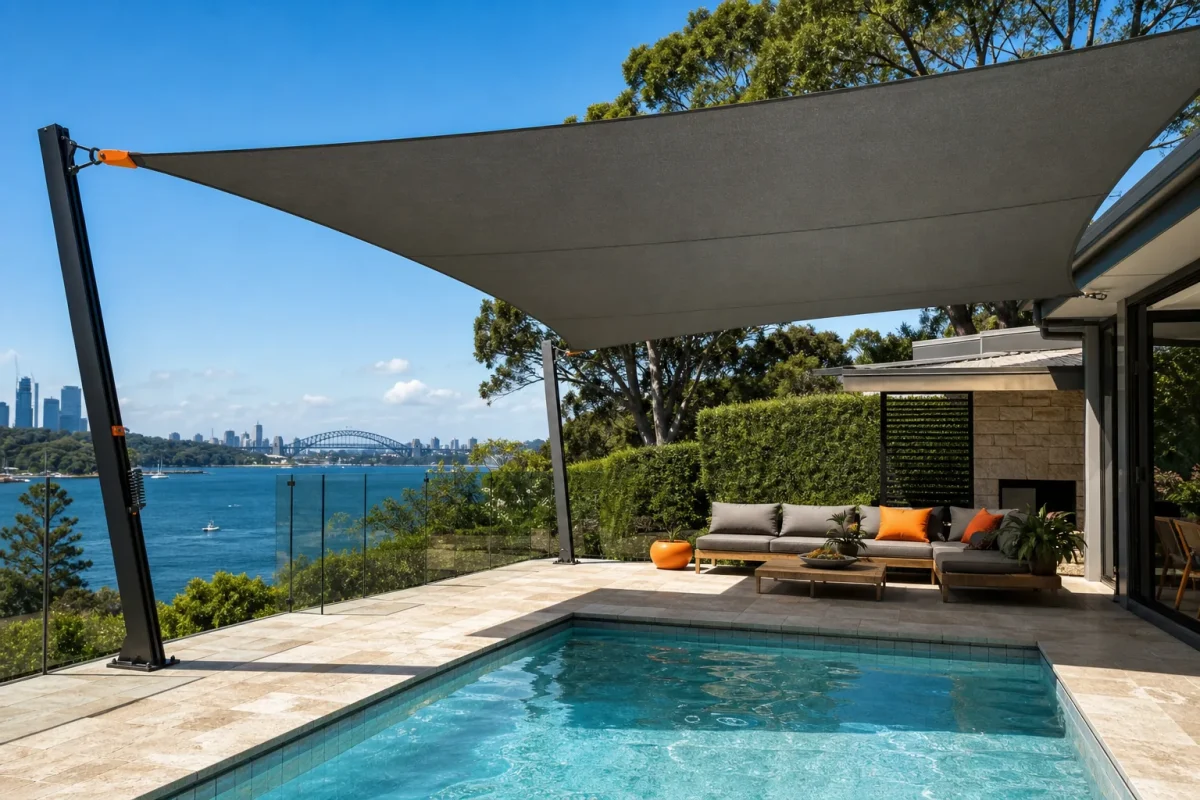
Poolside shade has to do more than look good. A solar powered cantilever umbrella for poolside Australia should give you useful shade by day, while its lights and base suit the way you use the space.
We analyzed 38 comments from YouTube and Reddit about solar powered cantilever umbrellas for poolside use and found that 24% asked about maintenance, parts replacement, and accessories. Ensure replacement parts and accessories are readily available before buying.
Here are two options to assess, followed by the poolside checks that matter most.
1. Umbrello
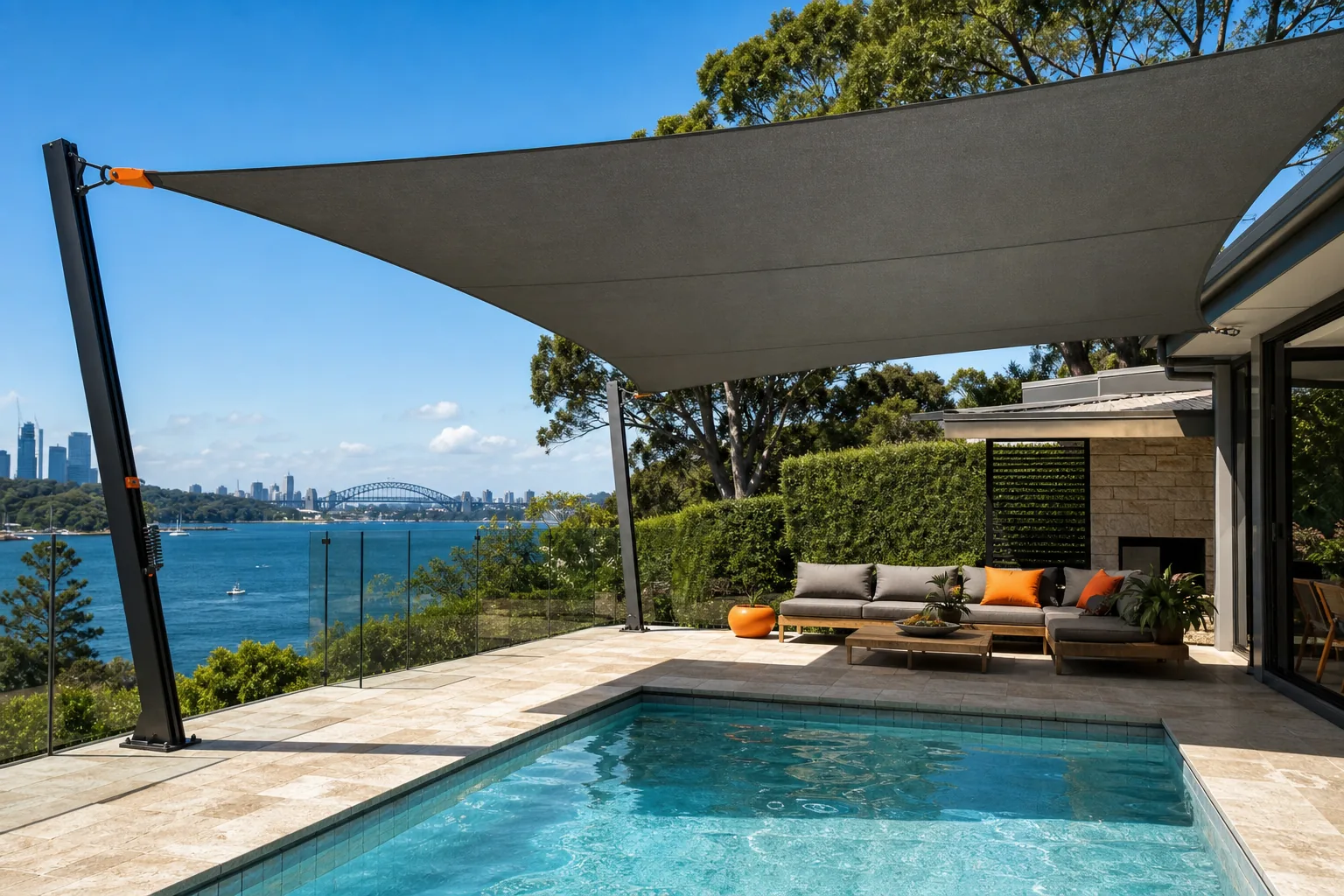
Umbrello is an Australian outdoor shade specialist with premium cantilever umbrellas for homes, venues and larger projects. It’s a fit for buyers who put design and durability ahead of a low entry price, and who want expert input on choosing shade for an Australian site.
The business describes its umbrellas as designed for Australian outdoor conditions. The available product information, however, doesn’t state wind ratings, UV figures or solar-light specifications for its High-End Cantilever Umbrella. That’s a meaningful gap if you’re comparing options on poolside performance rather than brand positioning alone.
For a pool, the offset arm can keep a central pole out of the seating area. Before you buy, confirm the canopy dimensions and the shade footprint at different tilt positions. A pool edge, sun lounge or walkway can sit just outside the canopy’s reach when the sun is low, even if the umbrella looks large when fully open.
Also ask Umbrello what the selected model’s canopy fabric, frame finish and base setup are. The answers should relate to your specific site. A sheltered courtyard has different needs from an exposed pool deck, and a fixed installation differs from a base you may need to move.
Umbrello’s cantilever umbrella range is a relevant place to review its available shade formats. Treat solar lighting as a separate question until the model’s specifications confirm it. If integrated LEDs are essential, ask for written details on the panel, battery, controls and warranty before making a decision.
That makes Umbrello a considered option for premium shade planning, not a verified solar-lighting match based on the details available here. Get the exact model specifications before comparing it with a solar-equipped umbrella.
2. Goplus 3M Solar Offset Hanging Umbrella w/40 Lamp Beads, Solar Panel, Easy Tilt Adjustment
This named option is a 3M solar offset hanging umbrella. It has 40 lamp beads, a solar panel and easy tilt adjustment. It may suit someone who wants shade with built-in lighting and prefers to assess a defined size rather than start with a large-format project.
The name gives a useful starting point, but it doesn’t answer the key buying questions. It doesn’t state the canopy’s shape or coverage area, a wind rating, UV protection, frame material, fabric type, base weight or warranty. Those details matter beside a pool, where the umbrella needs to fit the site and its exposure, not just the furniture layout.
“40 lamp beads” tells you the stated light count, not how bright the light is or how long it will run. Ask how the lights are switched on and off, whether the battery can be replaced, and what performance to expect after a cloudy day.
Easy tilt adjustment is part of the product name, though it doesn’t explain the control mechanism or how many positions it has. Check whether you can tilt the canopy while it’s open, and whether one person can operate the crank or lever safely. Those details become more important if the shade needs frequent adjustment as the sun moves across the pool.
Before purchase, get the base requirements in writing. A cantilever canopy puts its support to the side, so the base must suit the canopy and installation surface. Don’t assume that a base included with a product is heavy enough for a windy pool deck. Ask what anchoring is required and whether the maker gives a wind-use limit.
This option has more clearly stated solar-light details in its name than Umbrello’s available product information. But key performance and warranty details remain unconfirmed, so use the full specification sheet, not the product title, to make your final comparison.
Poolside solar performance and weather checks for Australian conditions
A solar-powered pool umbrella needs to work as shade first and lighting second. Look for written details on canopy coverage and UV performance before treating LED count or a solar panel as proof that it suits the site.
UV protection should be stated as a rating or clear figure, not left to a broad claim such as “sun safe.” As one point of comparison, the Shelta Solarmax Cantilever Umbrella lists 98% UV protection. It also lists a 60 kph wind rating, with a two-year frame warranty and a three-year fabric warranty. Those figures are useful because they make claims easier to check, but don’t assume they apply to another model.
Wind figures need context. Ask whether a rating describes the umbrella open, closed or under a specific test condition. Find out what base or fixing was used for the rating. A published number without those details may not tell you how the umbrella will behave on your own deck.
Solar-light descriptions need the same care. A solar panel gathers daylight to charge a battery, which then powers the LEDs. But a panel’s presence doesn’t tell you how much energy it stores or how long the lights run. Ask for battery capacity, expected lighting time after a full charge, charging requirements and the location of the on-off control.
Poolside exposure can complicate those answers. Nearby buildings or trees may shade the panel for part of the day. Chlorinated water can splash onto the frame and fabric, while coastal sites may face salt air. Check the maker’s care advice for the specific materials, and ask whether the panel or light wiring needs special cleaning or protection.
Canopy size also needs a site check. A 3M model name doesn’t by itself tell you the usable shaded area or how much shade remains when the canopy is tilted. Mark the poolside seating area on the ground, then compare its dimensions with the canopy’s stated size and support position. Leave room for people to pass the base.
Warranty terms are part of performance disclosure. The Shelta Solarmax figures above show what clear terms can look like. If a seller doesn’t publish warranty details, ask who handles a fabric fault, frame issue or failed light component, and get the answer in writing before ordering.
Poolside setup, adjustment and care: stability before convenience
Set the base and fixing plan before you judge how easy an umbrella is to swivel or tilt. A cantilever arm holds the canopy away from its support, which can make the space beneath it more usable. It also means the base and installation need to match the model and site.
Check what surface the umbrella will sit on. A freestanding base may suit one layout, while a fixed installation may be better for a permanent spot. Ask the supplier what anchoring method the maker specifies for your surface. Don’t choose sandbags, ground stakes or a water-filled base by guesswork; their suitability depends on the umbrella and the installation.
Plan the base position with the canopy open and tilted. Make sure it won’t block a path, sit where swimmers enter the pool or interfere with furniture. Think through the full rotation range too. A clear space in one position may become a collision point when the canopy turns.
Controls vary. Some cantilever designs use a crank to open the canopy, while rotation or tilt may use a lever, pedal or separate control. The Goplus 3M Solar Offset Hanging Umbrella w/40 Lamp Beads, Solar Panel, Easy Tilt Adjustment is named for easy tilt adjustment, but doesn’t specify its mechanism. Ask for a demonstration or clear instructions, especially if the umbrella will be adjusted often.
Closing the canopy when it’s not in use is a sensible operating habit. Follow the model’s instructions, including any direction to close it in wind. Don’t rely on a heavy base as permission to leave a large canopy open through changing weather. If the maker gives a wind limit, follow it.
For routine care, use the maker’s instructions for the canopy, frame and solar parts. A soft brush can help lift loose dust from fabric, but check the fabric care label before using soap or a cleaning product. Keep the panel clear of dirt with the method the maker approves. Don’t pull on wiring when cleaning around integrated lights.
Pool water and outdoor grime can build up over time. Rinse or wipe surfaces only as the product instructions allow, then let fabric dry before you store a cover over it. Check the frame joints and light connections at the start of the season. If a cord is damaged or a part feels loose, stop using the umbrella until the maker advises what to do.
Offset designs can keep the pole out of the shaded area. Check the exact fabric and UV information for the umbrella you’re considering, rather than assuming every canopy has the same rating.
Frequently asked questions
What should I check before buying a solar powered pool umbrella in Australia?
Check the canopy size, stated UV protection and wind rating before comparing solar lights. For a solar powered cantilever umbrella for poolside Australia, also confirm the base requirements, battery details and warranty. Ask whether the wind figure applies when the canopy is open. If any answer is missing, request the exact model specification in writing.
Does a solar panel mean the umbrella lights will last all night?
No, a solar panel alone doesn’t confirm how long the lights will run. Ask for the battery capacity and stated lighting time after a full charge. Also check how much direct daylight the panel needs and whether the battery can be replaced. A lamp count, such as 40 beads, doesn’t tell you brightness or run time.
Is a cantilever umbrella suitable beside a swimming pool?
It can suit a poolside area when its shade reach, base and fixing match the site. The offset support can leave more open space beneath the canopy, but the base still needs a safe position outside paths and pool access. For a solar powered cantilever umbrella for poolside Australia, also check fabric care and UV details.
What base does a cantilever umbrella need?
The right base depends on the umbrella model and the surface where it will be installed. Ask the supplier for the maker’s base weight and anchoring instructions, rather than relying on a general rule. A pool deck, lawn and paved area may need different fixing plans. Keep the canopy closed as the maker directs in unsuitable weather.
How do I compare wind ratings and warranties?
Compare the stated wind rating with its test conditions and the base or fixing used. Check whether the rating applies to an open canopy. Read warranty terms for the frame, fabric and solar-light parts separately. The Shelta Solarmax lists a 60 kph rating and separate frame and fabric warranty periods, but those figures shouldn’t be applied to other umbrellas.
Conclusion
Choose Umbrello if premium shade design and project advice matter most, but confirm solar lighting and performance figures for the exact model before buying. If integrated solar LEDs are essential, compare the Goplus specification against your site and ask for its wind, UV, base and warranty details. Your next step is to request those details in writing before you commit.
